Region
France › Burgundy › Côte d'Or › Côte de Nuits › Gevrey-Chambertin › Charmes-Chambertin AOC
Type
red · still
Grapes
Pinot Noir
Alcohol
13.5%
Volume
750 mL
Tasting Notes
No tasting notes yet.
About
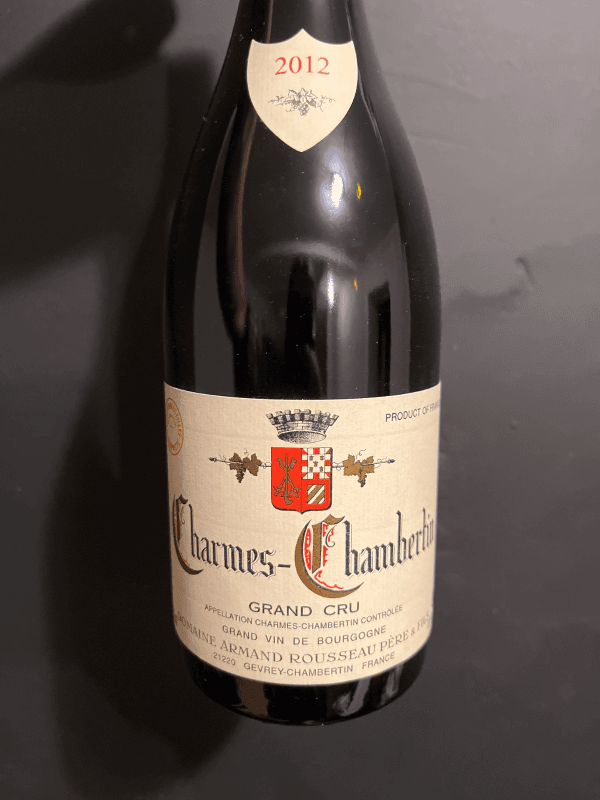
The thing to know about Domaine Armand Rousseau's Charmes-Chambertin is that most of it is not Charmes. The domaine's own account of its holdings lists Mazoyères-Chambertin "commercialisé sous l'appellation Charmes-Chambertin" - Mazoyères, sold under the Charmes name, which the appellation rules permit, from a parcel bought decades ago as the grands crus were assembled over the years. The total holding is about 1.37 hectares, and Rousseau is among the largest owners in Mazoyères; the usual breakdown puts roughly a third in Charmes proper and two thirds in Mazoyères, though that split is much less well documented than the total.
The domaine runs to 15.33 hectares across Gevrey-Chambertin and Morey-Saint-Denis, of which 8.51 are grand cru, and makes around 63,000 bottles a year across eleven wines. Éric Rousseau, who joined in 1982, runs it with his daughter Cyrielle, who came in permanently in 2014 and trained in geology and viticulture before harvest stints in Oregon, Australia and New Zealand. The domaine publishes yields of 30 to 40 hl/ha and works its soils mechanically without chemical herbicides, but says very little about the cellar beyond that its methods have changed little since the early harvests. Accounts from cellar visits give roughly 90% destemming, with the small whole-bunch fraction reserved for the grands crus in suitable vintages, and a late bottling at twenty to twenty-two months. New oak is graded by cuvée: Chambertin and Clos de Bèze take 100%, and Charmes takes materially less - every account agrees on the hierarchy, but the published figures for Charmes itself range from none at all to about a third to around half, so the exact number is not settled.
2017 in the Côte de Nuits was the rebound from 2016. The slope was largely untouched by that year's frost, and after a crop that had been low almost everywhere in 2016, volumes came back well above average. An early spring and a changeable summer ended in near-ideal late-season conditions that allowed slow, complete ripening, and picking began at the very end of August. With a generous crop, selection did the work.
Releases of Charmes-Chambertin Grand Cru
3 releases| Release | Score | QPR | Price |
|---|---|---|---|
 2018 2018 | — | — | — |
 2017this page 2017this page | — | — | — |