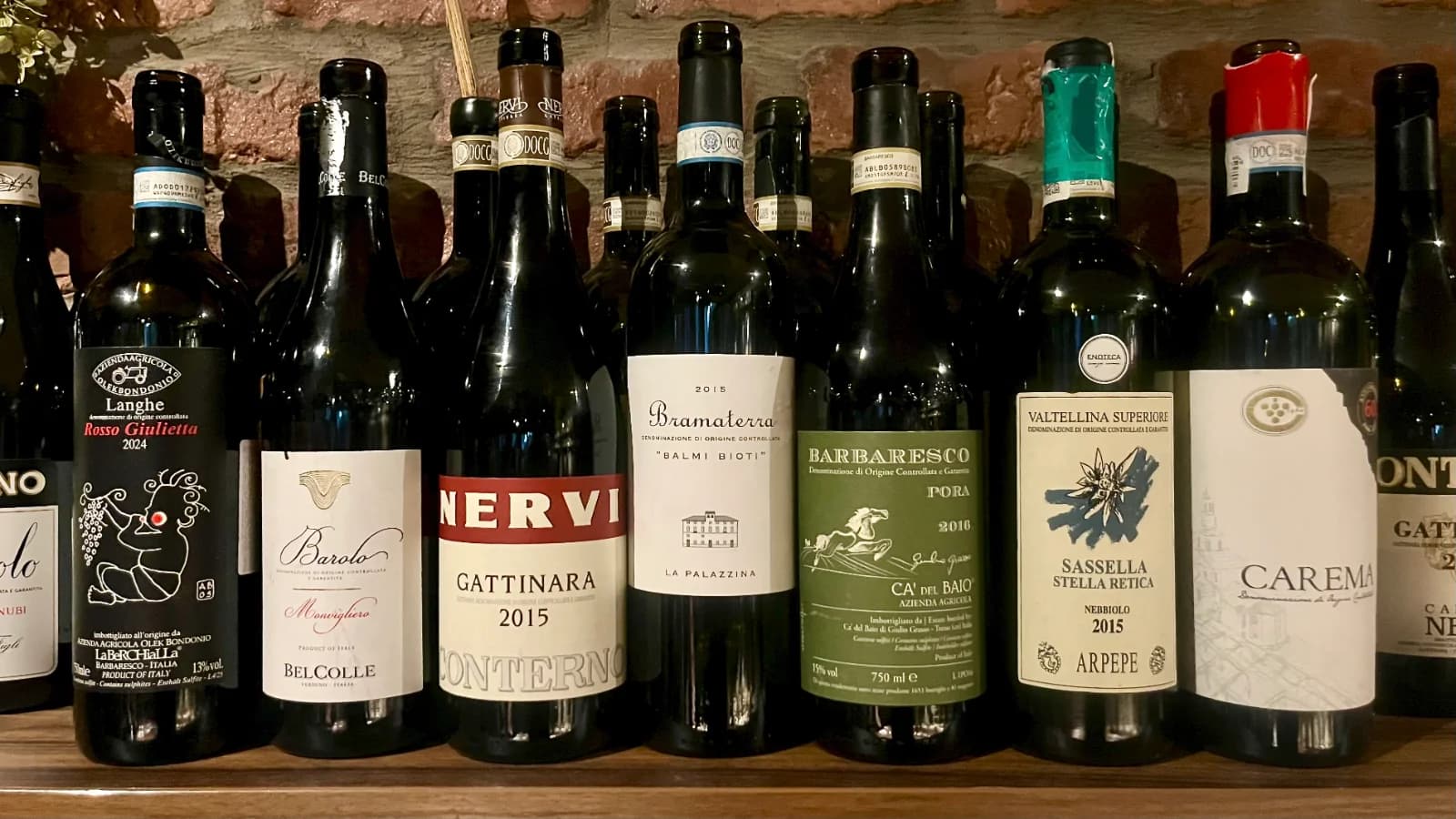
Six Nebbiolos blind at the Nebbiolo Embassy
Alessio's tasting at Lo - six 10-year-old Nebbiolos blind across Barolo, Barbaresco, Alto Piemonte, and Valtellina, plus a welcome Pelaverga to start.
By Boris · Hosted by Alessio Alexeev
I signed up for this tasting a few weeks ago without paying much attention to the topic - for me anything Alessio Alexeev hosts is on the calendar in pen, theme or no theme, because his evenings consistently deliver. Yesterday I walked in and learned the plan: six Nebbiolos at ten to eleven years of age, served blind, with reveals only after the last glass was empty. Properly splendid. And held, naturally, at Lo - the wine bar we joke about as the Nebbiolo Embassy.
The lineup turned out to be a near-complete tour of serious Italian Nebbiolo: Barolo and Barbaresco from the Langhe, three of the volcanic-soil Alto Piemonte appellations (Gattinara, Bramaterra, Carema), and an Alpine Sassella from Valtellina. A welcome Pelaverga Piccolo from Olek Bondonio's Roncagliette plot opened the evening - only one taster correctly guessed the grape, and to be fair the variety lives at the smaller end of the Piedmont varietal world.
The 2015-2016 framing is sweet-spot territory for these wines - long enough to start showing tertiary register, young enough that the structures haven't peaked. Tasting blind tends to be the most honest way to compare across Nebbiolo's many addresses, since each appellation does the variety differently and the labels carry their own expectations. Reveals only at the end kept everyone honest, including those of us who guessed Valtellina for the Verduno bottle and Barolo for the Gattinara.
Splendid evening end to end - the scores below speak for themselves. Thanks Alessio. Already looking forward to the next one.
Olek Bondonio Rosso Giulietta 2024
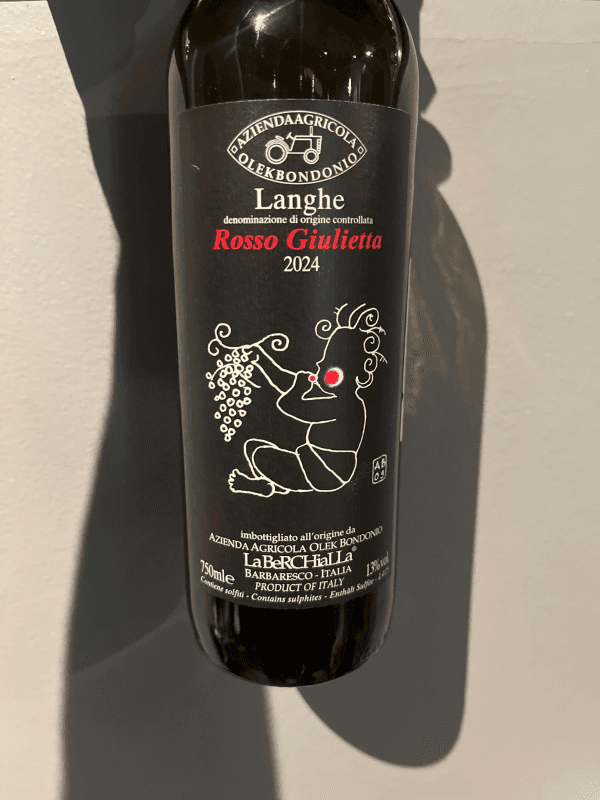
Olek Bondonio works out of La Berchialla, a 200-year-old farmhouse above Roncagliette in Barbaresco where his great-great-great grandfather helped found the Produttori del Barbaresco cooperative in 1894. A former competitive snowboarder, Olek returned to wine in the early 2000s and now farms across Barbaresco, Neive, and the broader Langhe. Rosso Giulietta is the curveball of the range - 100% Pelaverga Piccolo from a few rows inside Roncagliette planted by Olek's grandfather, reportedly the only meaningful Pelaverga plot outside the variety's home commune of Verduno, and named for Olek's daughter. A couple of weeks on skins, short ageing in neutral barrels, no new oak. 2024 was warm and wet in the Langhe, with September rains and a tight early-October harvest.
The full note is for members.
Join to read it and the restBel Colle Monvigliero 2016
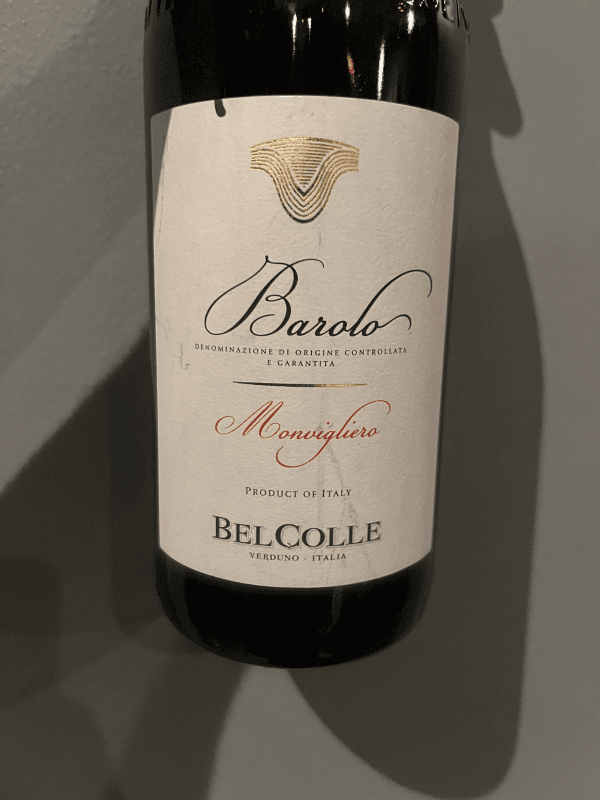
Bel Colle was founded in 1978 in Verduno by Giuseppe Priola and the Pontiglione brothers, and passed to the Bosio family of Santo Stefano Belbo in 2015. The estate farms 28.5 hectares across the Langhe and Astigiano on limestone marl and clay, with the historic Verduno crus of Monvigliero, Borgo Castagni, and Garavoglie anchoring the Barolo range. Monvigliero itself is widely regarded as the grand cru of Verduno - a south-facing natural amphitheatre on Sant'Agata Fossili marls, a pale clay-limestone with a sandy component that tends to give wines of unusual perfume rather than brute power. Bel Colle's bottling comes from vines averaging around 25 years old, with 22 to 25 days on the skins, then long ageing in large oak. 2016 is now broadly considered a modern Piedmont benchmark - structured and balanced, comparable to 2010.
The full note is for members.
Join to read it and the restNervi Gattinara 2015
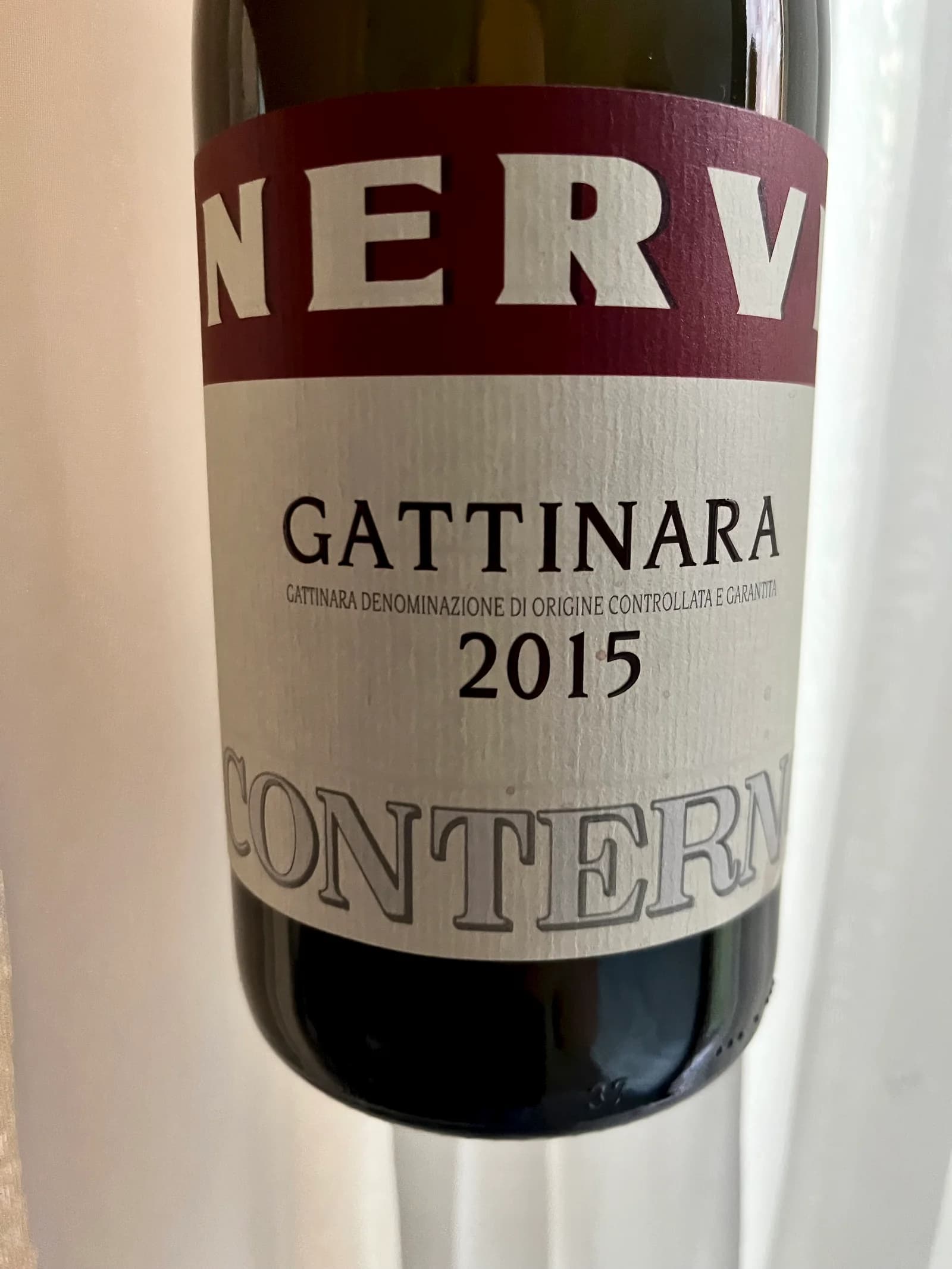
Nervi was founded in 1906 by Italo Nervi and is the oldest cantina in Gattinara. The 28.5-hectare estate passed from the founding family to steel magnate Germano Bocciolone in 1991, then to a Norwegian group led by Erling Astrup in 2011, and finally to Barolo's Roberto Conterno in 2018; the 2015 here is from the final Norwegian-era vintages, bottled before the cellar overhaul. The vineyards sit on red volcanic porphyry and gravelly granite, with the historic crus of Molsino, Valferana, and Garavoglie anchoring the estate. This is the estate Gattinara, a blend across the holdings, 100% Nebbiolo, aged around three years in a mix of Slavonian and French large casks. 2015 in Alto Piemonte was warm and dry, on the upper end of concentration for the region.
The full note is for members.
Join to read it and the restLa Palazzina Balmi Bioti Bramaterra 2015
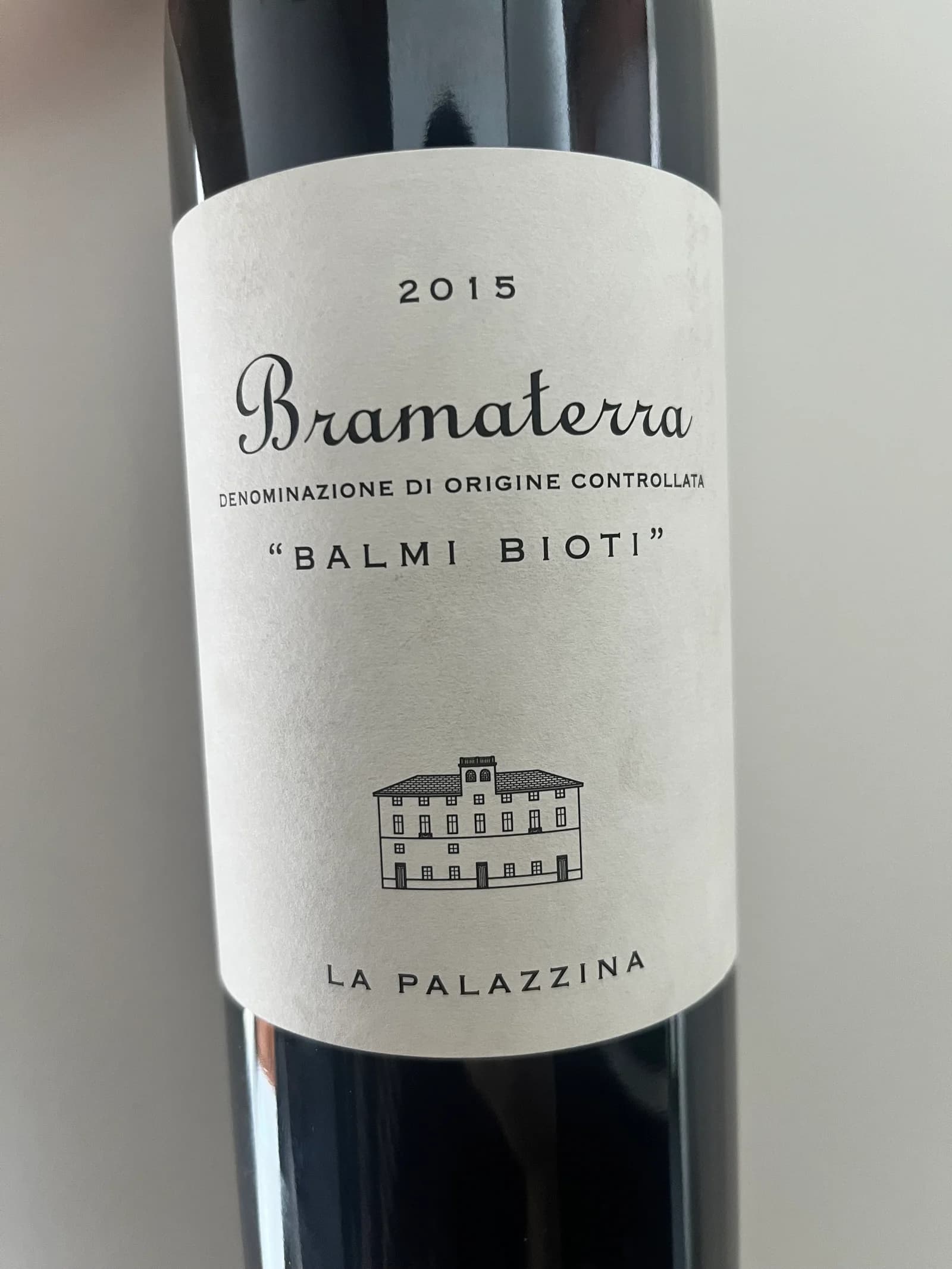
La Palazzina is a tiny Bramaterra estate in Roasio (Biellese hills of Alto Piemonte), founded in 1986 by Leonardo Montà and now run by his successor Paolo Montà - around four hectares on iron-rich red porphyritic volcanic soils, roughly 5,000 bottles a year, traditional and low-intervention in the cellar. Balmi Bioti is a single-vineyard Bramaterra from the Casa del Bosco hillside in Sostegno, where the soil is volcanic with veins of iron-rich red clay - distinctly more volcanic than the rest of La Palazzina's Roasio land. 2015 was the inaugural release of this cuvée. Lined concrete fermentation, around three weeks on skins, two years in large Slavonian botti, bottled without filtration and with minimal sulphites.
The full note is for members.
Join to read it and the restCa' del Baio Pora 2016
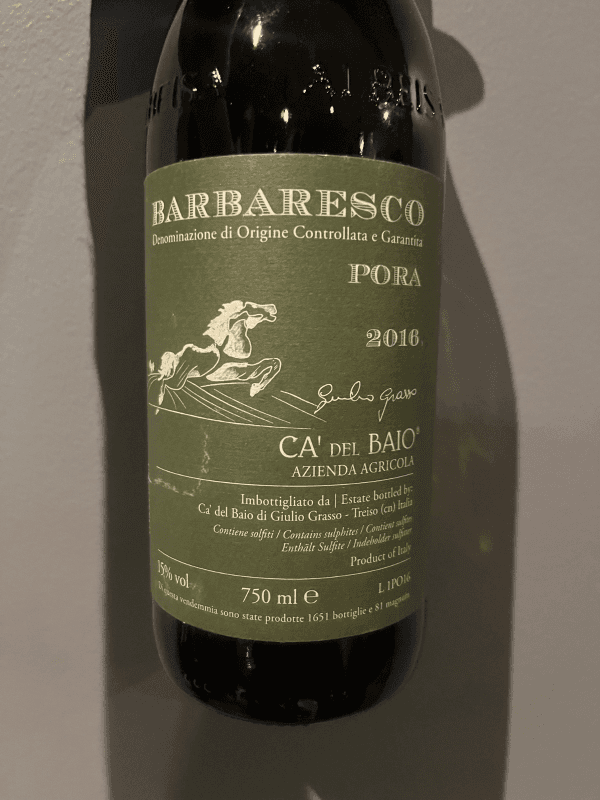
Ca' del Baio is a fourth-generation Grasso family estate in Treiso, currently led by Giulio Grasso with his daughters Paola, Valentina, and Federica - around 25 hectares across seven MGAs (Asili and Pora in Barbaresco, plus five Treiso crus) farmed under the regional Green Experience sustainability protocol. Pora is one of the historic Barbaresco crus, a south-west-facing hillside on bluish clay-limestone marl with sandy veins that drops steeply toward the Tanaro river. Ca' del Baio's parcel was planted in 1948, making the vines among the oldest in their lineup; vinification runs 7 to 15 days on skins, then 24 months in third-fill barriques followed by around 10 months in bottle. 2016 in Barbaresco delivered the same near-ideal balance of structure and freshness celebrated across Piedmont that year.
The full note is for members.
Join to read it and the restArpepe Sassella Stella Retica 2015
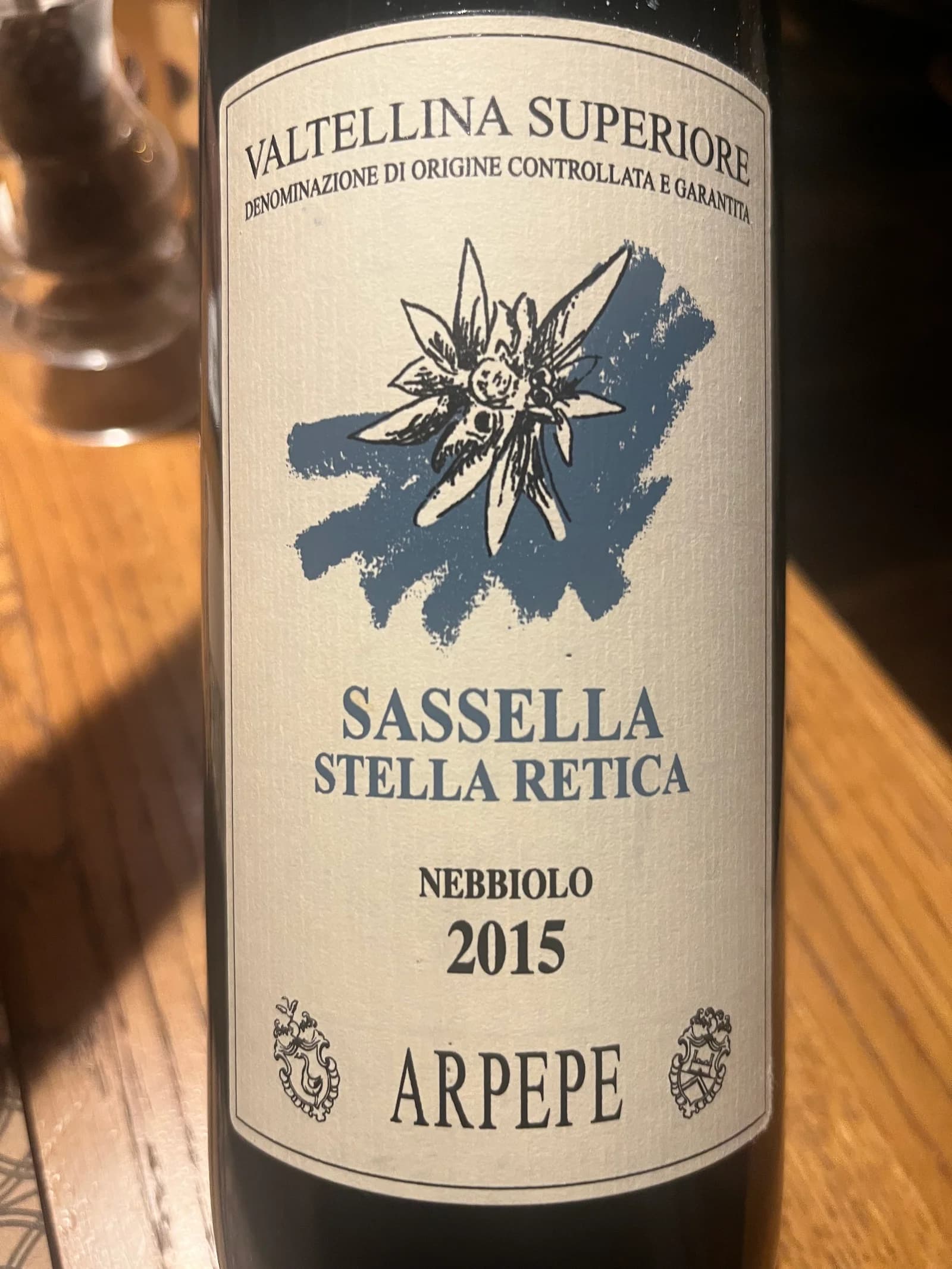
Arpepe is the reference for traditional Valtellina Nebbiolo - the Pelizzatti family back in the cellar after Arturo Pelizzatti Perego rebuilt the estate under his initials in 1984, now run by his three children. Fifteen hectares of terraced south-facing slopes on the north flank of the Adda valley, worked entirely by hand. Stella Retica is the house's 'normale' Sassella, blended across three family parcels - Rocce Rosse, Nuova Regina, Ultimi Raggi - with around four months (roughly 120 days) on the skins in open tini, then 18 months in large untoasted 50-hectolitre botti, then around two years of bottle age before release. 2015 in Valtellina was a warm vintage on the riper end of the Chiavennasca spectrum, tempered by Sassella's steep, well-aired terraces.
The full note is for members.
Join to read it and the restCantina Produttori Nebbiolo di Carema Carema Selezione 2015
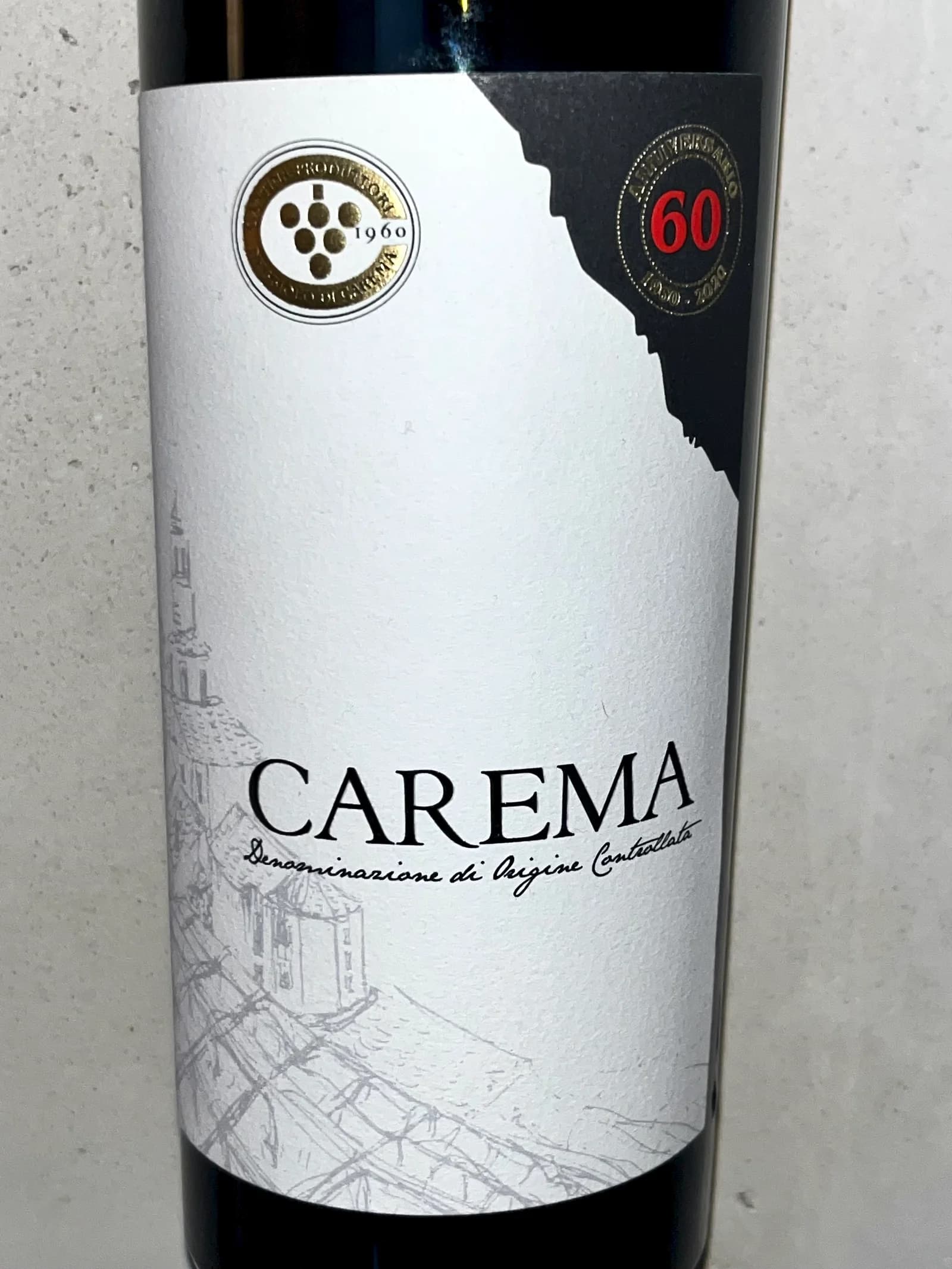
The Carema cooperative was founded in 1960 by ten growers and now has roughly one hundred members, all farming within the single commune of Carema at the foot of the Aosta valley. The total vineyard surface is small - around 13 hectares of registered DOC land since 1967 - clinging to steep south-facing terraces up to 600 metres on glacial soils, with Nebbiolo (locally Picotendro) trained on traditional pergolas supported by stone-and-mortar 'pilun' pillars that absorb daytime heat and release it at night. The Selezione is the cooperative's small-production anniversary cuvée, sitting alongside the Etichetta Nera Classico and Etichetta Bianca Riserva - grapes from the members' parcels considered to give the most intense wines, aged two years in large oak botti followed by about a year in neutral French oak barriques. 2015 was warm enough to bring full ripeness without losing the appellation's altitude-driven nerve.
The full note is for members.
Join to read it and the rest