All producers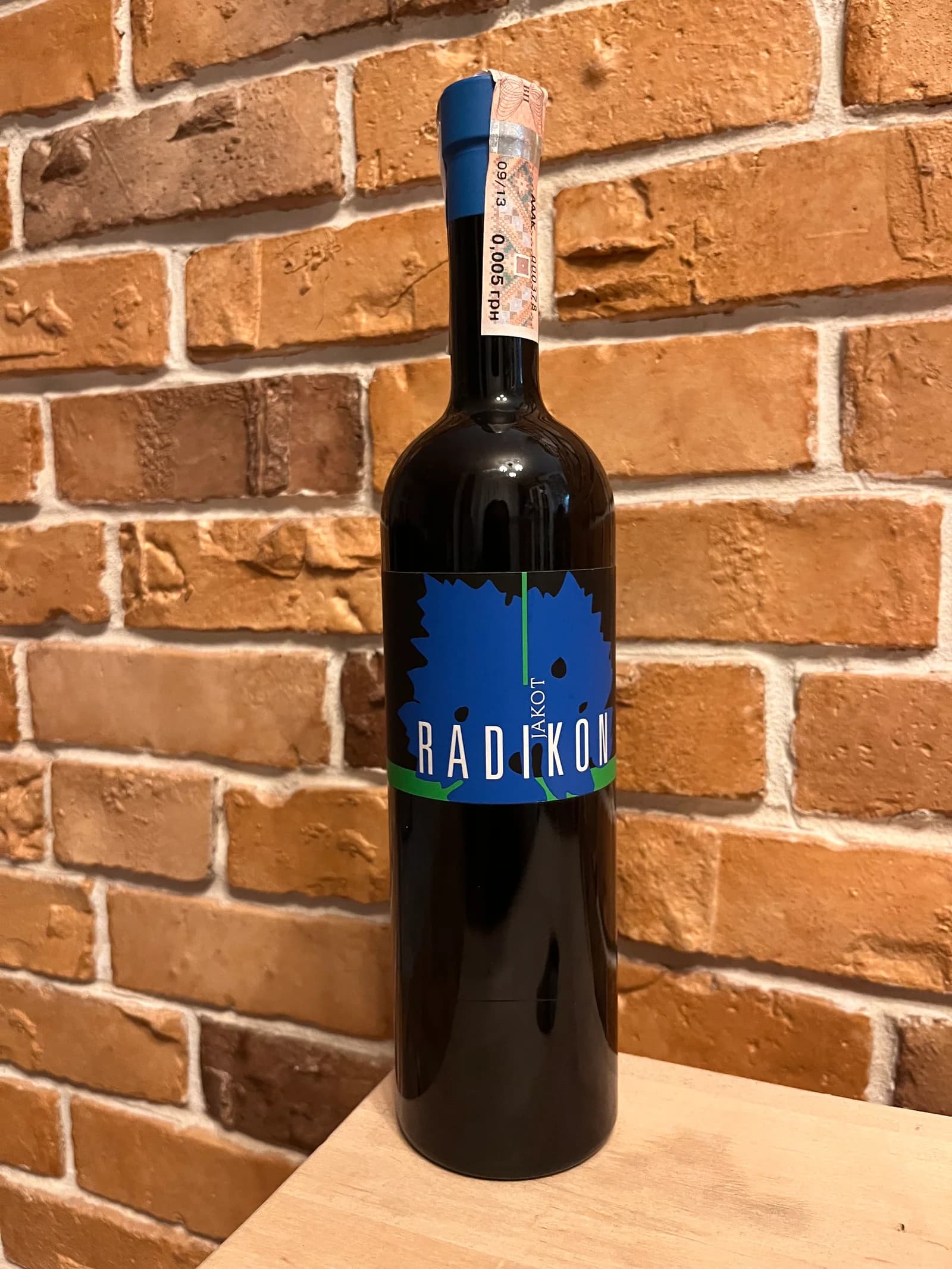
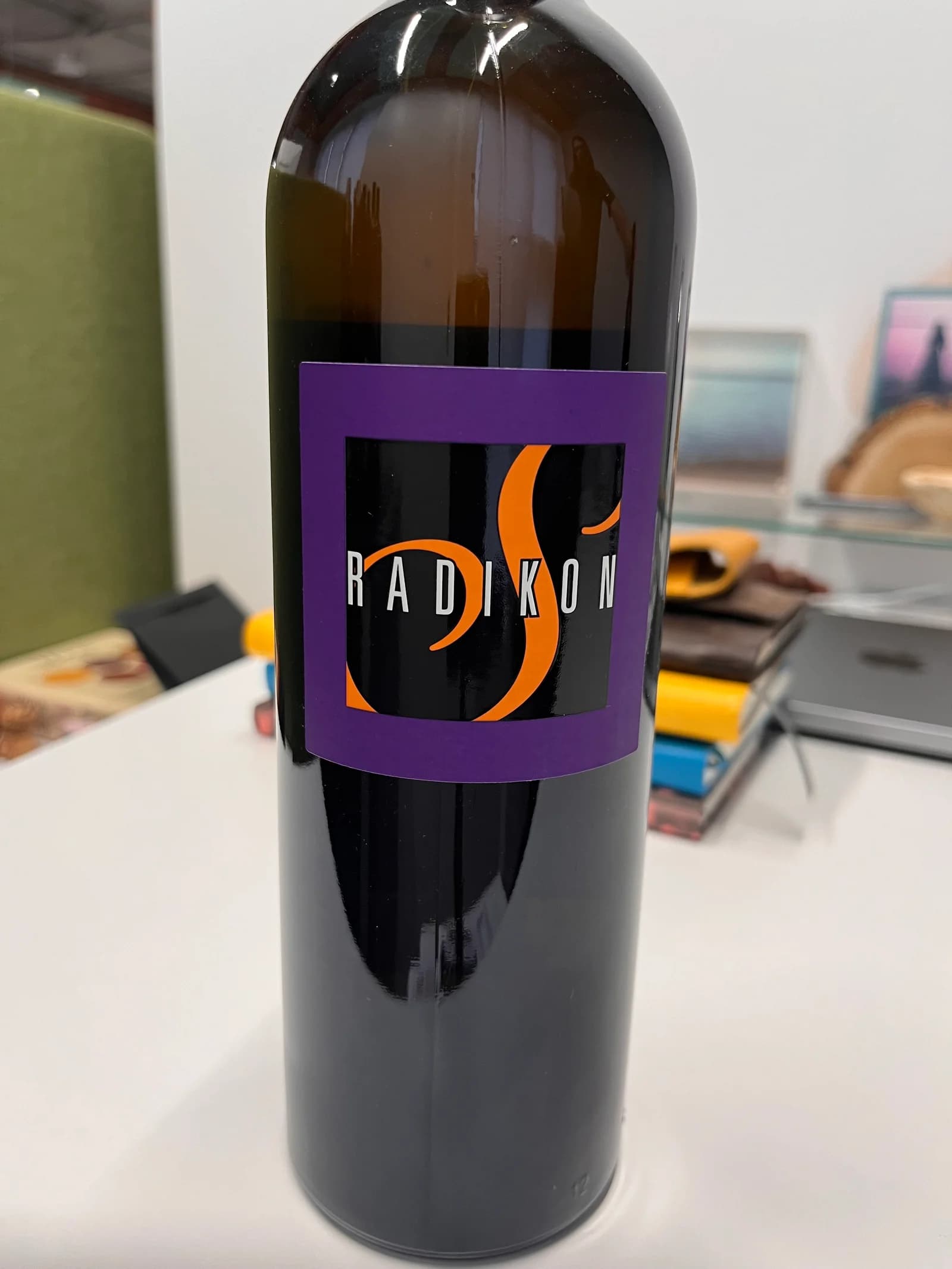
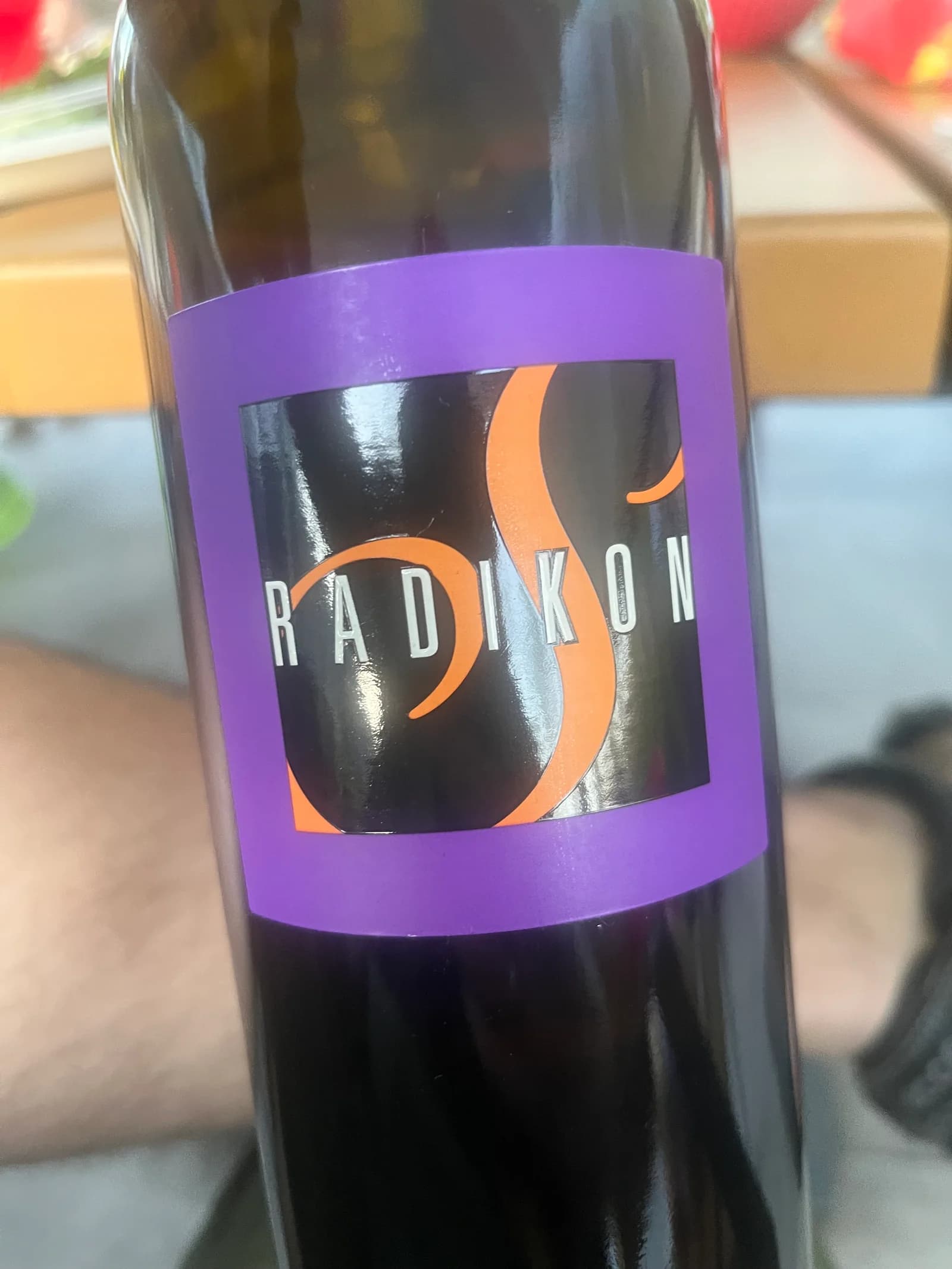
Radikon
Friuli-Venezia Giulia, Italy14 wines4.1 avg
131
Oslavia, Collio - the family that returned to grandfather's skin-maceration method in 1995 and accidentally started the modern orange-wine movement.
The Radikons are ethnic Slovenes who have been farming Oslavia, on the Italian side of the border with Slovenia, since the 1860s - more than a century and a half. Stanko's grandfather Franz Mikulus planted Ribolla Gialla here in the early twentieth century, and the extended skin-contact whites that are now Oslavia's signature are more-or-less what Franz was making in the 1930s. The industrial twentieth century taught his descendants to destem, temperature-control, and filter. Then, in 1995, Stanko Radikon decided to go back.
Stanko had bottled his first vintage in 1979, and for fifteen years he made whites the way everyone else in Collio was making them. In 1995 he reached back to his grandfather's method - whole-cluster, open-top fermenters, months of skin contact, no temperature control, no added yeasts, no additions. Alongside his friend Gravner down the road, he effectively founded what the rest of the world now calls orange wine. The word "Radikon" is, in some circles, now a reference rather than a surname.
Stanko died on 11 September 2016, after a long battle with cancer. The estate is run by his wife Suzana, son Saša (a partner since 2006, now winemaker), and daughter Ivana. The philosophy has continued intact, with one evolution: the S Line, which Saša launched with the 2009 vintage as a shorter-maceration, smaller-vessel, standard-750ml entry tier. The traditional line - longer maceration, larger botti, no added sulphur, Stanko's bottle sizes - is untouched.
Vineyards
The family works around seventeen hectares on the Italian side of the border, plus additional plantings in Slovenia - steep slopes of ponca (the local Collio marl and sandstone), planted tight (6,500-10,000 vines per hectare), farmed without chemicals and now certified organic (though the farming had met that standard long before the paperwork), yields kept below 2.25 tons per acre.
The planting breakdown, for the traditional (Blue label) line:
- Ribolla Gialla: 2 hectares
- Tocai Friulano: 1.5 hectares
- Chardonnay: 2.5 hectares
- Sauvignon Blanc: 2 hectares
- Pinot Grigio: 3 hectares
- Merlot: 1.5 hectares
- Pignolo: 0.5 hectares
Many individual vines are considerably older than the averages suggest.
Winemaking
The following is based on the process described in Simon Woolf's Amber Revolution, which remains the best English-language account of how Radikon wines are made.
Saša destemms the grapes and places them into large, open-top, conical fermenters made of Slavonian oak. Fermentation starts spontaneously with native yeasts. The cap - the solid mass of skins that rises to the surface - is punched down roughly four times a day. During this phase the fermenter stays open; the CO2 produced by fermentation forms a protective blanket that prevents oxidation.
Once fermentation finishes, the fermenter is sealed and filled to the brim so no oxygen remains inside. The wine stays on its skins for another three months before being pressed off (gently, using a pneumatic press) and transferred to large Slavonian oak botti. It ages there for approximately four years before bottling. No sulphur is added at any stage - not during fermentation, not during aging, not at bottling. No fining, no filtration.
The wine then rests in bottle for at least two more years before release. From harvest to market, a traditional-line Radikon takes roughly six to seven years.
The bottles
In 2002 Stanko and his friend Edi Kante designed new bottle sizes. They felt the standard 750ml was too much for one person and not enough for two, so they had 500ml and 1000ml bottles made - with custom cork sizes that preserve the same glass-to-cork-to-oxygen ratio as a magnum. The traditional-line cuvées are still bottled this way (Kante eventually abandoned the unorthodox sizes; Radikon kept them). Edi Kante likes to joke that the litre bottle is perfect for two people, as long as only one of them is drinking.
The ranges
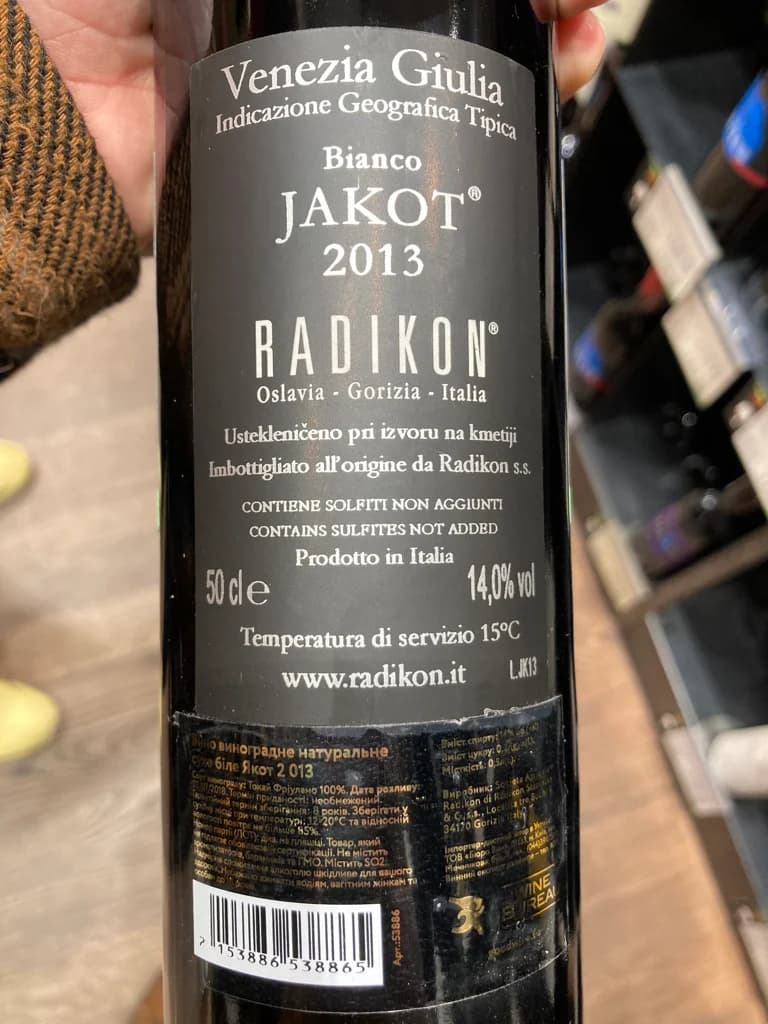
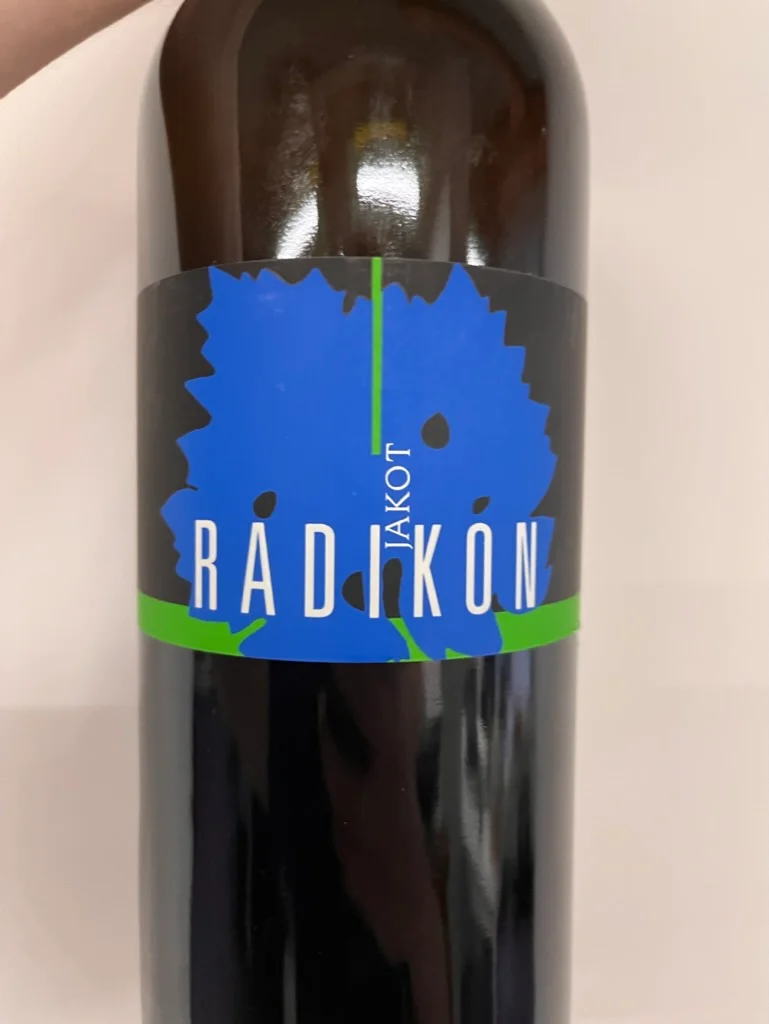
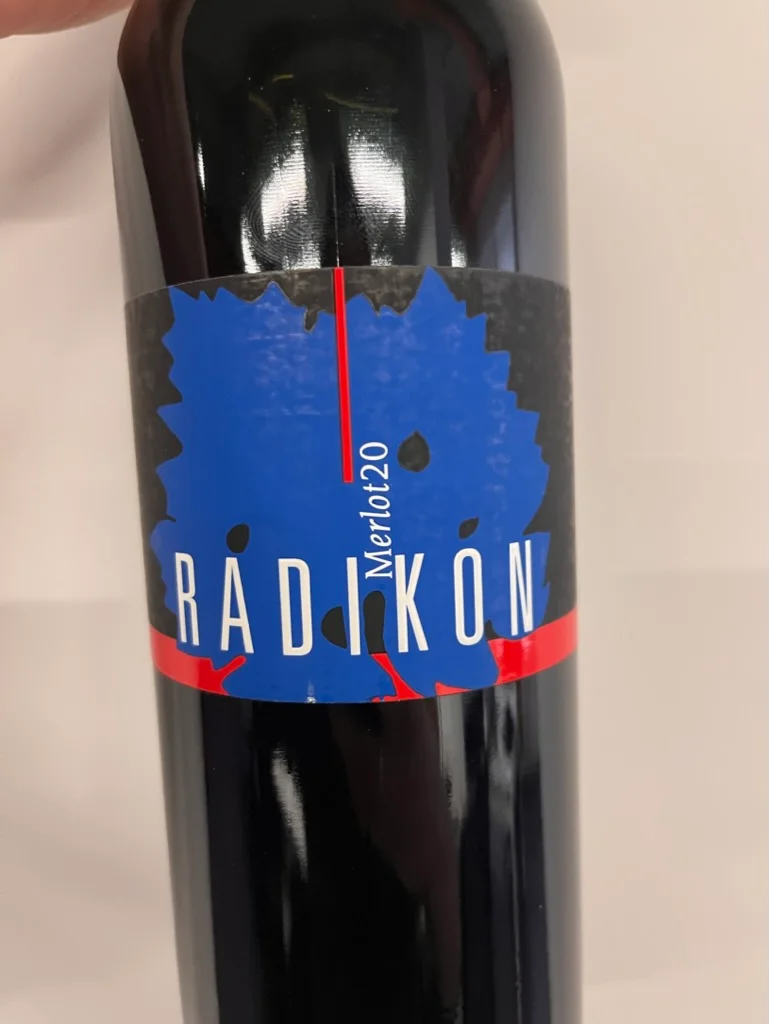
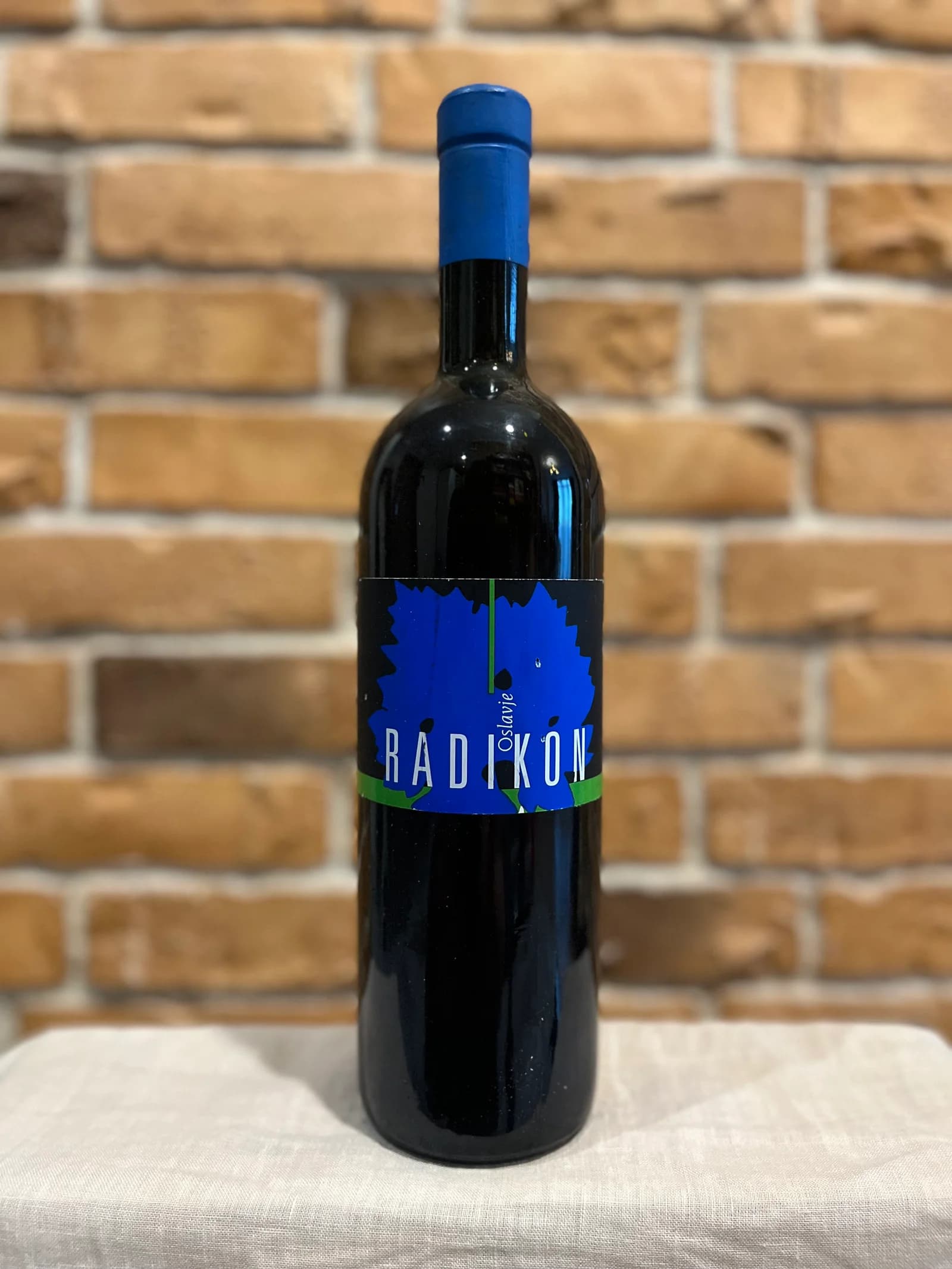
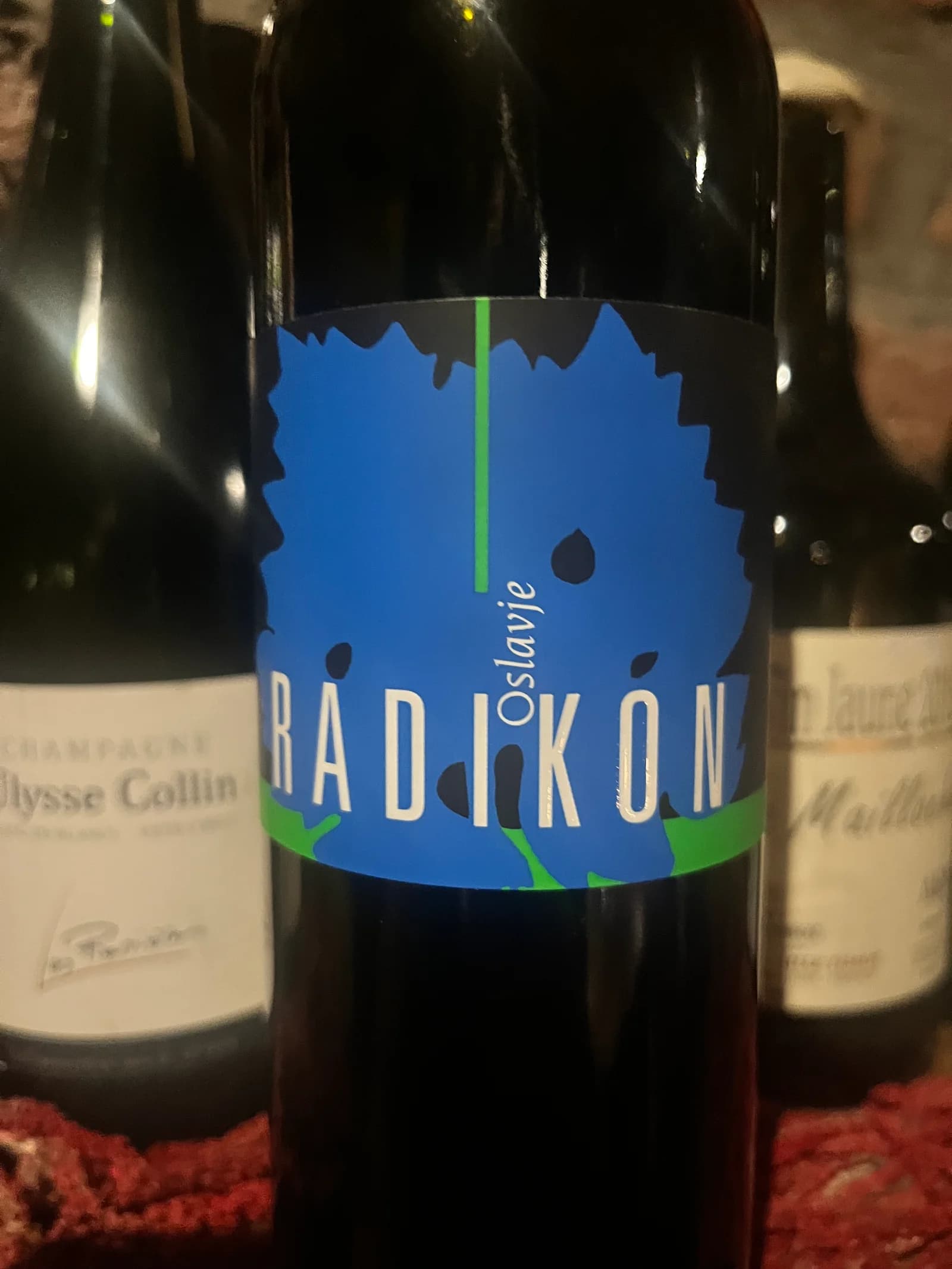
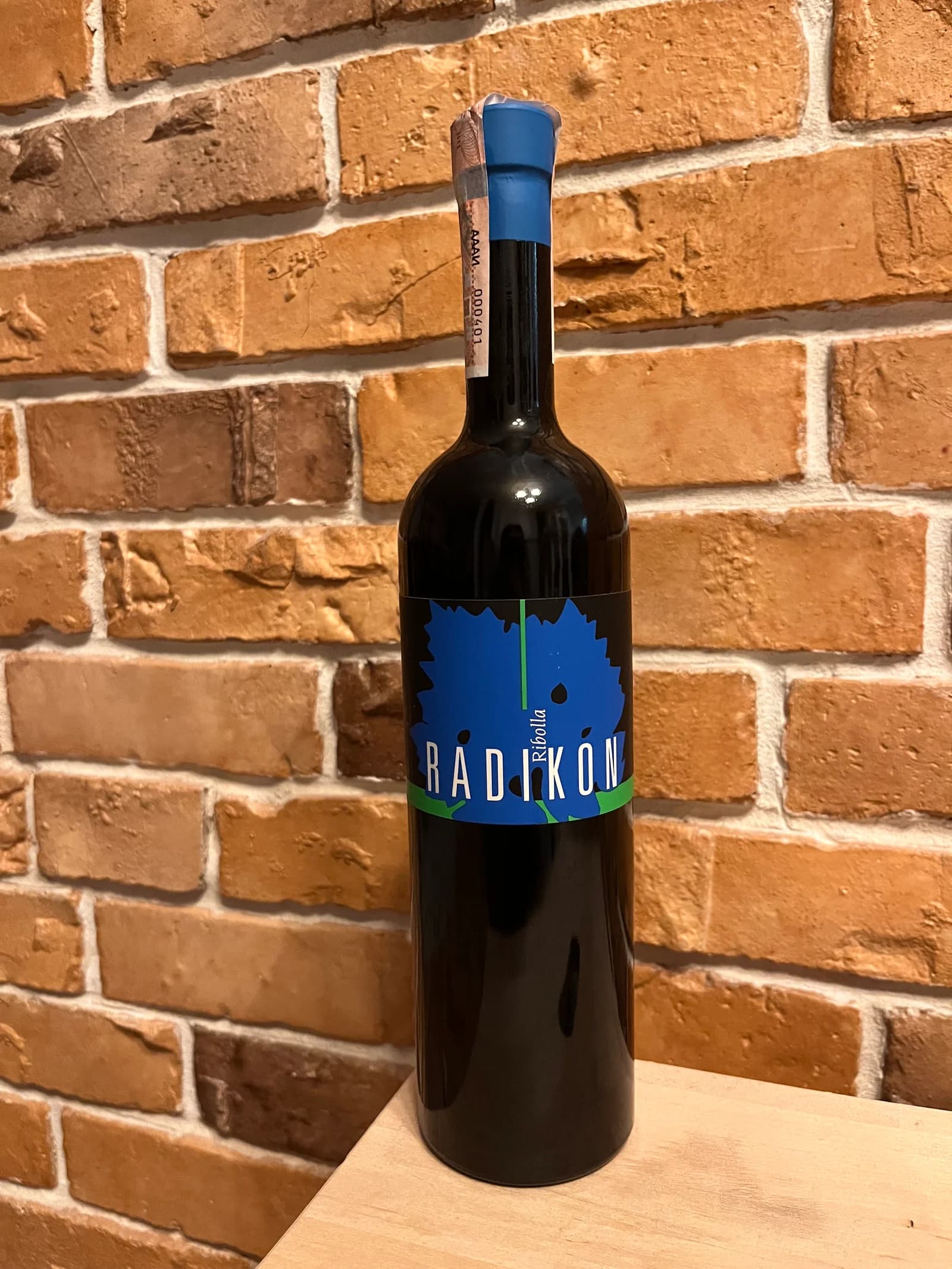
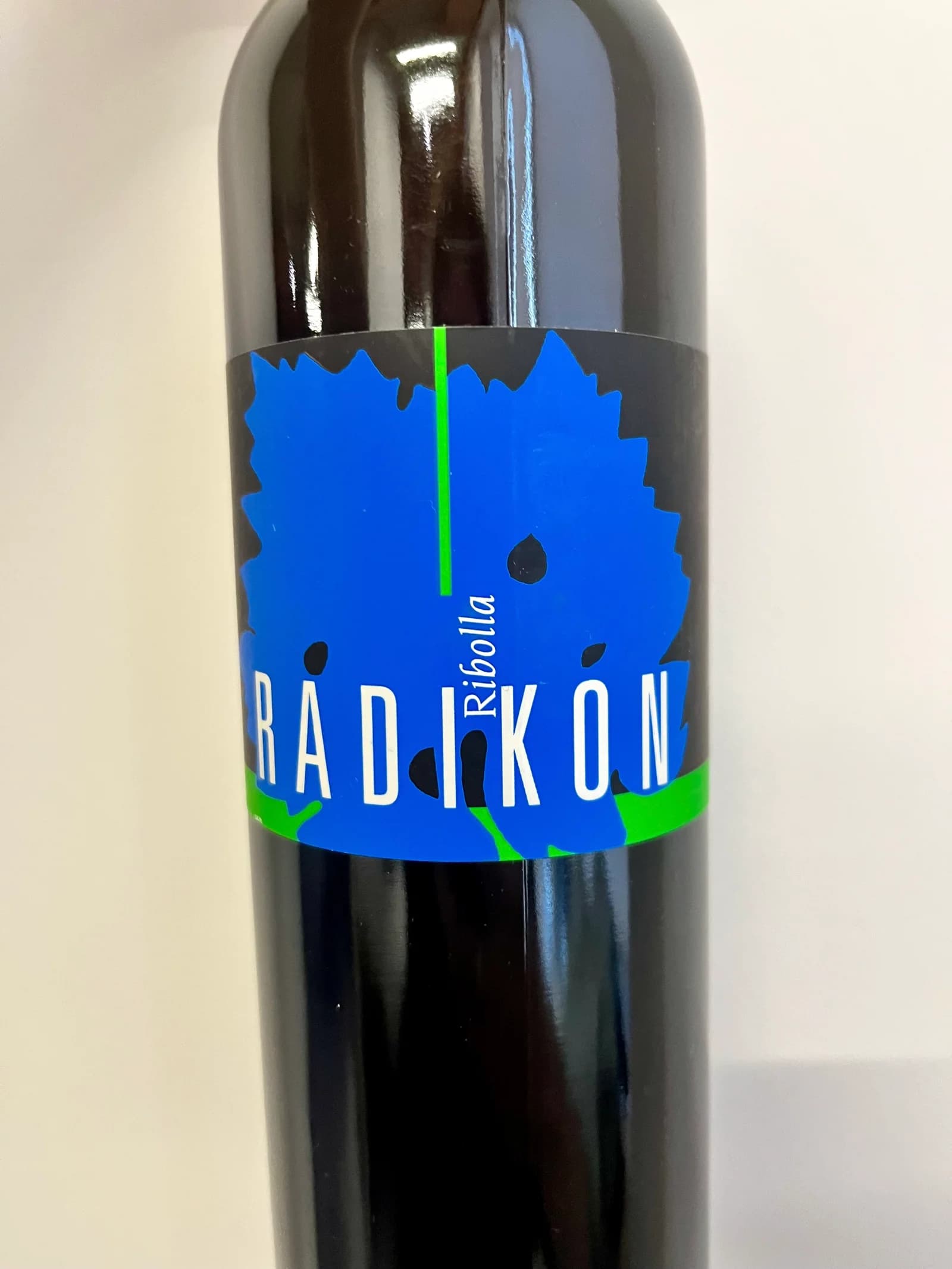
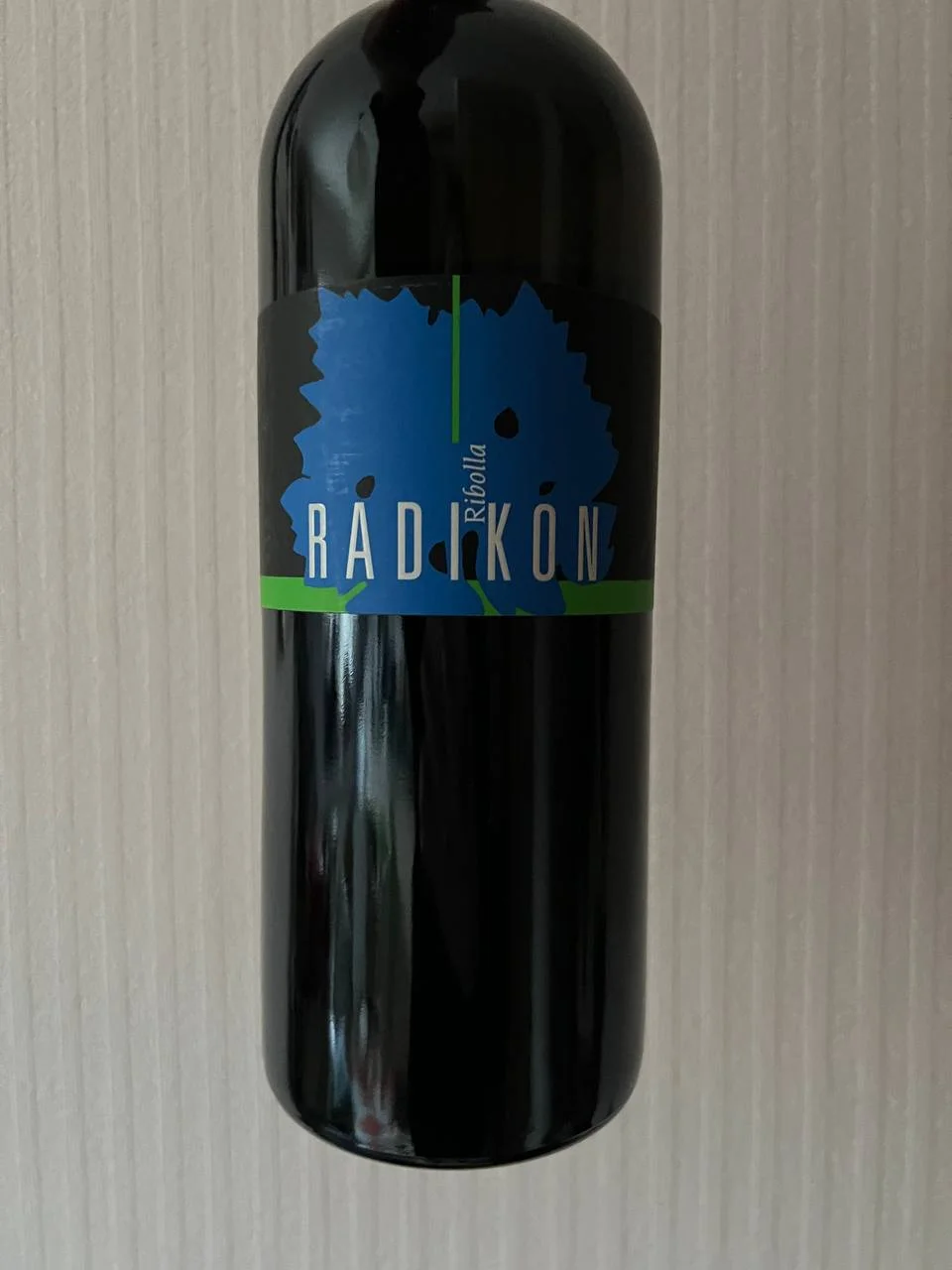
- Blue label (traditional). Stanko's original cuvées - Ribolla Gialla, Jakot (Tocai spelled backwards, the defiant response to the 2008 EU ban on the name "Tocai"), Oslavje (Sauvignon + Chardonnay blend, composition has shifted over the years), Sivi (Pinot Grigio, "sivi" is Slovenian for grey). Plus Merlot, Pignolo, RS (a Merlot-Pignolo blend). Bottled in 500ml and 1000ml only. No added sulphur.
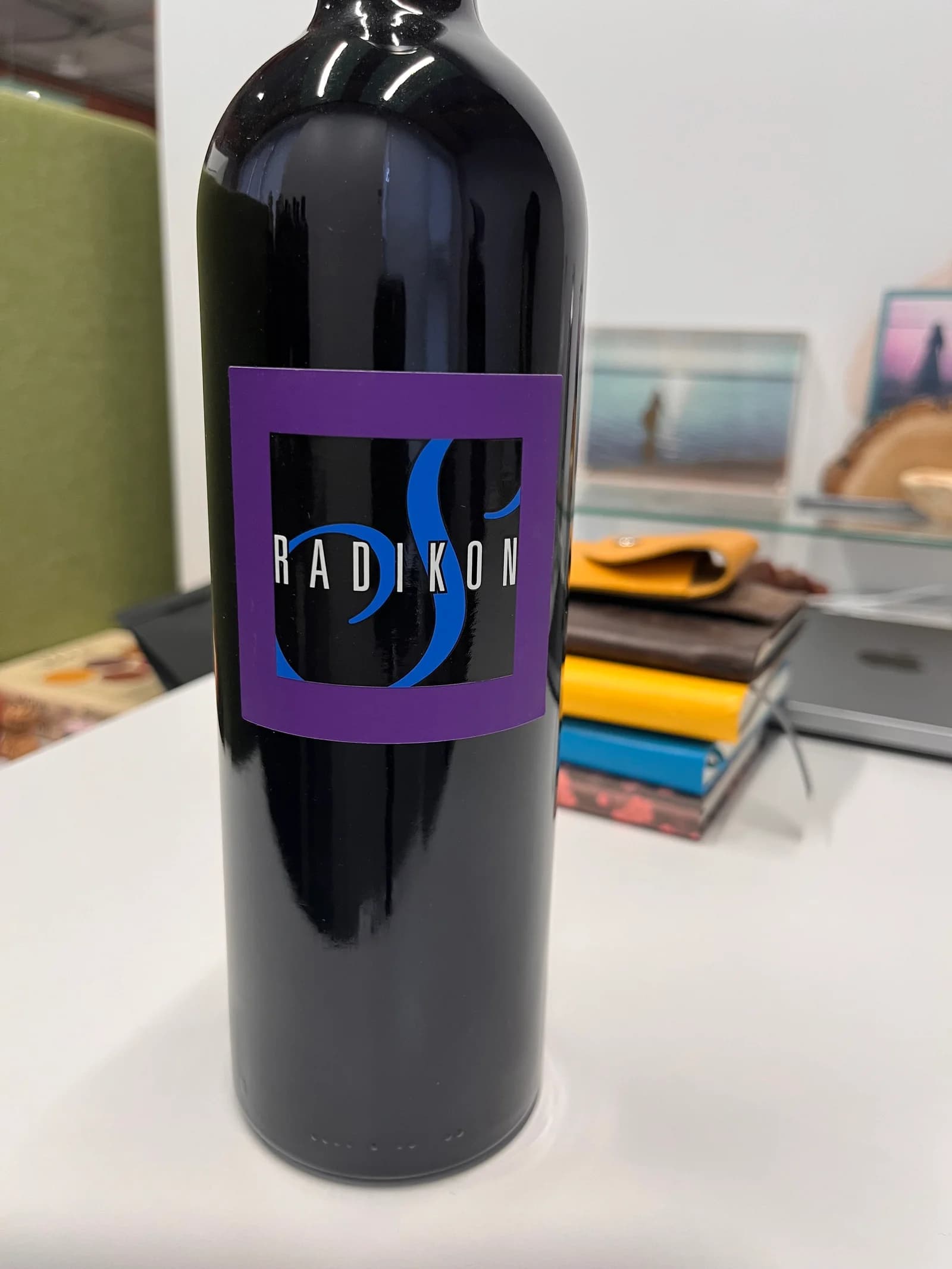
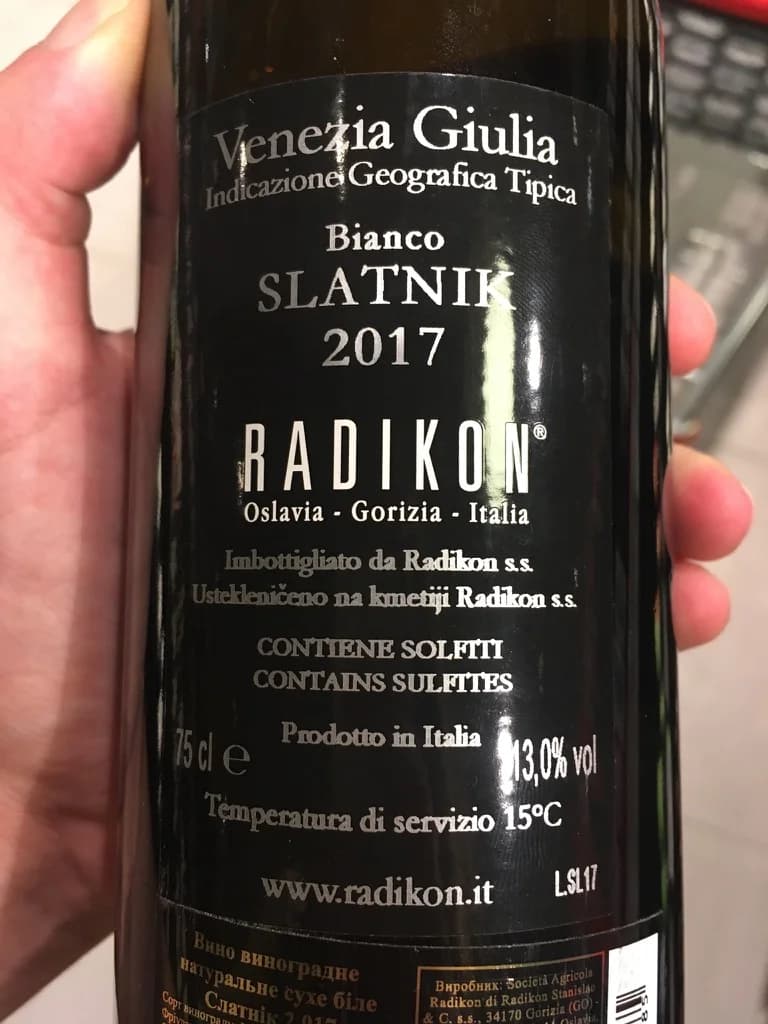
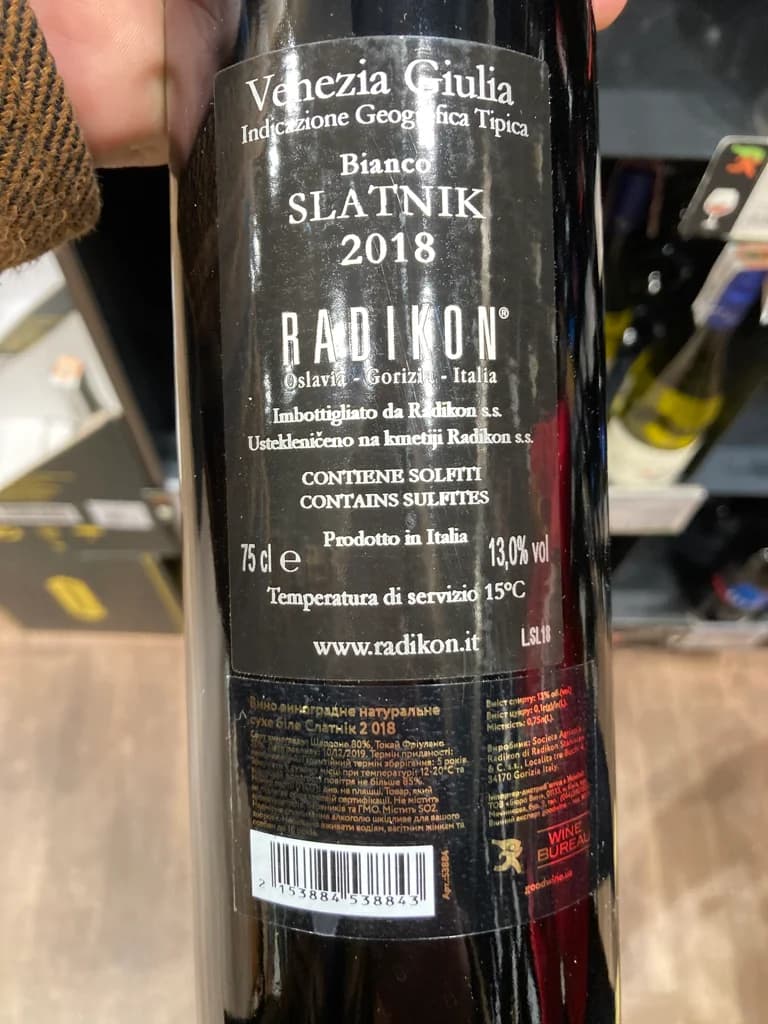
- S Line. Saša's shorter-maceration tier, launched with the 2009 vintage - 8 to 14 days of skin contact, smaller vessels, 18 months of aging, standard 750ml bottles. Minimal sulphur rather than zero. Now roughly 55% of production, and includes Slatnik (Chardonnay-Friulano blend) alongside Sivi and others. A gentler on-ramp to what Radikon does, without abandoning the principle.
- Selections. A handful of special bottlings, reds and the occasional white, outside the core lineup.
Wines
4.2
Jakot
2007· Italy
4.2
Jakot
2013· Italy
4.0
Jakot Magnum
2018· Italy
4.3
Merlot20
1997· Italy
4.0
Oslavje
1997· Italy
4.2
Oslavje
2019· Italy
4.5
Ribolla
2007· Italy
4.0
Ribolla
2019· Italy
4.2
Ribolla Magnum
2013· Italy
4.0
Sivi
2021· Italy
4.1
Slatnik
2017· Italy
4.0
Slatnik
2018· Italy
4.1
Slatnik
2021· Italy
4.0
Slatnik
2022· Italy