All producers
Georges Remy
Montagne de Reims, France2 wines4.2 avg
11
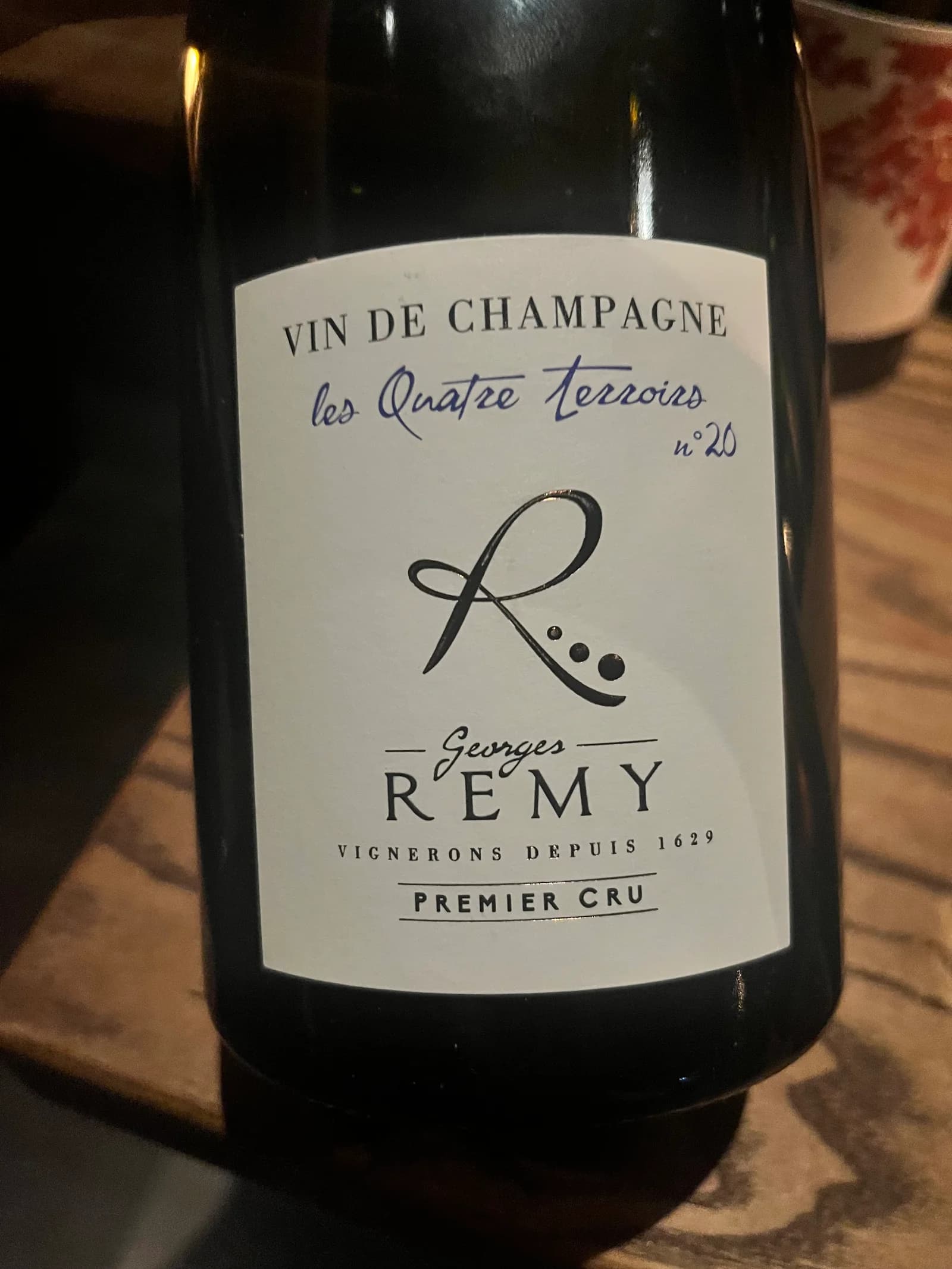
Georges Remy is not a historic label revived by a descendant - Georges himself is the founder, even if the family has farmed vines around Bouzy for centuries (the estate claims vigneron lineage from father to son since 1629, with its own Bouzy vines from the early 1800s). His grandfather bottled estate champagne from 1950, but in 1989 his father gave up production entirely and went back to selling grapes. Georges took the long way home: viticulture and oenology studies at Avize, then red-winemaking stints in Bordeaux, then years running a vineyard-services business in the Montagne de Reims, reinvesting the profits into a press and barrels. His first wine, in 2011, was not champagne at all but a micro-lot of still Bouzy Rouge; the first sparkling harvest followed in 2014.
The estate is small even by grower standards - about 4.7 hectares in 17 parcels across Bouzy, Ambonnay, Louvois and Tauxieres, heavily Pinot Noir, with vines mostly 40-plus years old (the oldest plot dates to 1953). Conversion to organics began around 2015 (certified from the 2018 harvest), with biodynamic practices layered on top but no biodynamic certification. In the cellar it is spontaneous fermentation in 228-litre Burgundy pieces - he buys only two or three new ones a year - no chaptalization, no fining, no filtration, long aging on cork rather than crown cap for the top cuvees, and dosage that rarely rises above a few grams; most of the range is brut nature.
Above the Les Quatre Terroirs blend sits a set of single-lieu-dit, single-vintage wines: Les Muits (blanc de blancs from Tauxieres), Le Mont de Tauxieres, Les Hauts Clos, a Bouzy blanc de noirs, and the Les Vaudayants rose - plus still Coteaux Champenois in both colours, a nod to Bouzy's red-wine tradition. Back labels state tirage date, disgorgement date and exact bottle counts, and those counts explain the scarcity: single-cuvee lots often run one to two thousand bottles, with total production in the high four to low five figures. This is Bouzy Pinot Noir - the village of Paul Bara, Benoit Lahaye and Pierre Paillard - in a riper, bolder register than most, from a producer who openly harvests later than his neighbours.