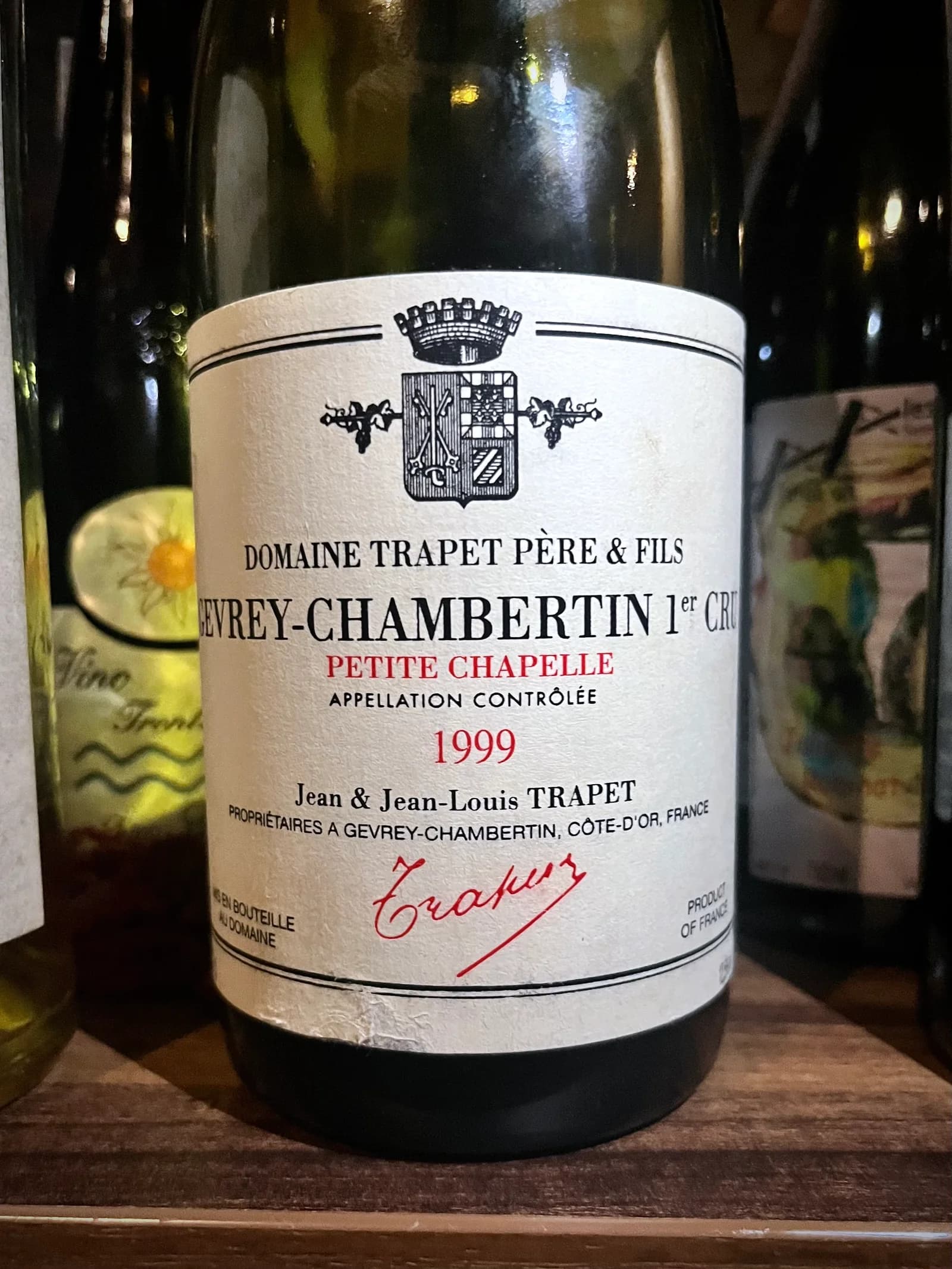
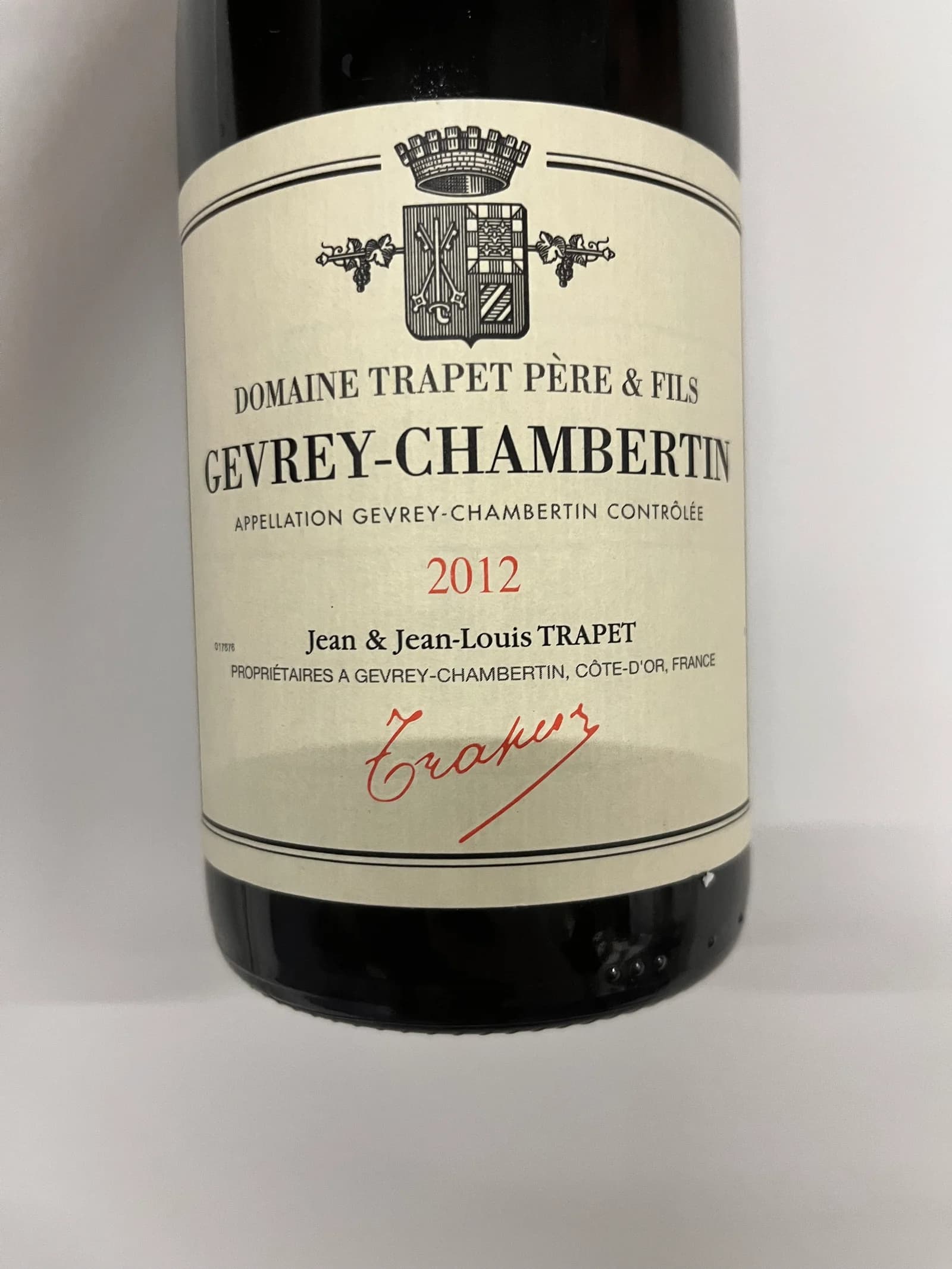
Region
France › Burgundy › Côte d'Or › Côte de Nuits › Gevrey-Chambertin › Chambertin AOC
Type
red · still
Grapes
Pinot Noir
Volume
750 mL
Tasting Notes
No tasting notes yet.
About
In May 1919 Arthur Trapet bought his first parcel of Chambertin, and the family has worked the grand cru ever since. Today the domaine holds 1.9 hectares of it in three parcels, the oldest still planted in that same year. When the Trapet vines were divided in 1990, one side went to Jean Trapet and the other to the cousins at Domaine Rossignol-Trapet, as La Revue du Vin de France, quoted by iDealwine, tells it.
The family likes to recall how long the place has been prized. By their account the story begins in 630, when Duke Amalgaire gave the monks of the abbey of Bèze his best vineyard. Later records name a "campo Bertuyn", a field owned by a certain Bertin next to the Clos de Bèze, and the name stuck.
The three parcels sit on three different soils. Tasting with Jean-Louis Trapet, the Burgundy Report noted deep clay at the bottom, some gravel in the middle and white marl at the top. The domaine's own page describes the lower slope as marl and limestone with rich clays, and the upper part as whiter and marlier, which slows the vine's cycle.
The vines have been farmed biodynamically since 1997, when the whole domaine converted and began its Biodyvin and Demeter certification. Herbicides had already gone in 1992.
In 2019 the flowering dragged on, Jean-Louis said, so ripeness varied from place to place by harvest time. The crop came in a little smaller than 2018, though not at a level that worried him. The domaine started bottling its 2019s on 5 April 2021 and took a month to finish, and every cork now carries its own reference number. Even a grand cru gets a paper trail.