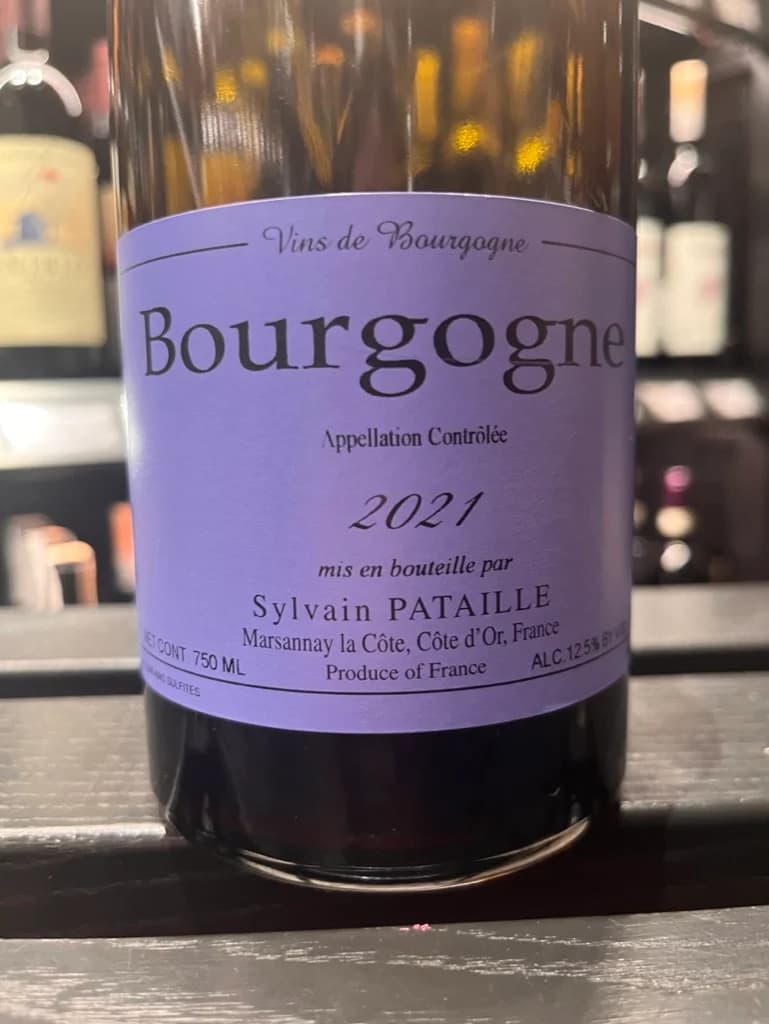
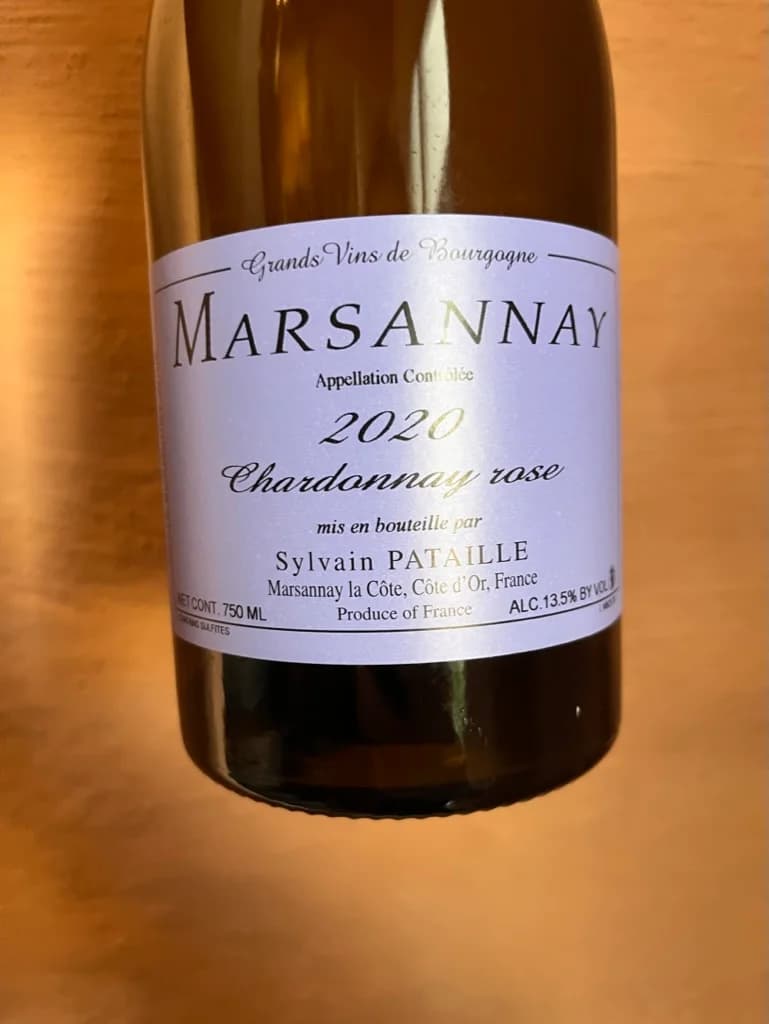
Region
France › Burgundy › Côte d'Or › Côte de Nuits › Marsannay › Marsannay AOC
Type
red · still
Grapes
Pinot Noir
Alcohol
13%
Volume
750 mL
Tasting Notes
No tasting notes yet.
About
Sylvain Pataille grew up in a Marsannay wine family, studied in Bordeaux and spent years as a consulting oenologist while he built a domaine of his own. His first vintage was 2001, made from a single hectare, and by 2004 he farmed ten.
This is his village red, the wine that speaks for the commune as a whole rather than for one lieu-dit. His named sites, such as Clos du Roy and La Montagne, go into bottles of their own, and so do his oldest vines, blended as L'Ancestrale. The village cuvée draws on about 2.4 hectares spread over several parcels, the youngest vines from around 1980, by the Burgundy Report's account. His US importer Skurnik dates them between 1950 and 1980.
Skurnik's sheet for the 2023 vintage gives the cellar routine: about 30% whole bunches, native yeasts, twelve months in barrel with 15% new oak, and sulphur added only at bottling. Skurnik lists the vineyards as farmed biodynamically. The Burgundy Report's 2004 profile described his early cellar work as simple and natural: wild yeasts, no enzymes, and fermentations that peak at around 32 °C.
Marsannay itself is a late arrival. The village got its own appellation only in 1987, and before that its reds were sold as Bourgogne. The appellation also takes in vines in Chenôve and Couchey.
The 2021 season tested every grower in Burgundy. A warm end of March woke the vines early, and polar air brought heavy frost in the first days of April across the whole region. A wet July followed, so growers fought disease too. Picking for still wines started on 18 September, later than the three vintages before it, and the crop was small. Little wine, then, and a lot of work for every bottle.