All producers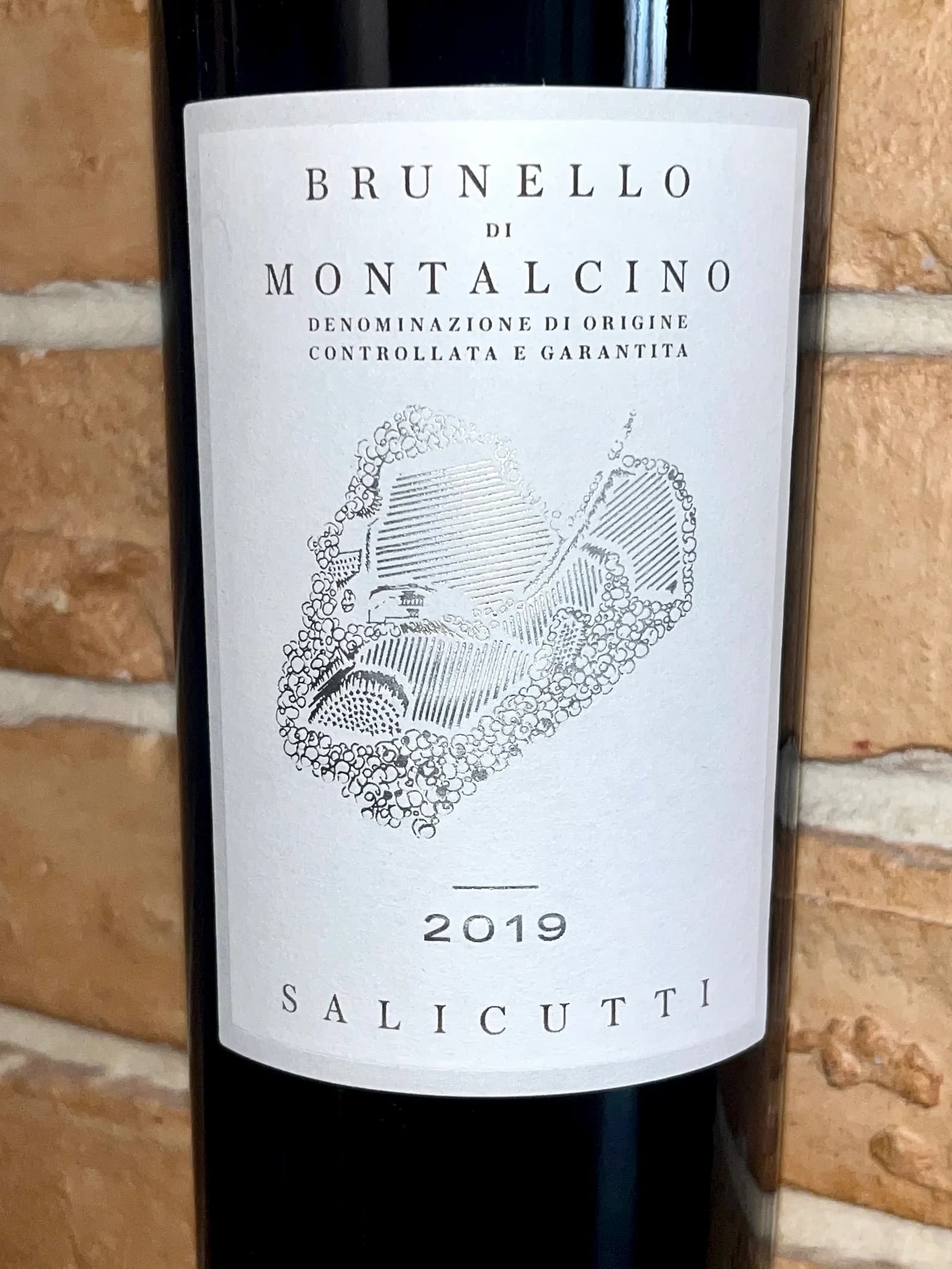
Podere Salicutti
Montalcino, Italy16 wines4.3 avg
Montalcino's first certified organic estate - a Sicilian chemical engineer who fell in love with a hillside, now biodynamic under Munich restaurateurs, and Brunello with an almost Burgundian touch.
Francesco Leanza was a Sicilian chemical engineer living in Rome who fell in love with Montalcino during a series of vacations and, around 1990, bought an eleven-hectare estate on the southeastern shoulder of the hill. He planted just four hectares of Sangiovese - quality over expansion, from the start - and farmed organically from day one, at a time when nobody else in Montalcino was doing so. In 1996 his Rosso di Montalcino became the first wine in the denomination to carry the words da Agricultura Biologica on the label. He was the organic pioneer of Montalcino before the idea had a constituency.
Leanza's wines had an unmistakable signature: elegant, with what critics have called an "almost Burgundian touch" - not made for technical perfection but for depth, honesty, and personality. Hand-harvest, sorting table, gentle pressing, spontaneous fermentation with indigenous yeasts, aging in French tonneaux and Slavonian oak. He collaborated closely with the new owners for three years before stepping back.
In 2015 the estate was purchased by Felix and Sabine Eichbauer, who own Tantris Maison Culinaire (a two-Michelin-starred restaurant in Munich) and had been longtime clients. They began biodynamic conversion in 2018 with consultant Adriano Zago and achieved Demeter certification in 2022.
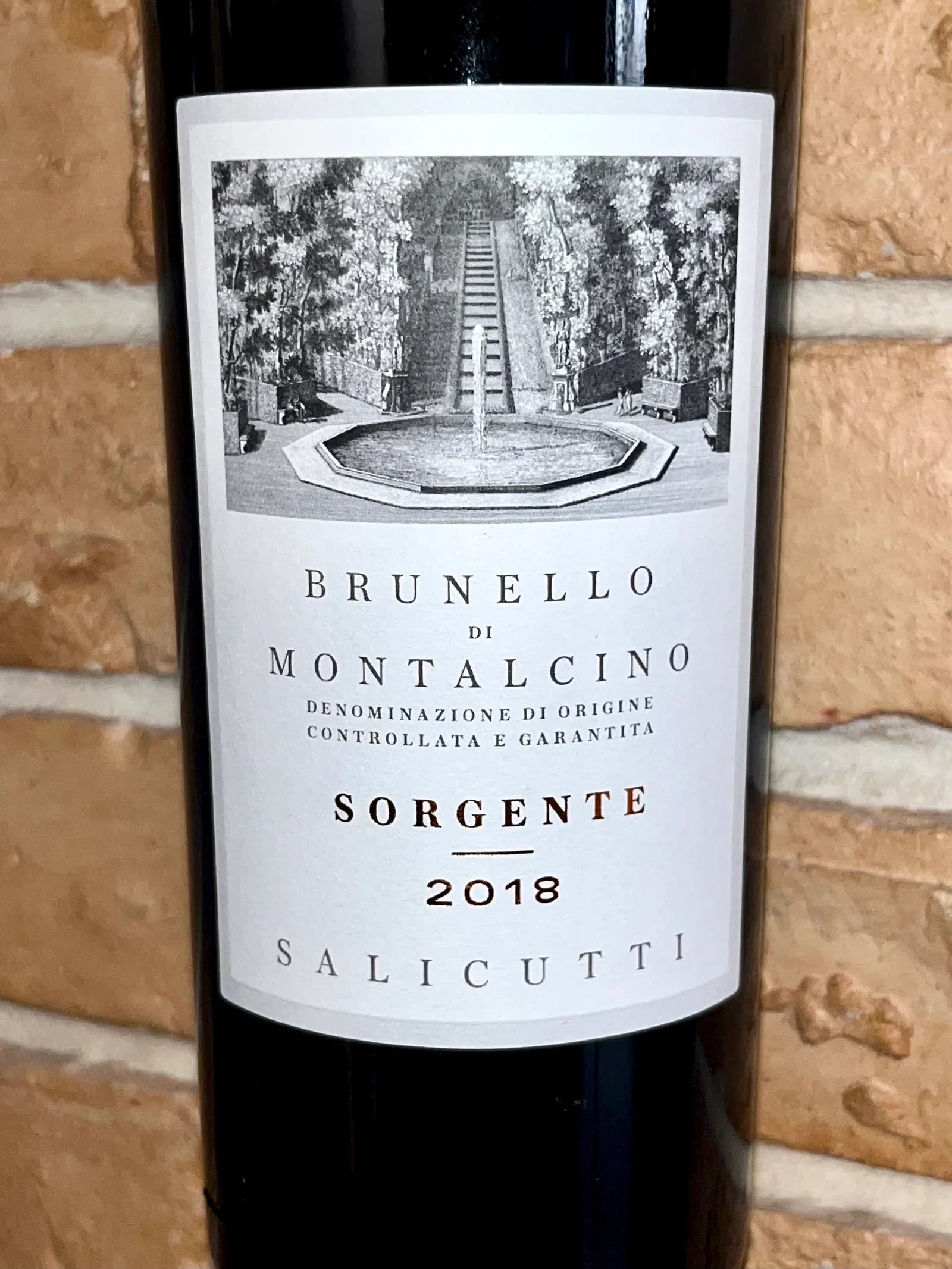
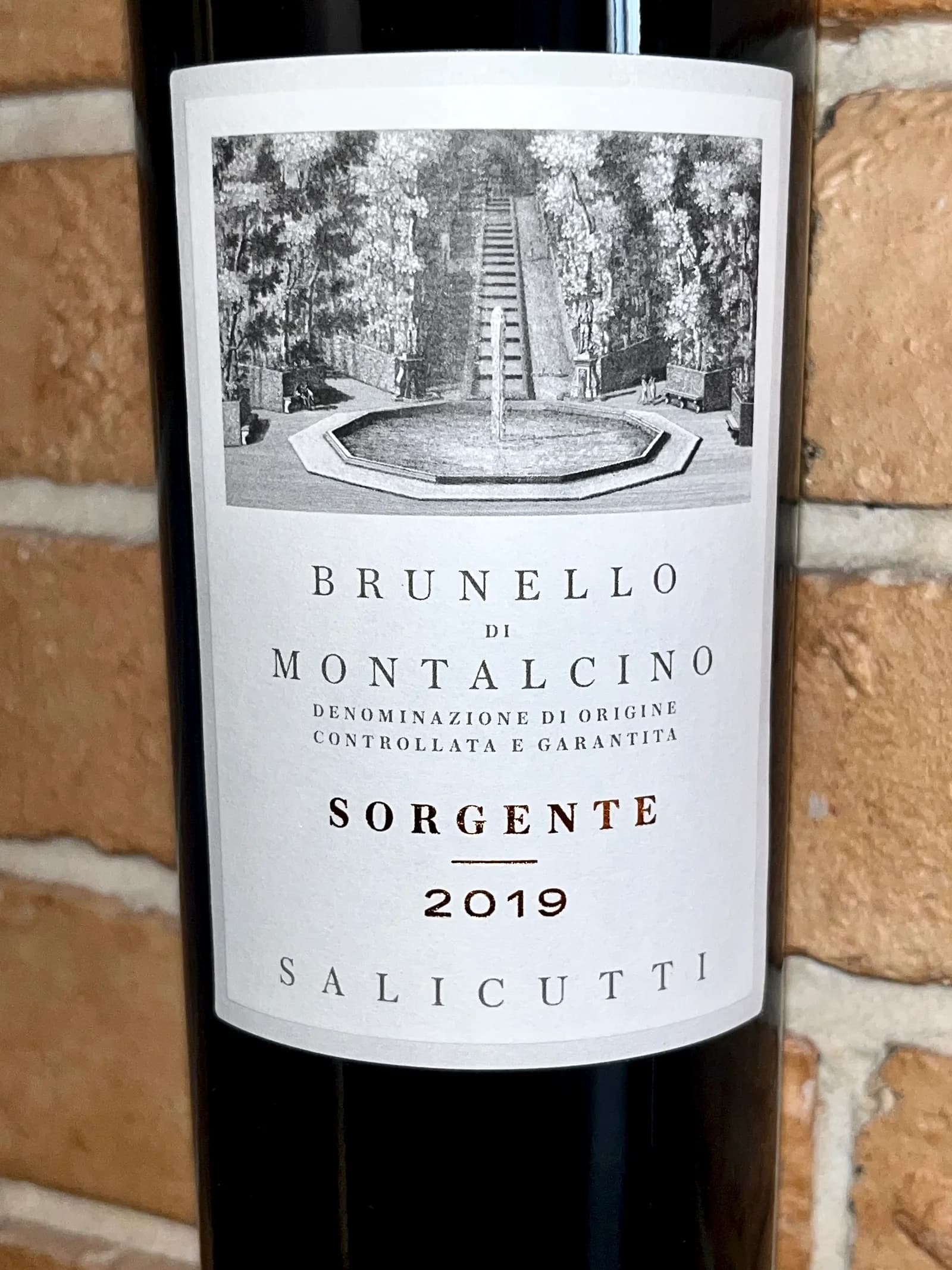
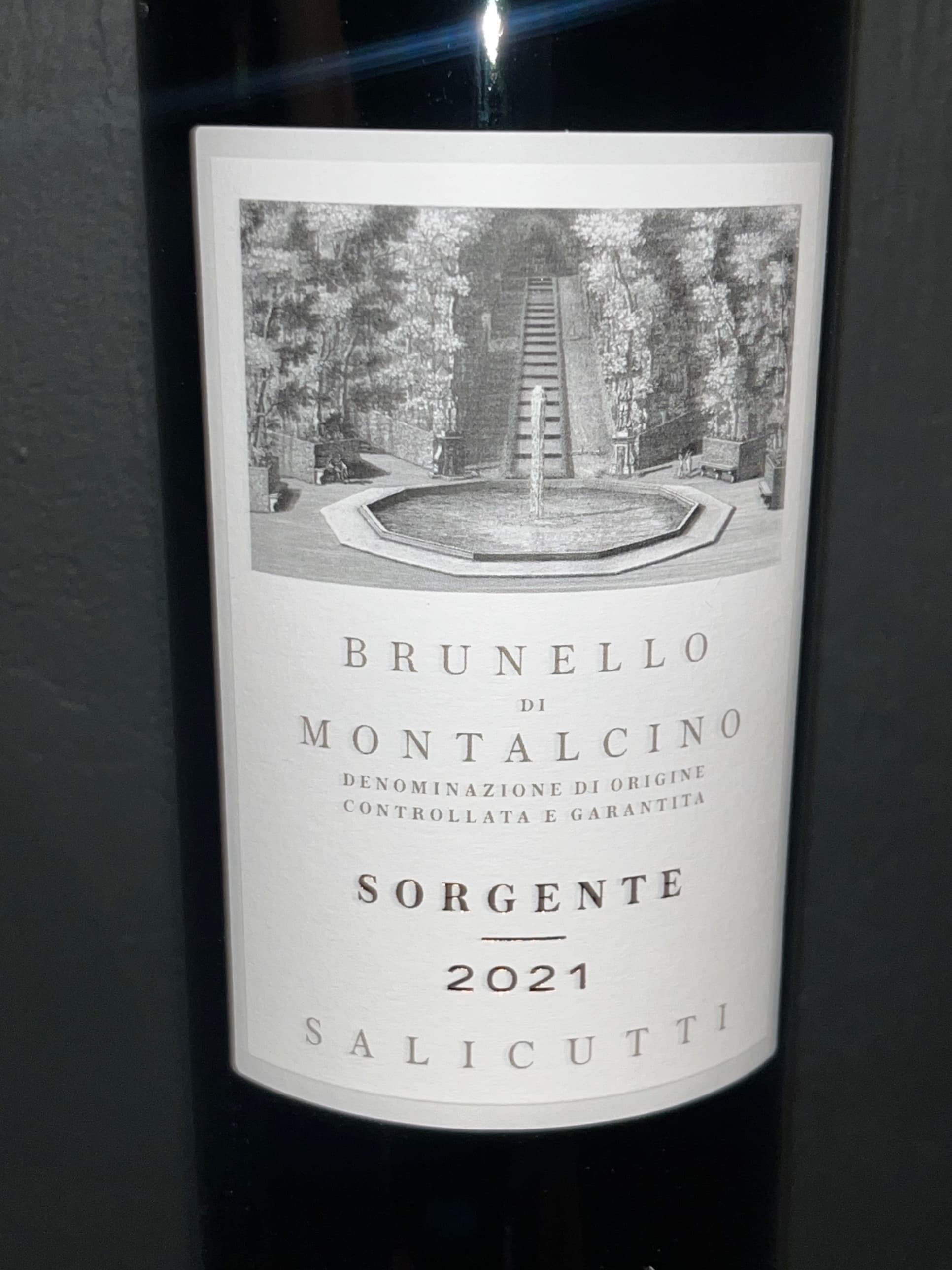
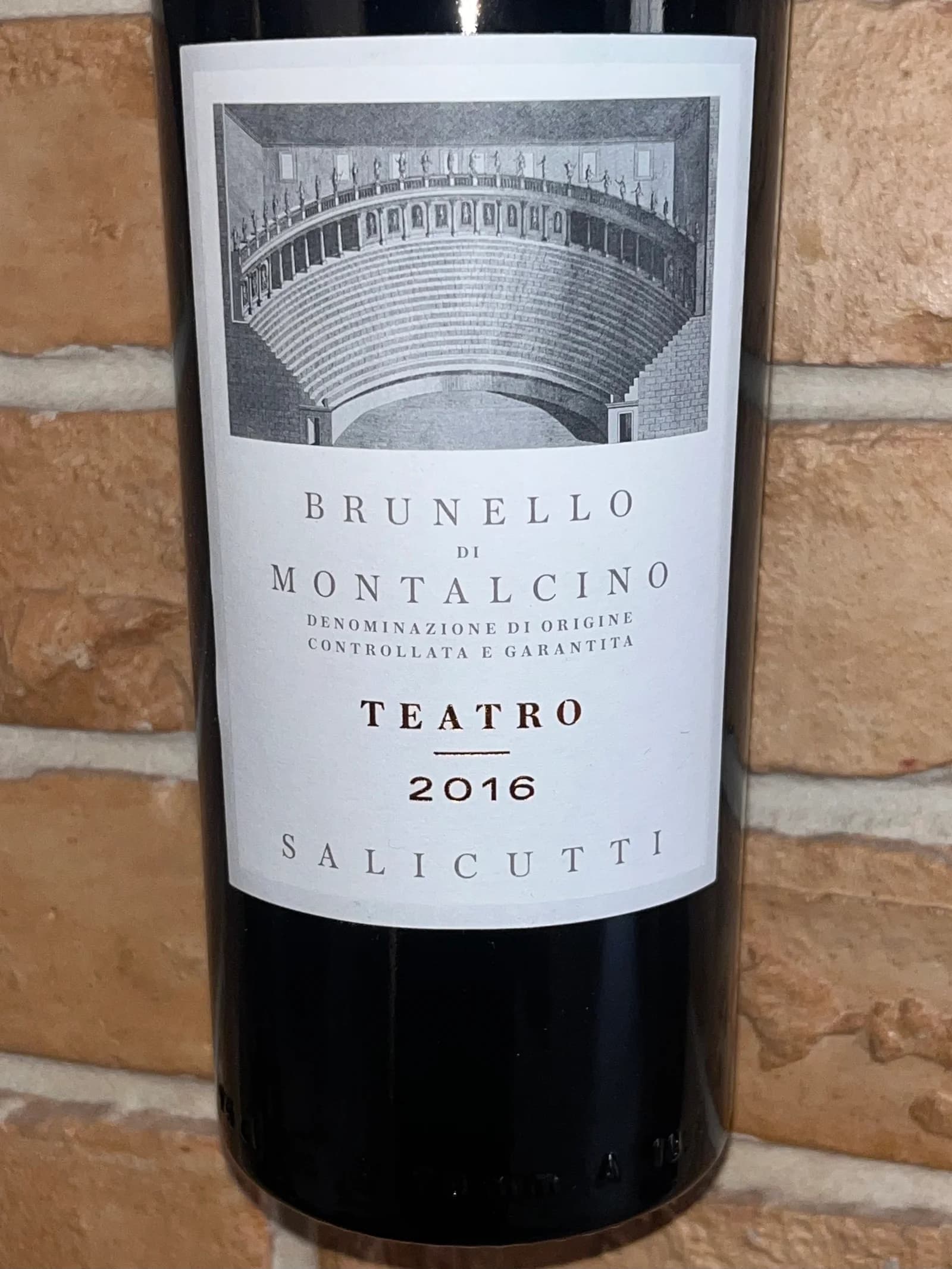
The key change under the Eichbauers: expanding from one or two Brunellos to three single-vineyard bottlings, each expressing a distinct register of the estate's terroir. Sorgente - "the spring" - had previously been the source for the estate's Rosso di Montalcino; the Eichbauers promoted it to Brunello. Teatro was carved out as a separate cru within the broader Piaggione area. All three vineyards sit at 420-500 metres, south-facing (south-by-southeast to south-by-southwest), on sixty-to-eighty-million-year-old Santafiora stone (clay, sandstone, calcareous sand), but with enough micro-climate and soil variation to justify separate bottlings:
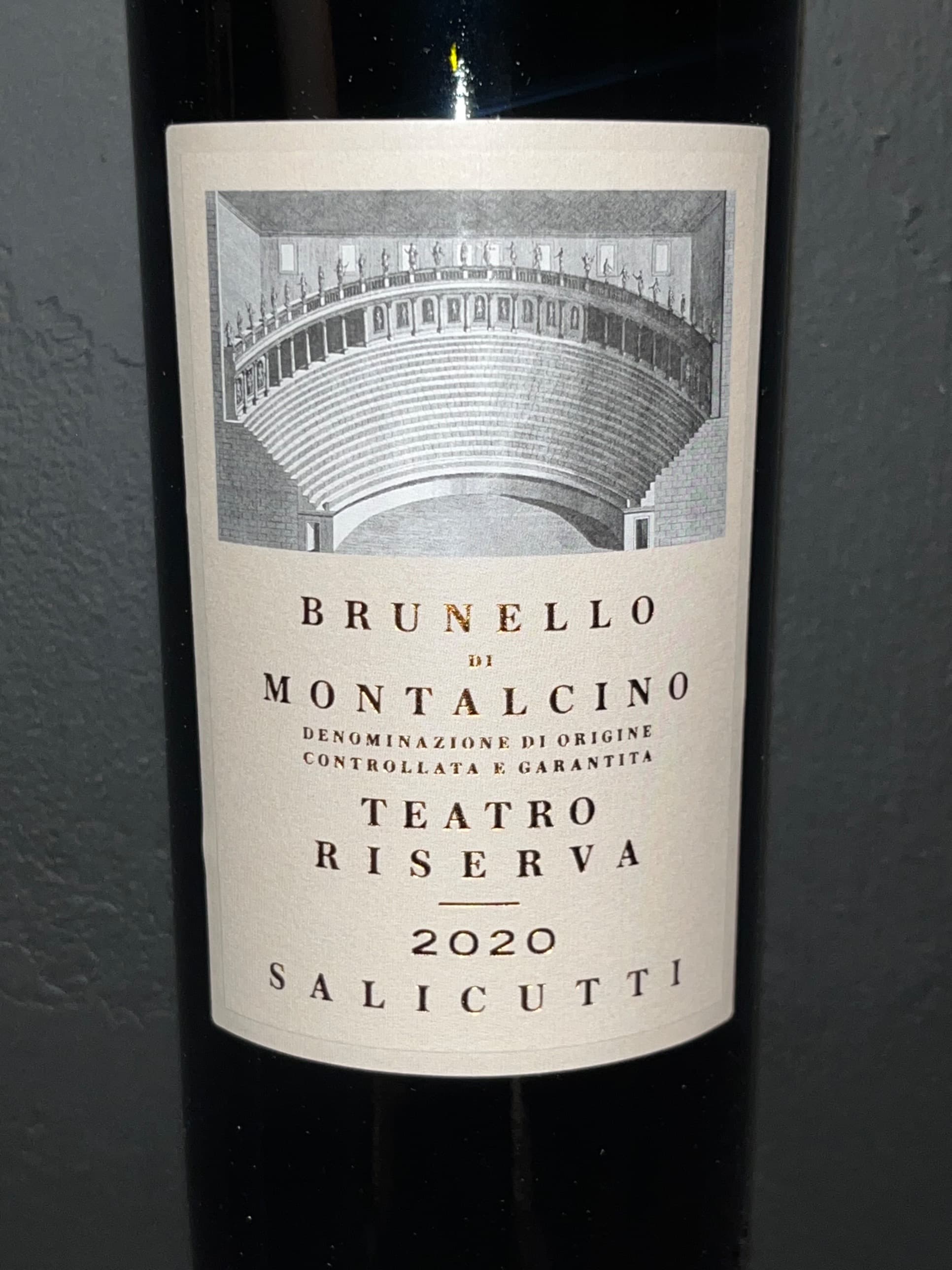
- Teatro - copper etching of a Roman theatre on the label
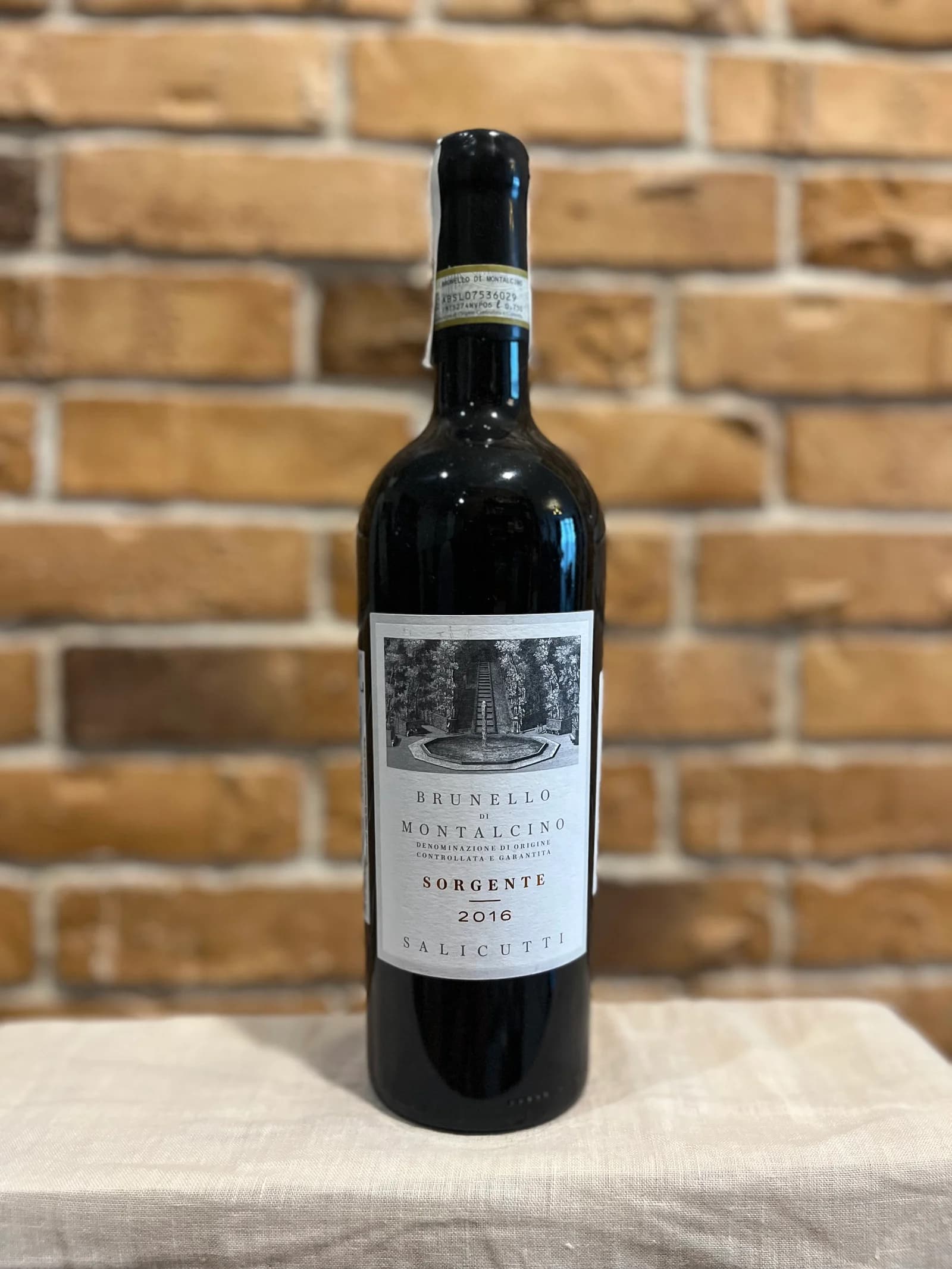
- Sorgente - "the spring," garden scene with a fountain
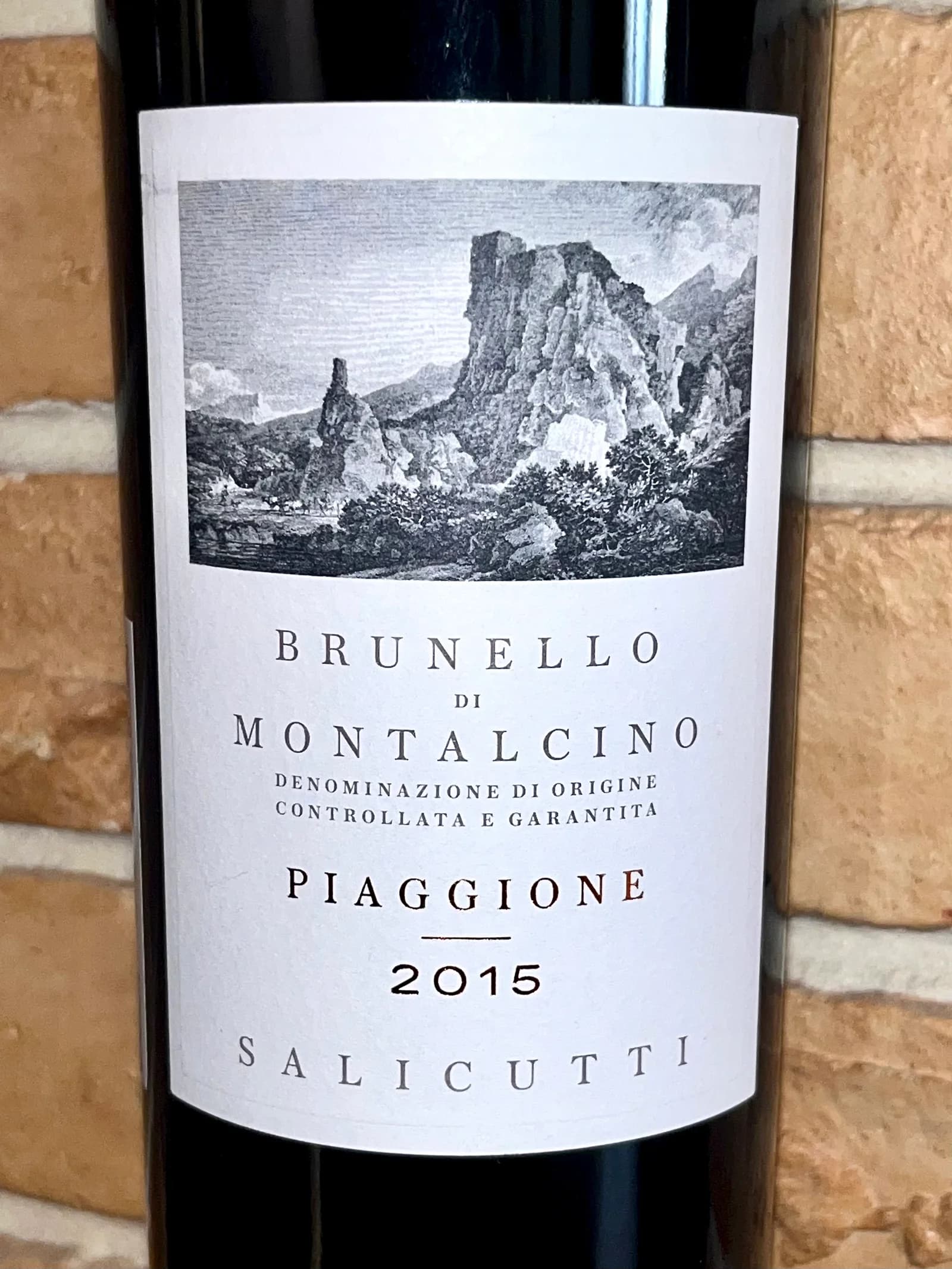
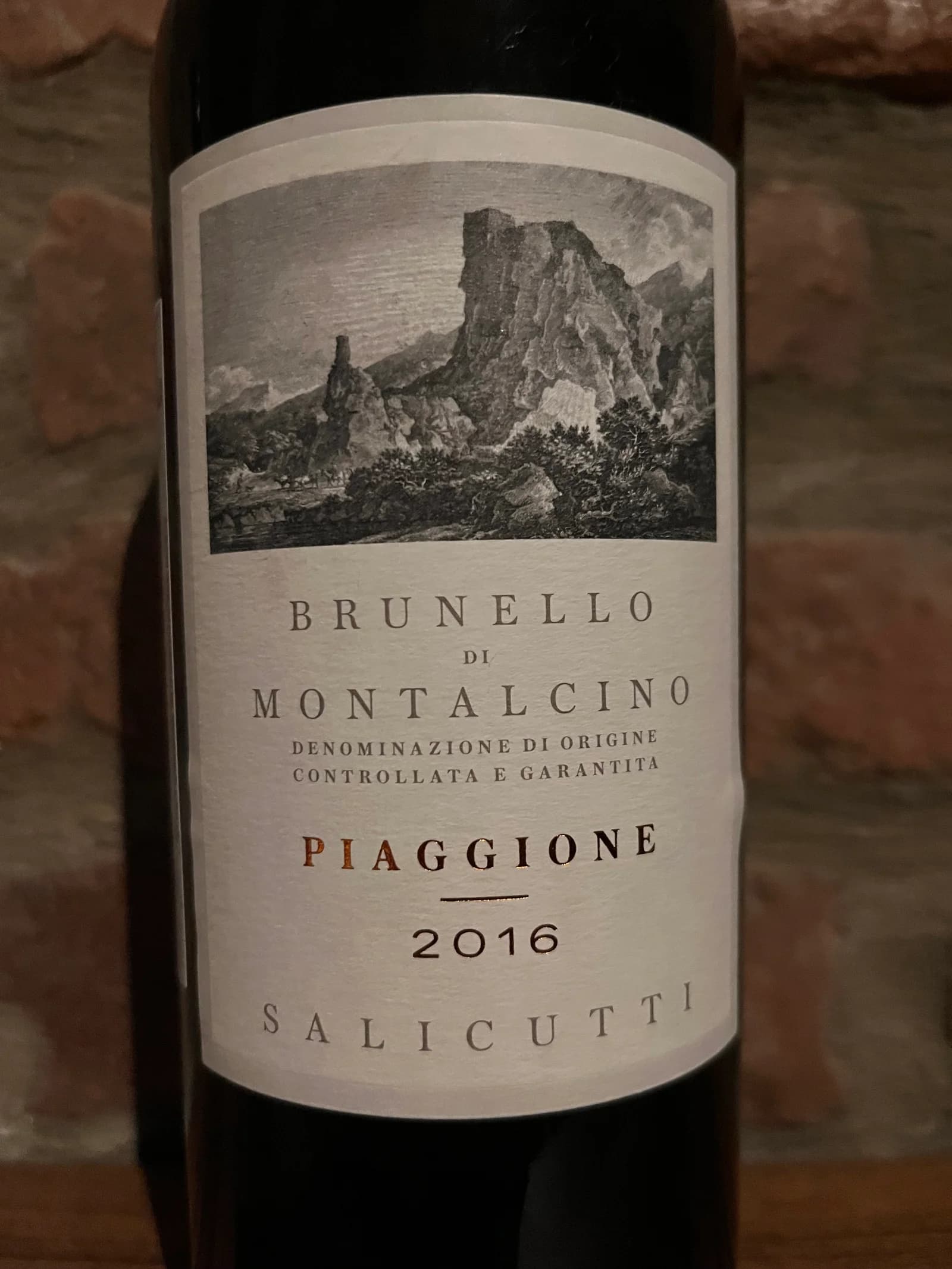
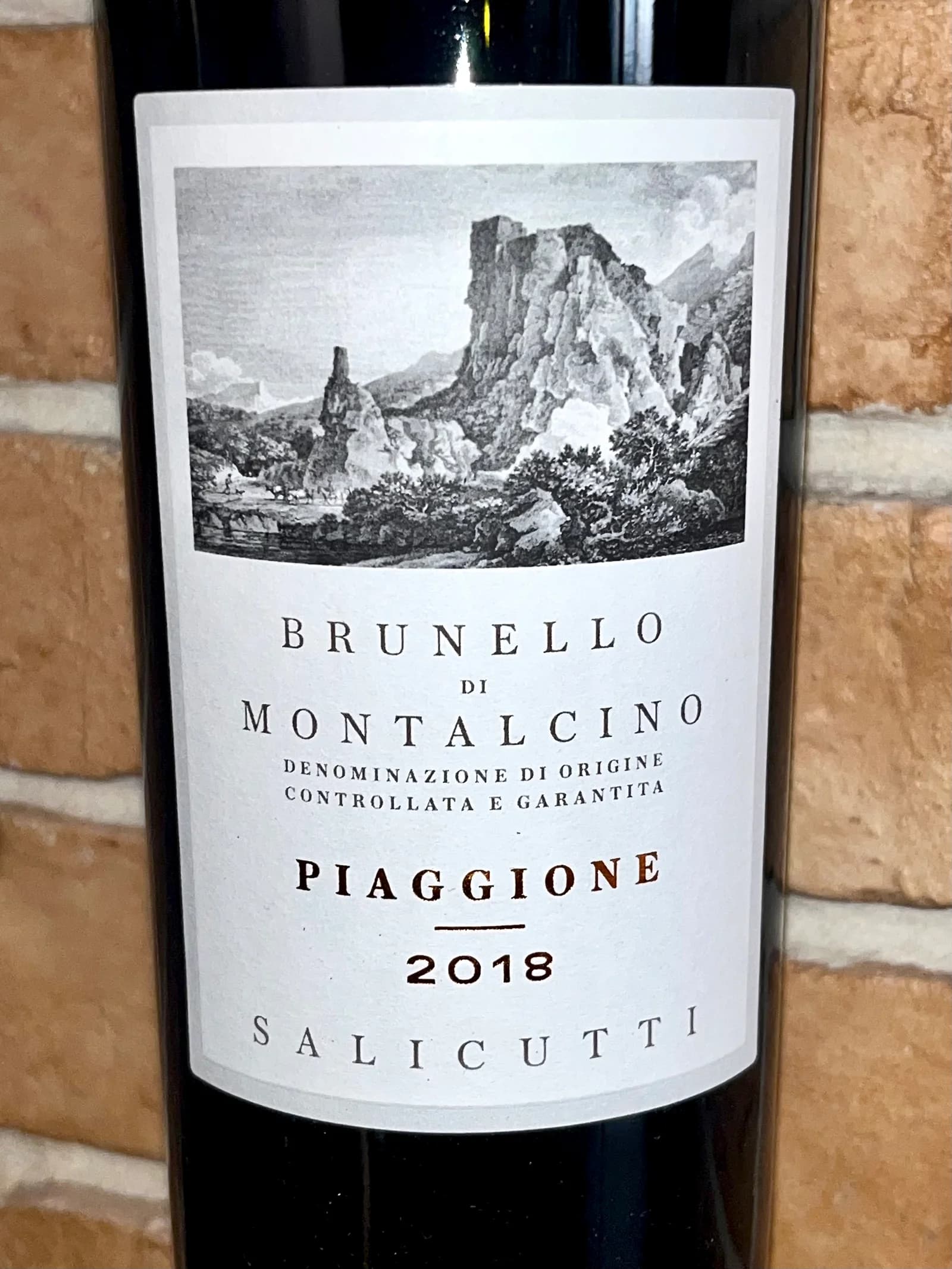
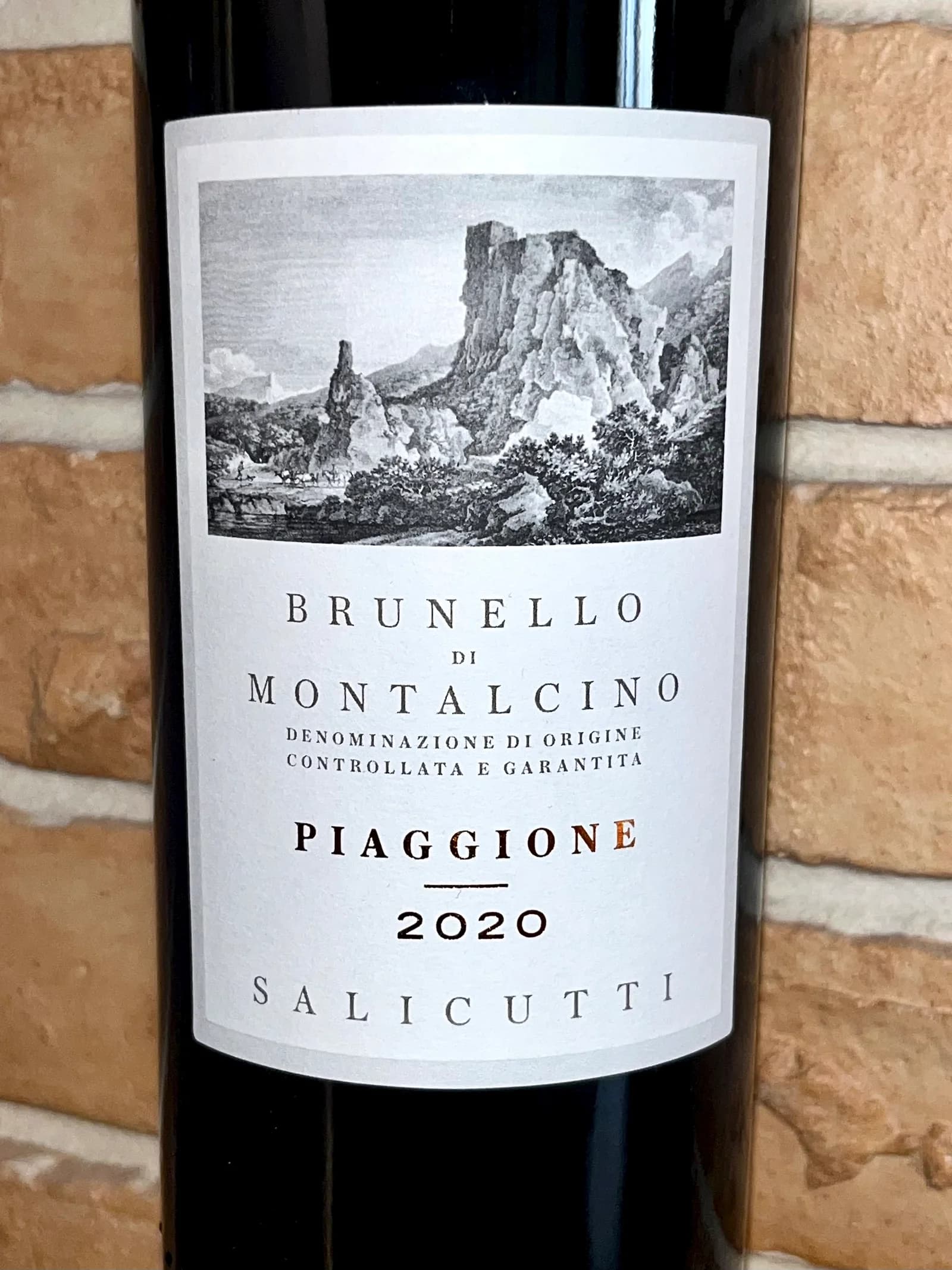
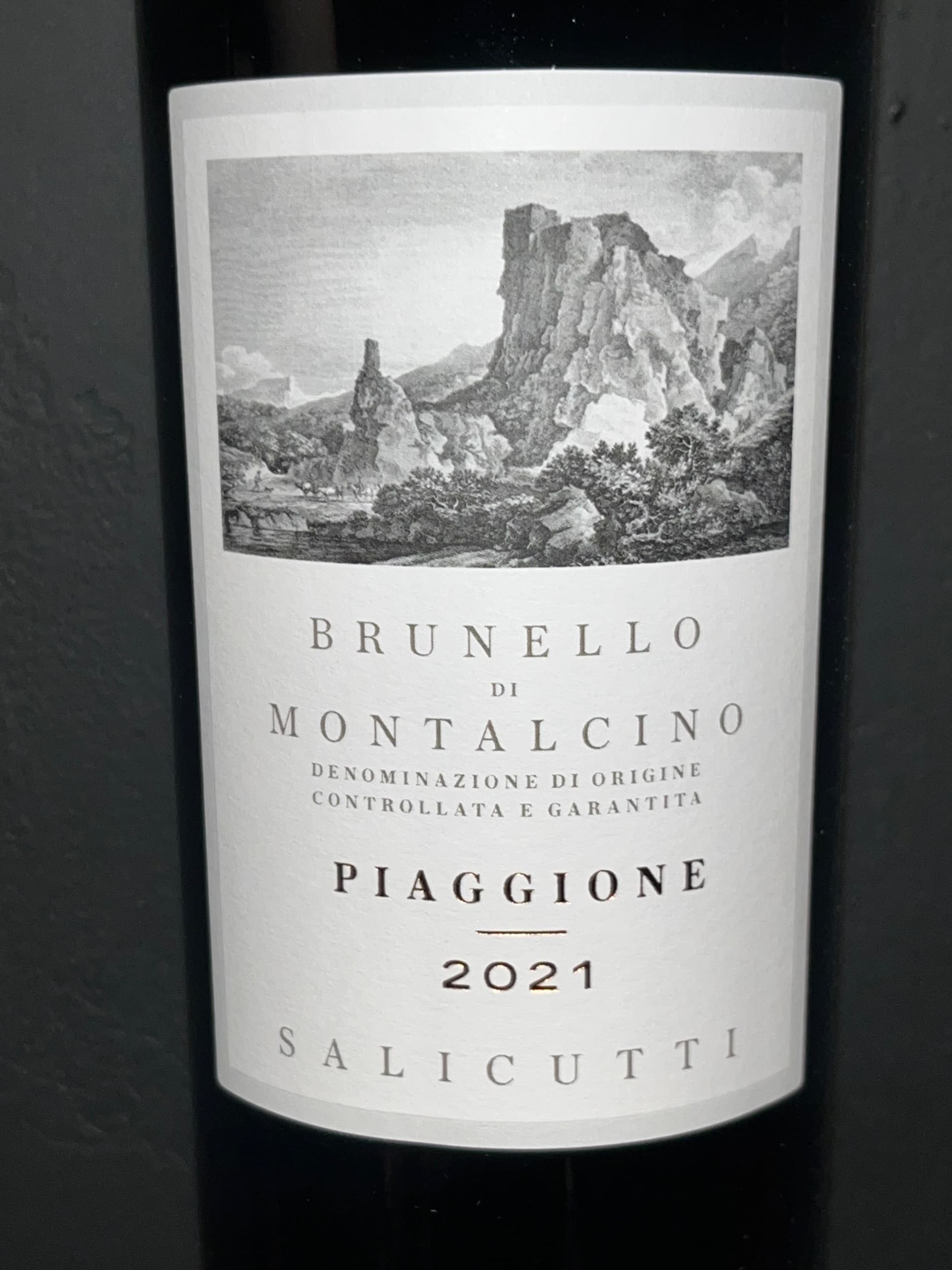
- Piaggione - "the steep hillside," wild and rugged
The estate has also moved toward a self-sufficient hacienda model: hydropower, beehives, a fruit grove, a vegetable garden, pigs, chickens, and in-house composting. The Eichbauers describe their approach as the "Cosmo di Salicutti" - embracing the diversity of the estate's sites rather than flattening them into uniformity.
The style under both owners has been consistent in its essentials: gentle, Burgundian-inflected, terroir-transparent Brunello. What changed is the ambition of the single-vineyard programme and the move from organic to biodynamic. Alongside Stella di Campalto, Pian dell'Orino, and Case Basse (Soldera), Salicutti belongs to the biodynamic Montalcino cohort that has redefined what Brunello can be when patience and soil health come before everything else.
Sources:
Wines
Brunello di Montalcino
2019· Italy
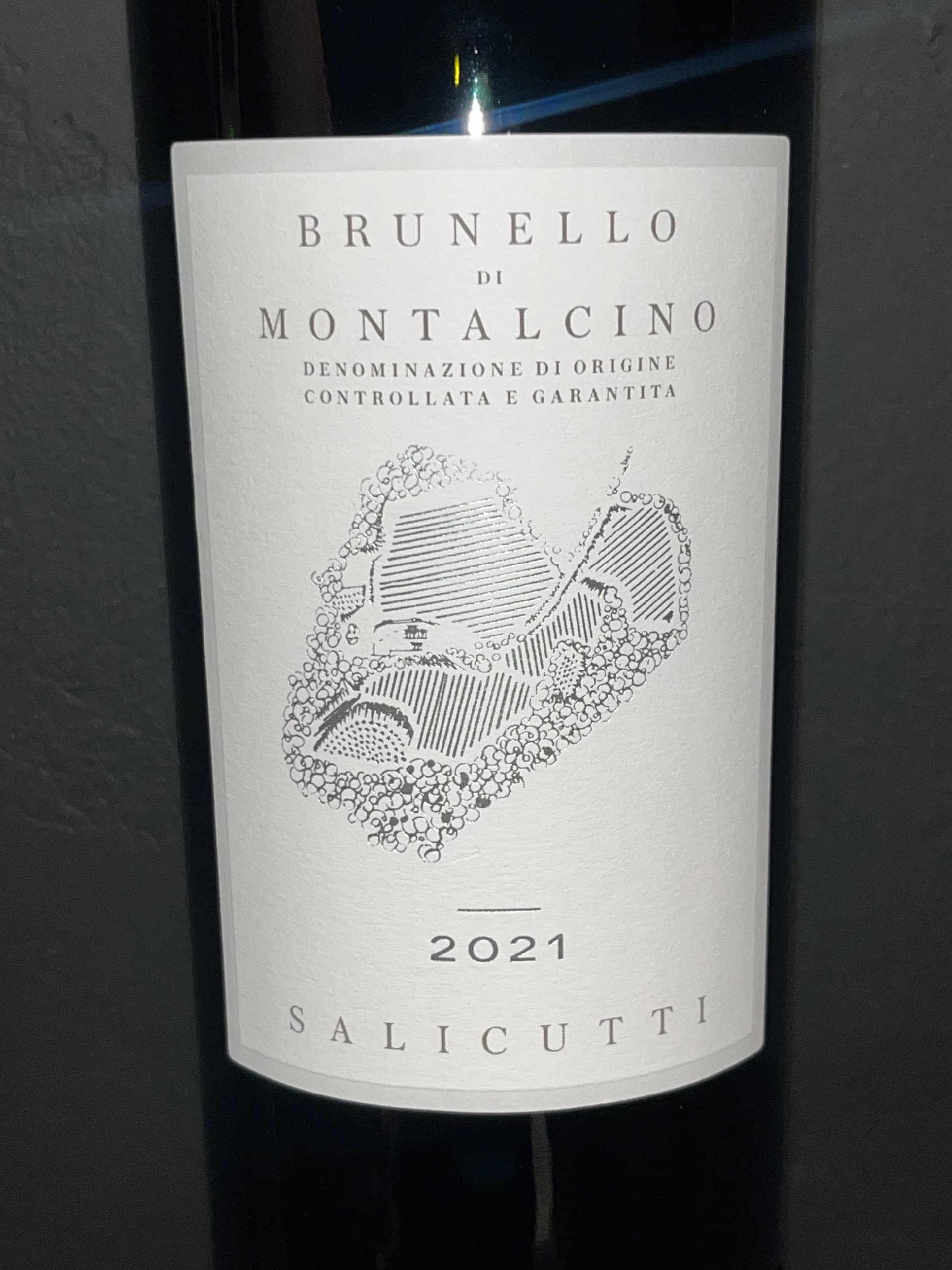
Brunello di Montalcino
2021· Italy
Brunello di Montalcino Piaggione
2015· Italy
4.2
Brunello di Montalcino Piaggione
2016· Italy
4.4
Brunello di Montalcino Piaggione
2018· Italy
Brunello di Montalcino Piaggione
2020· Italy
Brunello di Montalcino Piaggione
2021· Italy
4.3
Brunello di Montalcino Sorgente
2016· Italy
Brunello di Montalcino Sorgente
2018· Italy
Brunello di Montalcino Sorgente
2019· Italy
Brunello di Montalcino Sorgente
2021· Italy
4.6
Brunello di Montalcino Teatro
2016· Italy
Brunello di Montalcino Teatro Riserva
2020· Italy
4.4
Rosso di Montalcino
2014· Italy
3.8
Rosso di Montalcino
2016· Italy
4.1
Rosso di Montalcino Sorgente
2008· Italy