All producers
Maria & Sepp Muster
Steiermark, Austria2 wines3.9 avg
11
Maria and Sepp Muster farm steep opok slopes above Leutschach, South Styria, biodynamically since taking over in 2000, and make slow, natural wines.
In December 1995 Sepp Muster was badly injured, and he and Maria set off on a long journey to recover. According to Frank Wines, their Ukrainian importer, it was in India, at a lecture by the New Zealand biodynamic grower Peter Proctor, that they first heard of biodynamics. The couple tell it more briefly: years of travelling half the world and learning from remarkable people, then a return to the place of their childhood, where nature became their greatest teacher.
That place is the Schlossberg above Leutschach in South Styria, not far from the Slovenian border. The farm's records go back to 1727, and Graf has always been its house name, later given to one of the wine lines. Sepp took over from his parents, Rudolf and Theresia, in 2000. Frank Wines adds that his parents had never used systemic sprays, so the vineyards came to the couple in unusually clean shape for the region. Primal Wine dates the Demeter certification to 2003.
There are about ten hectares, all on steep slopes of opok, the local calcareous marl. The vines are trained the old local way, a single wire at 1.80 metres on chestnut poles with the shoots left to hang free, a system the family believes shows the soil better than any other. Winds from the Koralpe cool the summer nights and let them pick late. Their UK importer, Les Caves de Pyrene, describes Sepp as a grower who watches what the vines need rather than following biodynamics as a system, working with teas, preparations and the Maria Thun calendar. Frank Wines says he uses no fertiliser, not even humus, rarely drives a tractor through the rows and almost never mows, while Primal Wine speaks of composts alongside the biodynamic preparations. Frank Wines also tells of a biodiversity survey that went looking for ten plant species in his vineyards and found 72.
In the cellar the rule is to leave things out rather than add them: spontaneous fermentation, wooden casks, long ageing of around two years, then bottling without fining or filtration and with little or no sulphur. The range follows the slope. Sgaminegg, a Slavic name for stony ground, is Sauvignon Blanc and Morillon from old vines on pure opok at the top, open to the Koralpe winds. Graf sits in the middle, and the vom Opok wines come from younger vines lower down. Reds from Zweigelt, Blaufränkisch and Blauer Wildbacher were planted decades ago. Two wines ferment on their skins: Gräfin, Sauvignon Blanc with two to four weeks of contact, and Erde, Sauvignon Blanc and Morillon left on the skins for a year by the family's account, six to twelve months by Les Caves'.
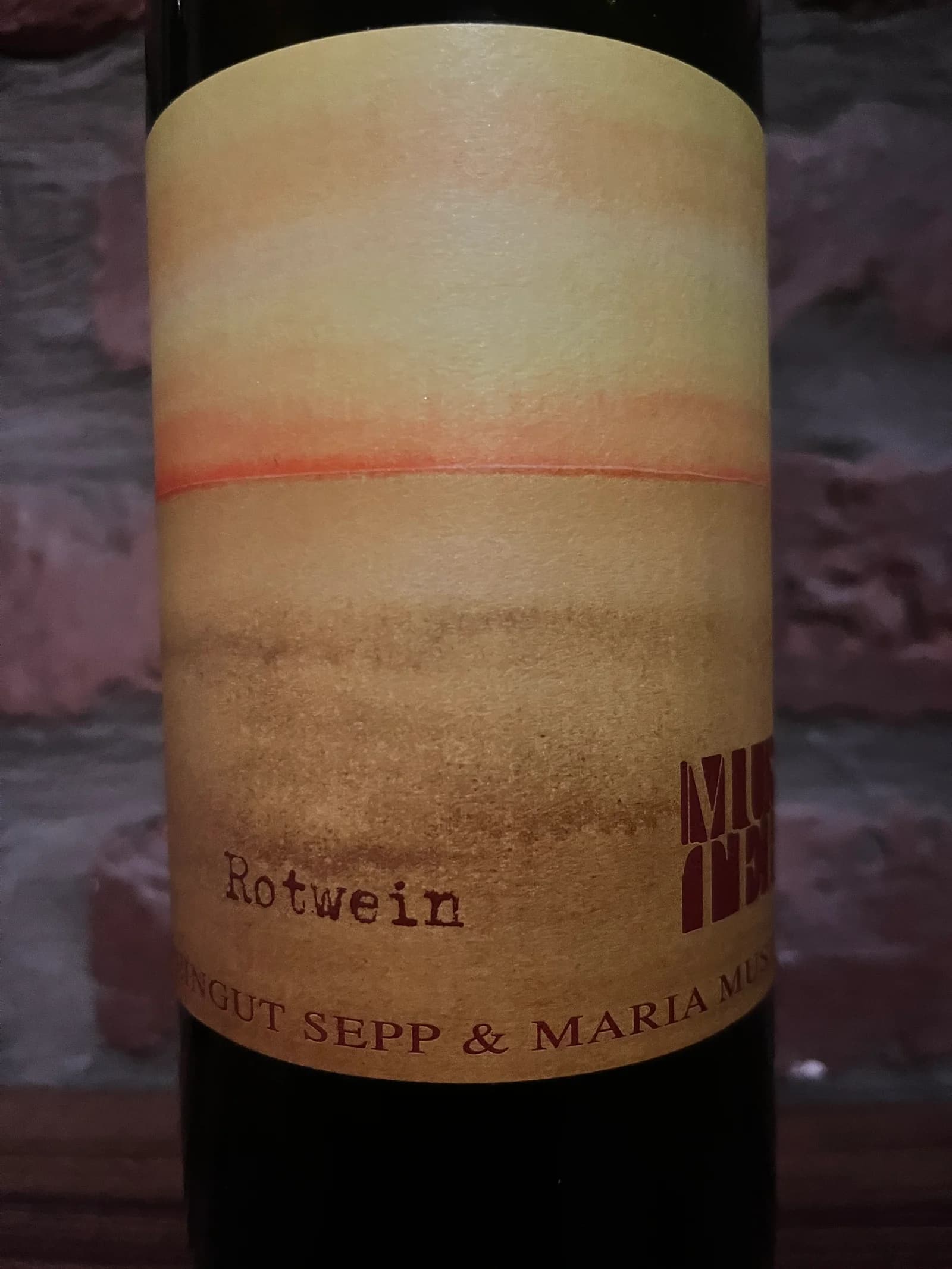
The Musters are one of the five members of Schmecke das Leben, a group of Styrian growers who farm and make wine the same way. Their son Elias now makes wines of his own. The labels carry the work of the painter and sculptor Beppo Pliem, whose phrase "more and more of less and less" has become the estate's motto. Sepp's view of the result, as Frank Wines retells it, is simple: people who like the wines drink them, and people who do not drink something else.