All producers
Sadie Family
Swartland, South Africa10 wines4.3 avg
73
Eben Sadie's Swartland project - forty-plus parcels of old-vine, dryland farming across decomposed granite and shale, and the estate that made modern South Africa credible internationally.
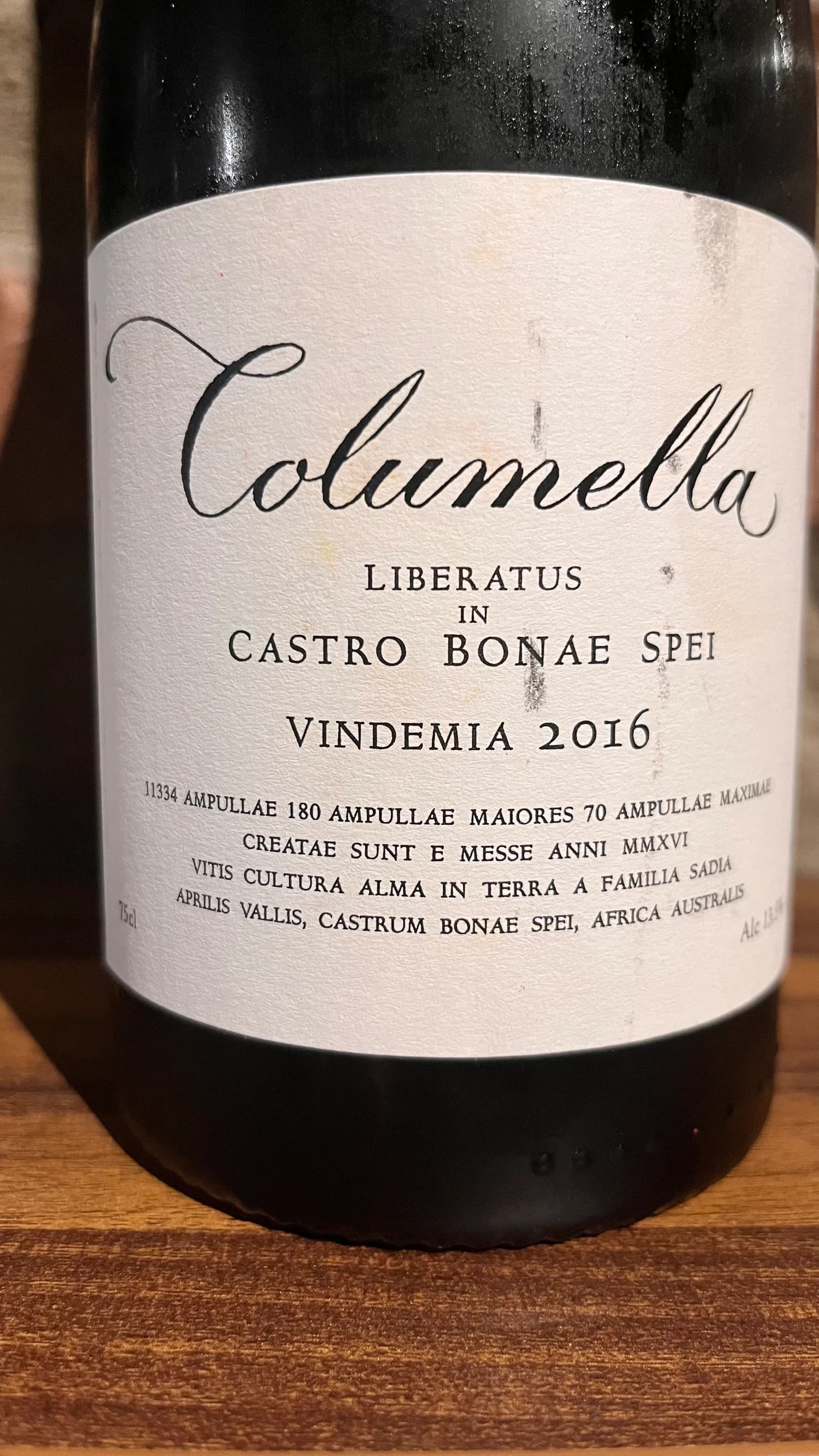
Eben Sadie is a South African winemaker who spent the late 1990s in Germany, Austria, Italy, Oregon, and Burgundy before coming home. He joined Charles Back's Spice Route project in the Swartland as chief winemaker in 1998. In 2000 he made the first vintage of Columella - a Syrah-led Rhône-style blend from old-vine Swartland parcels - under his own new label. The wine did something no South African red had really done before: convinced the international market to take Cape reds seriously at the top level. Sadie Family was founded in 1999; Columella is the wine that made the company.
Alongside his SA work, Sadie spent a long stretch of the 2000s (from roughly 2004 to 2011) as a partner in Terroir al Límit in Priorat with Dominik Huber. That parallel project connected him to the Niepoort / Priorat / Swartland axis of ambitious old-vine work that defined that decade.
The estate farms around forty-three hectares across some forty-eight parcels scattered through the Swartland, with home vineyards on the slopes of the Paardeberg. Soils are decomposed granite, schist and slate, shale and sandstone. The key word is dryland - no irrigation anywhere. Old bush vines, farmed to phenolic ripeness rather than alcohol. Native yeasts, whole-bunch portions adjusted by vintage (Eben has experimented at every level from full-cluster down to roughly thirty percent in recent years), almost no new oak - large old foudres, 500-litre puncheons, concrete eggs, ceramic amphorae for Palladius.
If you look at old wines from the Swartland you'll realise that we don't really have to reinvent anything, we should just go and harvest the good, old things that were already there. The Swartland really is one of those places where you can say what we have is fantastic, what we have is enough - there is nothing better out there. Our soil is remarkable and while our climate is a bit tough at present due to the drought, this place is thoroughly amazing.
- Eben Sadie
The flagships:
- Columella - the Syrah-led red blend from multiple Swartland parcels. The wine that made modern South African fine wine credible internationally.
- Palladius - a Chenin-led white blend that has grown over the years to around fourteen varieties from seventeen sites, aged across foudres, concrete, and amphorae.
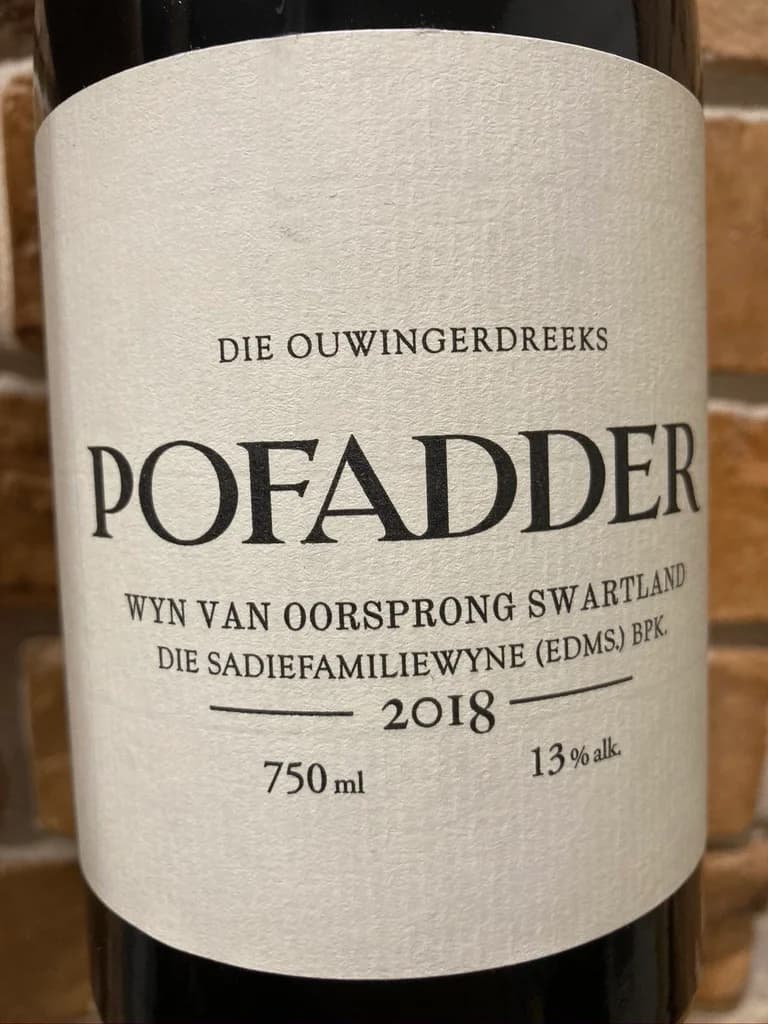
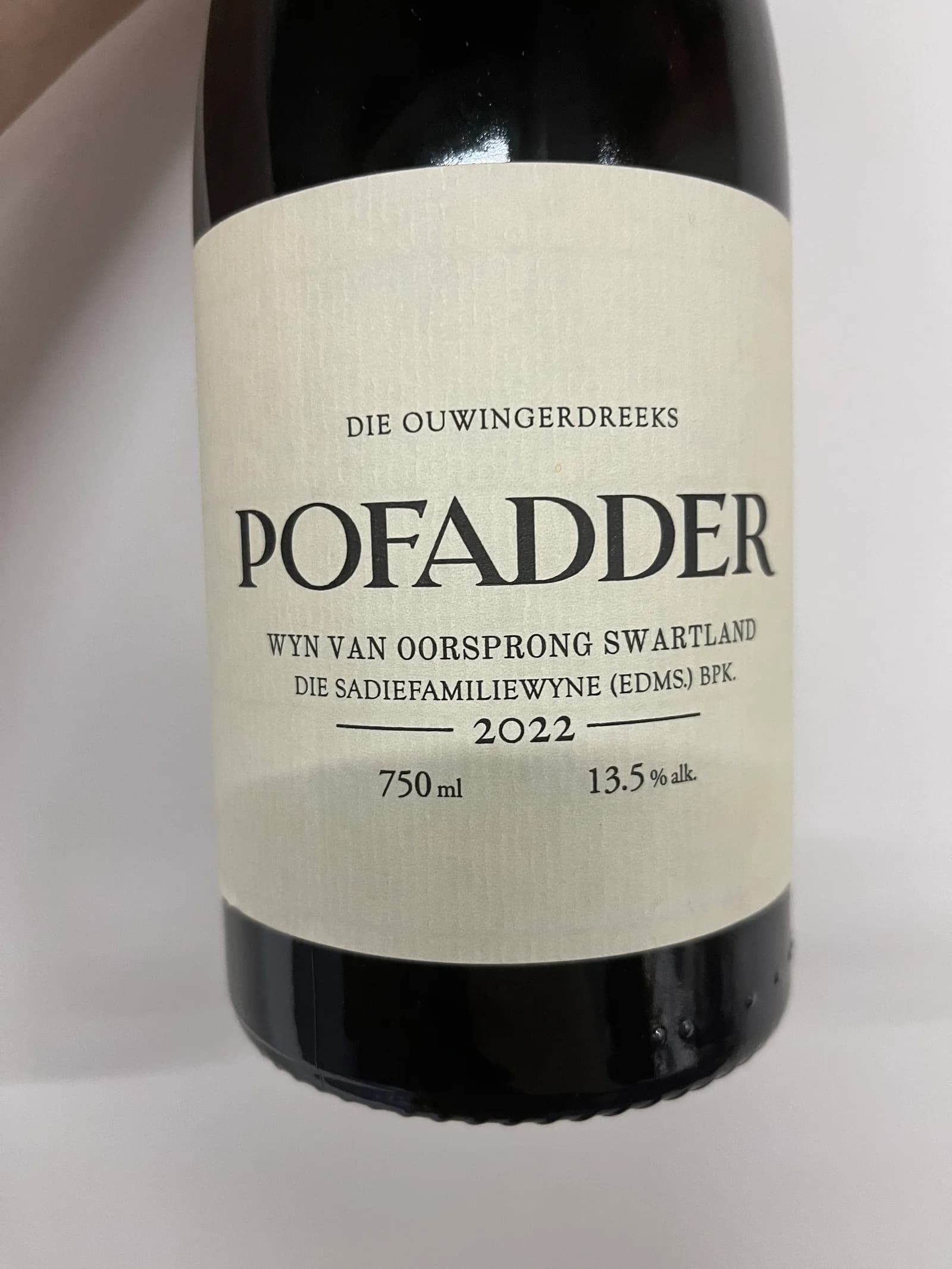
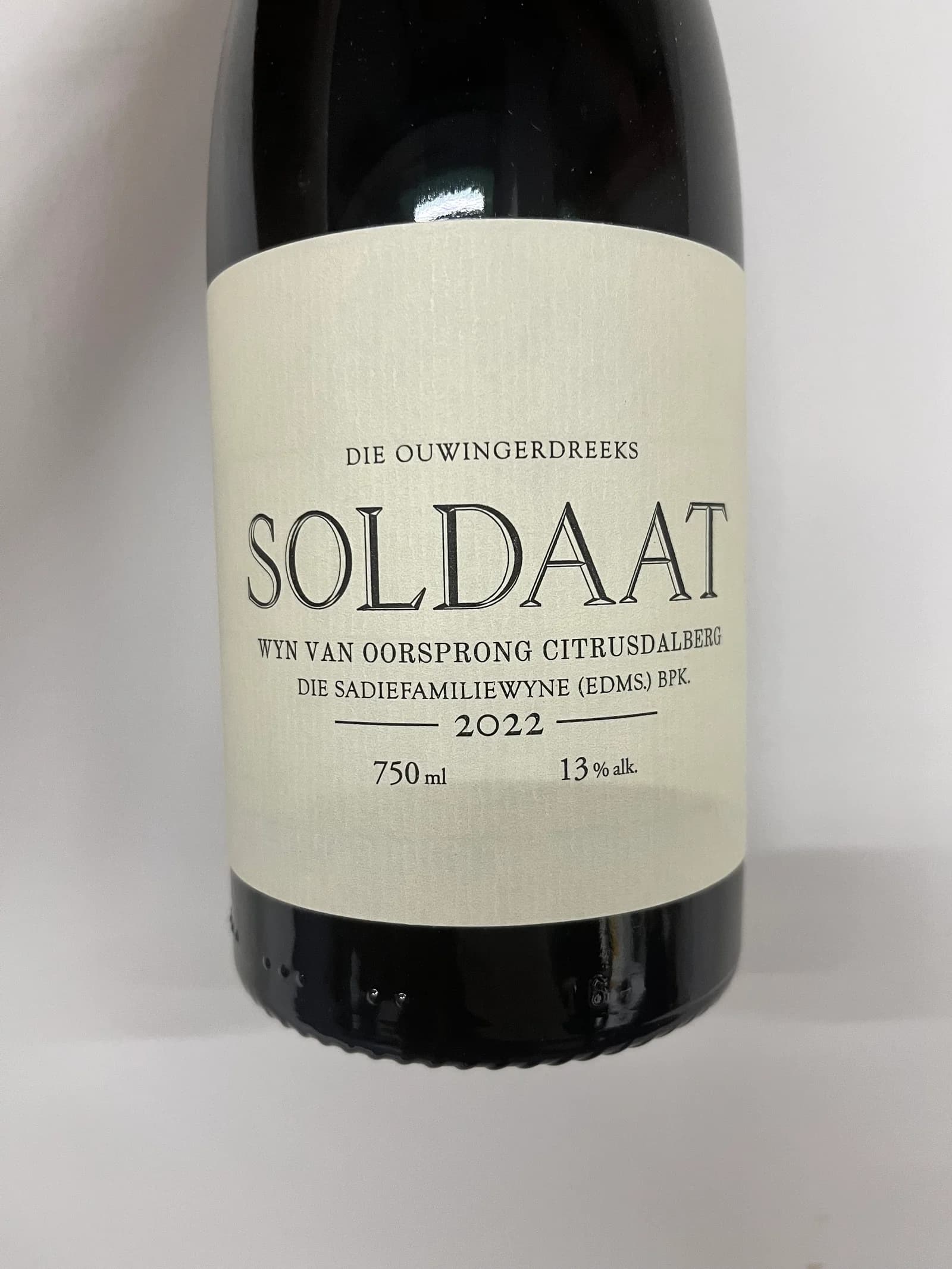
The Old Vine Series (Die Ouwingerdreeks, which began with Mev. Kirsten in 2006 and expanded into the full set from 2009, launched to draw attention to South Africa's heritage vineyards and now a parallel catalogue in its own right):
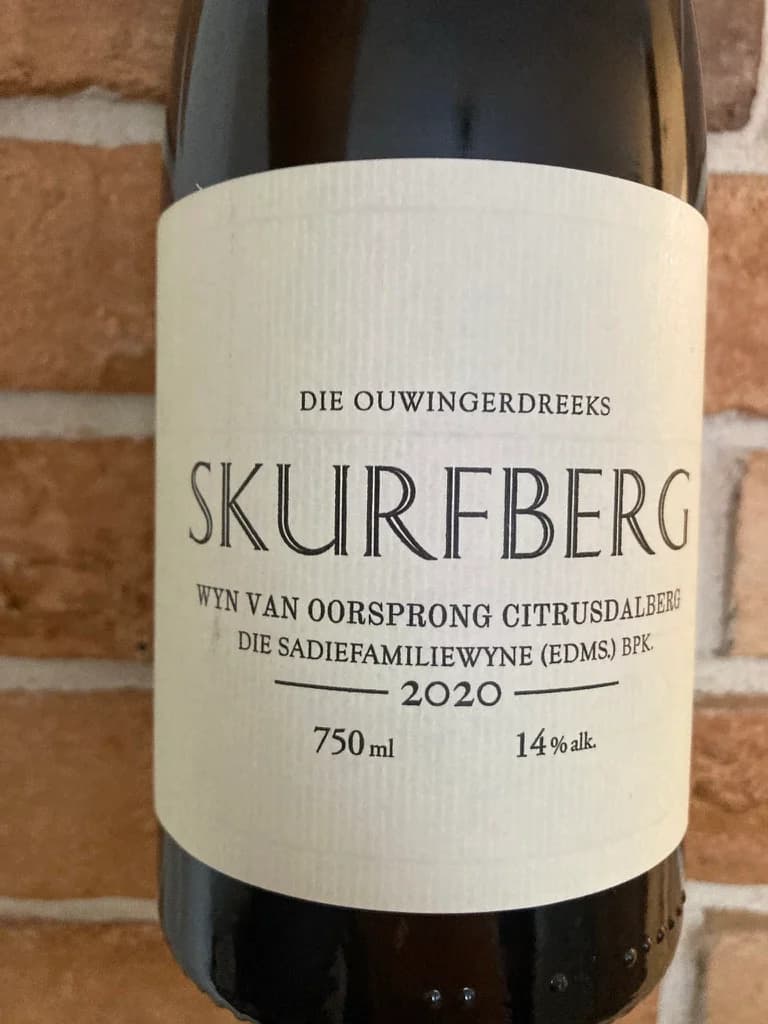
- Skurfberg - Chenin Blanc on Olifants River sandstone
- Mev. Kirsten - Stellenbosch Chenin from the oldest Chenin vineyard in South Africa (planted 1905)
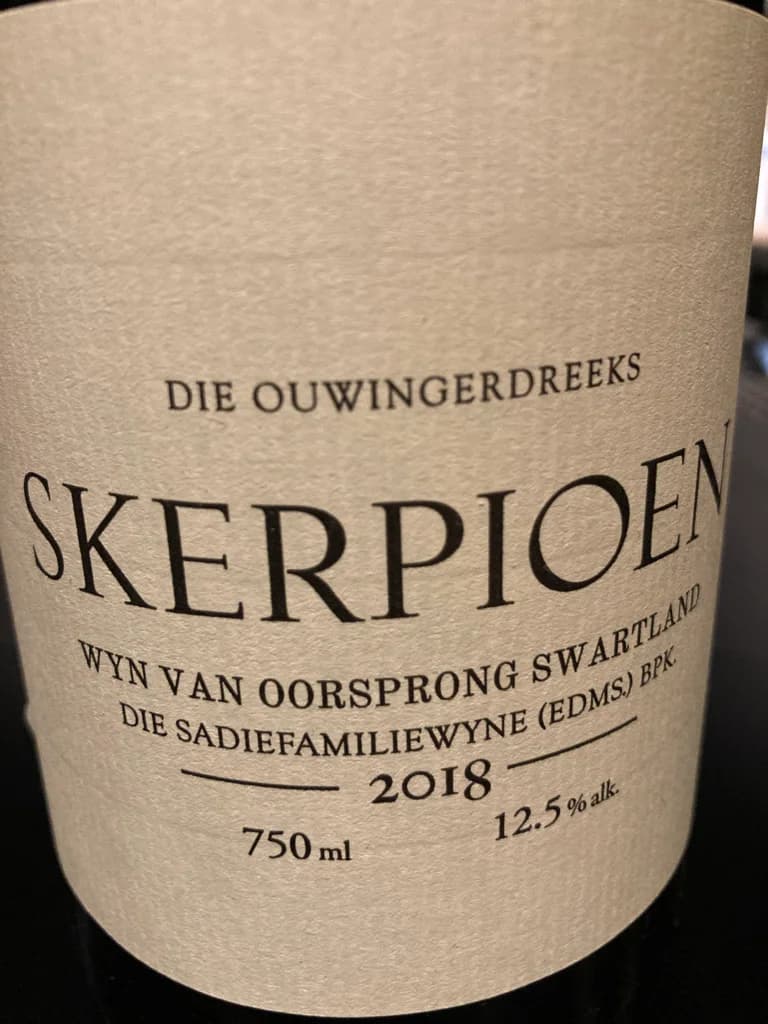
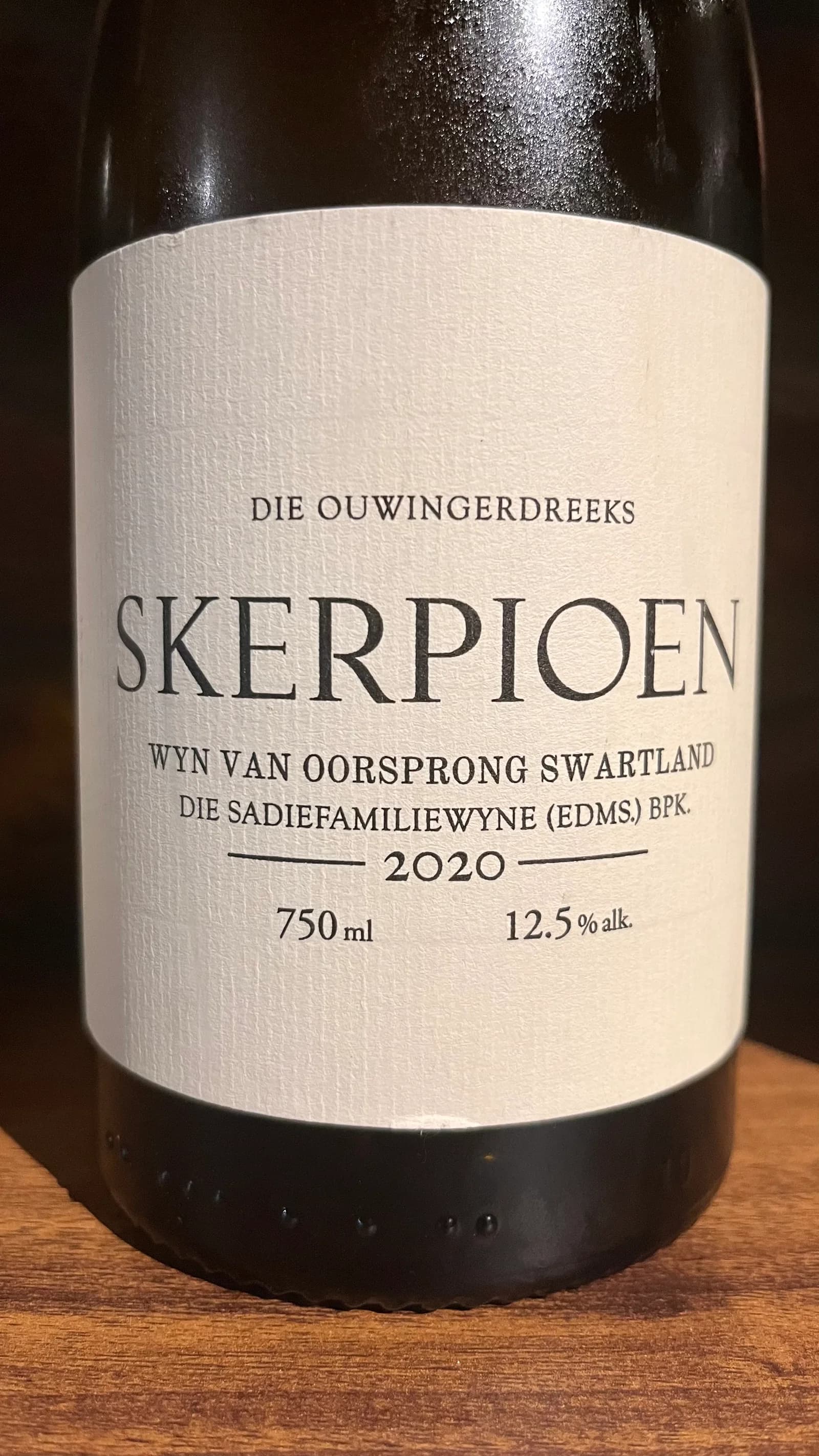
- Skerpioen - Chenin and Palomino co-fermented, from a limestone near-coastal plot
- Kokerboom - Semillon
- 'T Voetpad - field blend of Semillon Blanc and Gris, Palomino, Chenin, and Muscat d'Alexandrie from the oldest white-wine vineyard in the country (1887)
- Treinspoor - Tinta Barocca, which Sadie calls the greatest grape for the Swartland
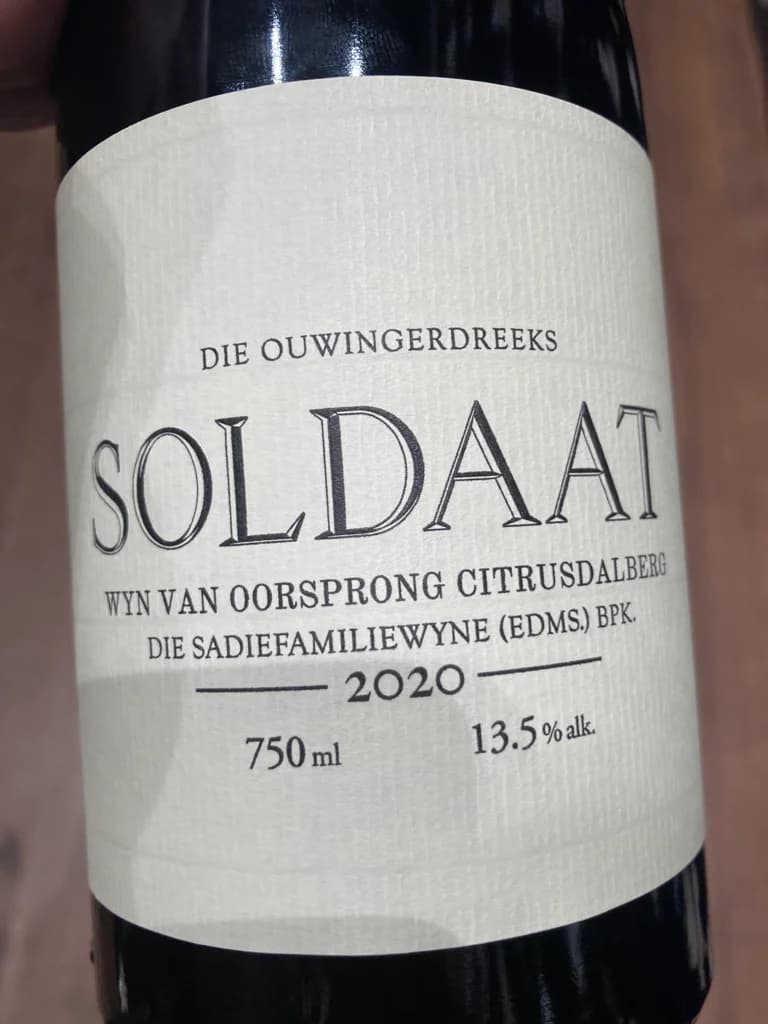
- Soldaat - high-altitude Grenache Noir from Piekenierskloof
- Pofadder - Cinsault
More recently, Sadie has added three new wines that signal where his thinking is going:
- Rotsbank (from 2022) - Chenin Blanc from a newly purchased Paardeberg vineyard on a shallow granite shelf, barely 30-50cm of soil. The Swartland single-vineyard Chenin he had been wanting to make since 2008.
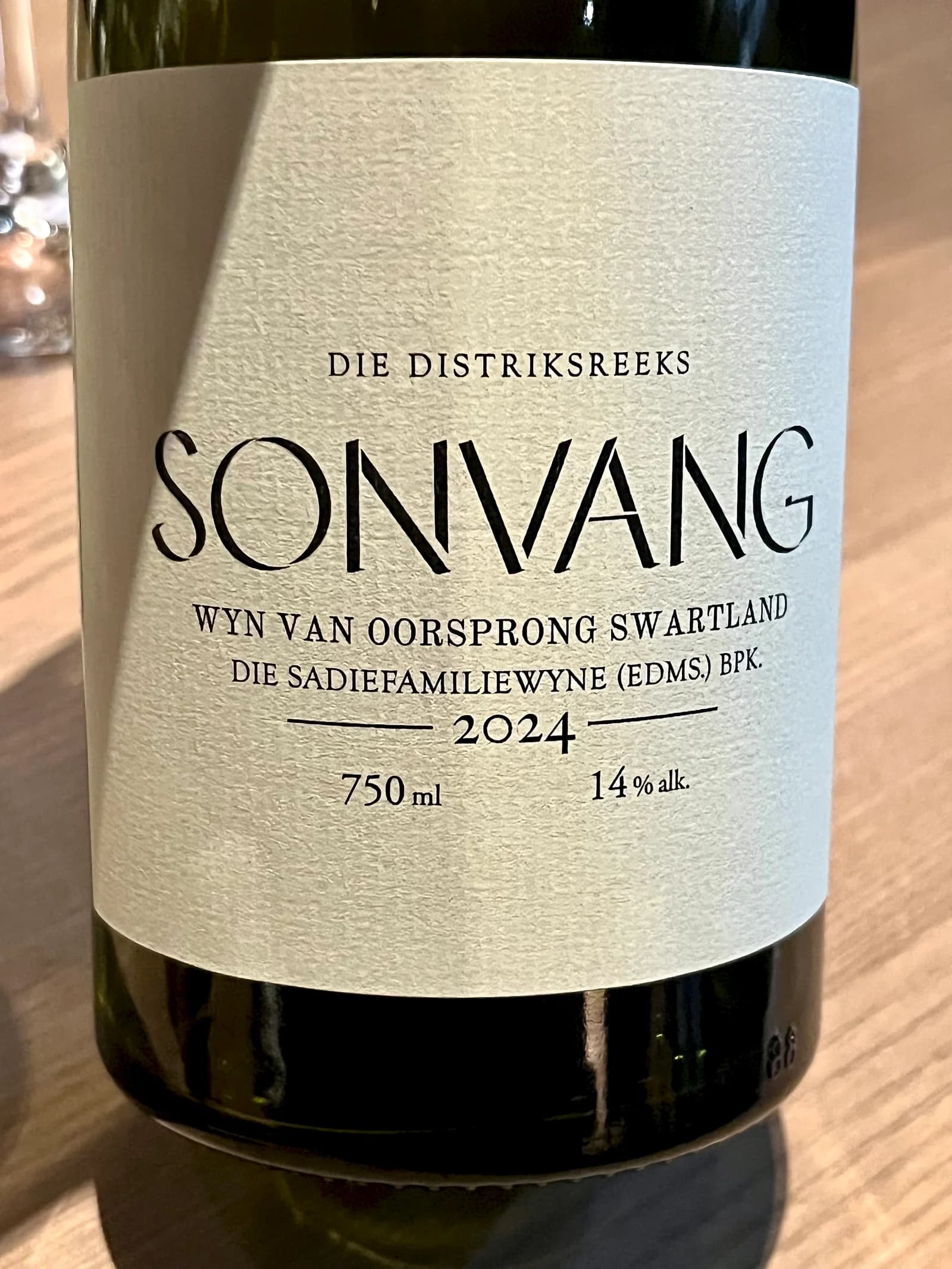
- Sonvang (maiden vintage 2024) - "Sun Catch." A co-planted red from the western Paardeberg slope, with a grape list that reads like a climate-adaptation manifesto: Alicante Bouschet, Agiorgitiko, Pontac, Bastardo do Castillo, Trincadeira, Tinta Barocca, Lledoner Pelut, Grenache Noir, Pinotage, Cinsault, Counoise, Carignan. Greek, Portuguese, Spanish, French, and South African varieties in one vineyard.
- Twiswind (maiden vintage 2024) - the white counterpart. Twelve co-planted varieties: Vermentino, Picpoul, Marsanne, Grenache Blanc, Cinsaut Blanc, Palomino, Chenin Blanc, Grillo, Assyrtiko, Verdelho, Clairette Blanche, Semillon.
The Sonvang and Twiswind release notes are explicit about the intent: "establishing a single vineyard site with futuristic grape varieties that will brace and stand in the future climate change." The concept is co-fermentation of many varieties from one site - "the whole is greater than the sum of its parts." This is Eben thinking a generation ahead: not what the Swartland tastes like now, but what it will need to taste like when the climate has moved on.
Sadie is the anchor of the Swartland Revolution generation (the festival ran 2010-2015) alongside Chris and Andrea Mullineux, Adi Badenhorst, and Callie Louw, and a founding member of the Swartland Independent Producers association, whose charter codified dryland farming, old-vine protection, and restrained oak. More or less everything interesting in South African fine wine today comes out of that framework.