All producers
JM Dreyer
Alsace, France8 wines3.9 avg
53
Rosheim, Bas-Rhin, Alsace. Jean-Marc Dreyer took over the family estate in 2003 and converted to biodynamics immediately. Six hectares on clay-limestone, extended skin-contact whites, zero added SO2 since 2009 - one of the core Alsace natural-wine figures alongside Binner, Julien Meyer and Rietsch.
Jean-Marc Dreyer works six hectares spread across twenty-five parcels around Rosheim, on the clay-limestone (argilo-calcaire) belt of the Bas-Rhin, about twenty-five kilometres south-west of Strasbourg. The family has been on the land since 1830; Jean-Marc took over in 2003 and began biodynamic conversion the same year. Partial horse-work, trees planted between the rows, native yeasts only, no additives, no filtration. Around twenty thousand bottles a year.
The variety set is the Alsace seven - Sylvaner, Auxerrois, Riesling, Muscat, Gewürztraminer, Pinot Gris, Pinot Noir. His formation in the natural-wine scene ran through a stage d'installation with Patrick Meyer at Domaine Julien Meyer in Nothalten - the direct mentor - and he sits firmly in the same Alsace circle as Christian Binner, Rietsch, Barmès-Buecher and Bruno Schueller. He also contributes a bottle to Binner's Les Vins Pirouettes and the Brutal! group.
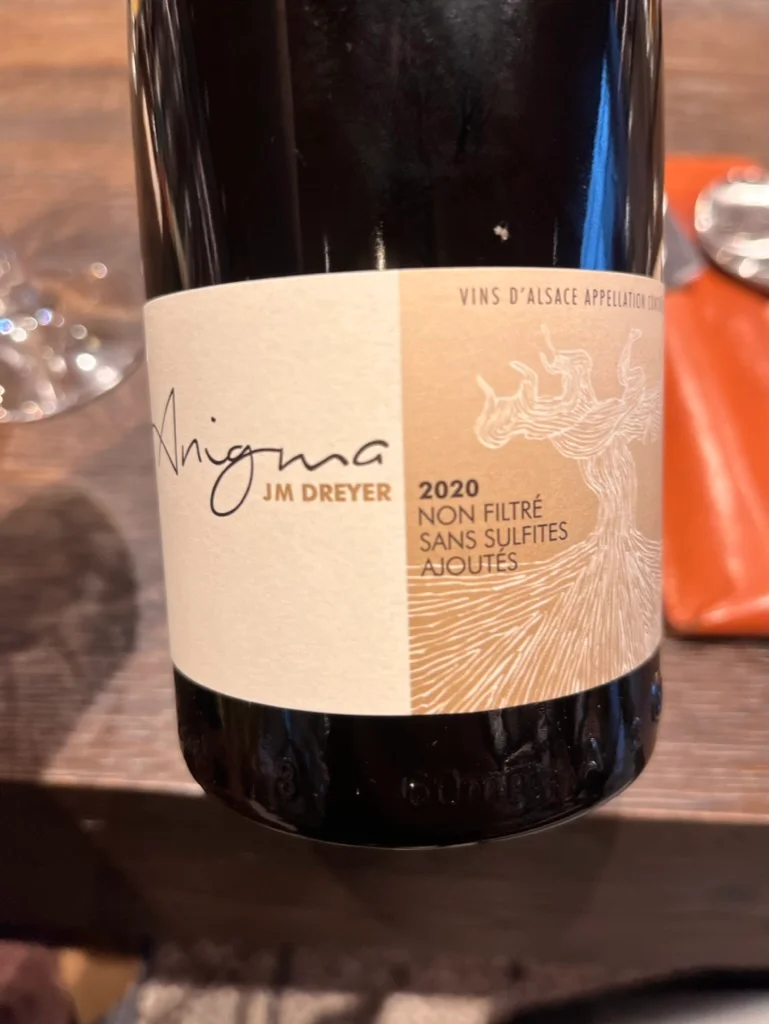
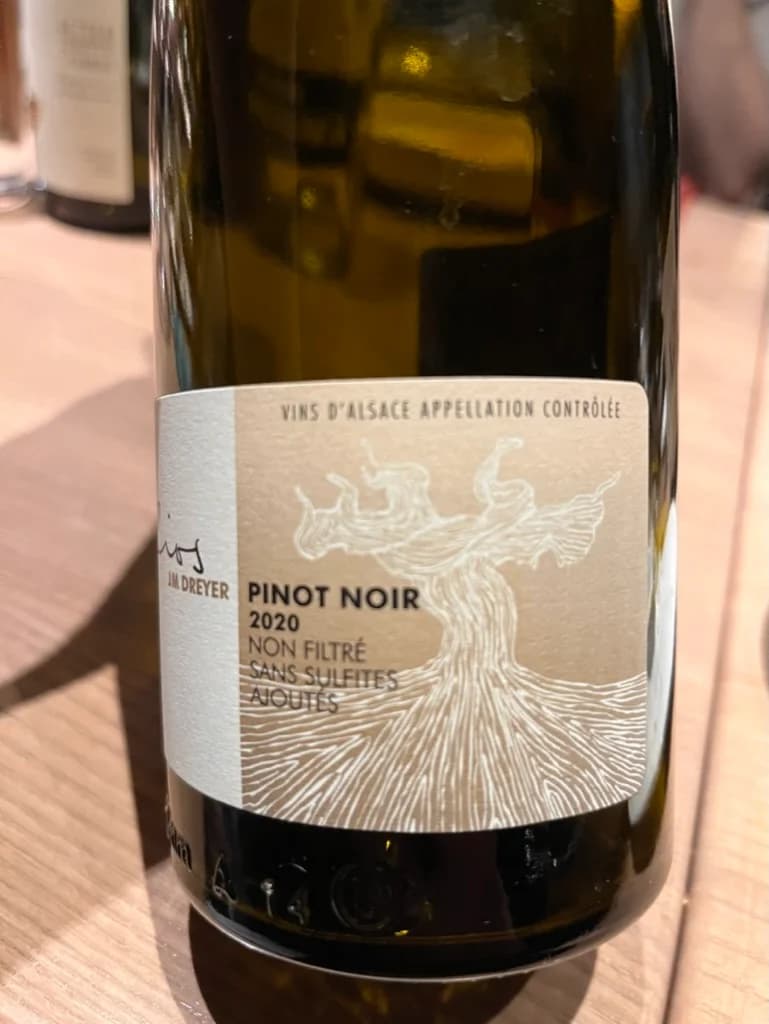
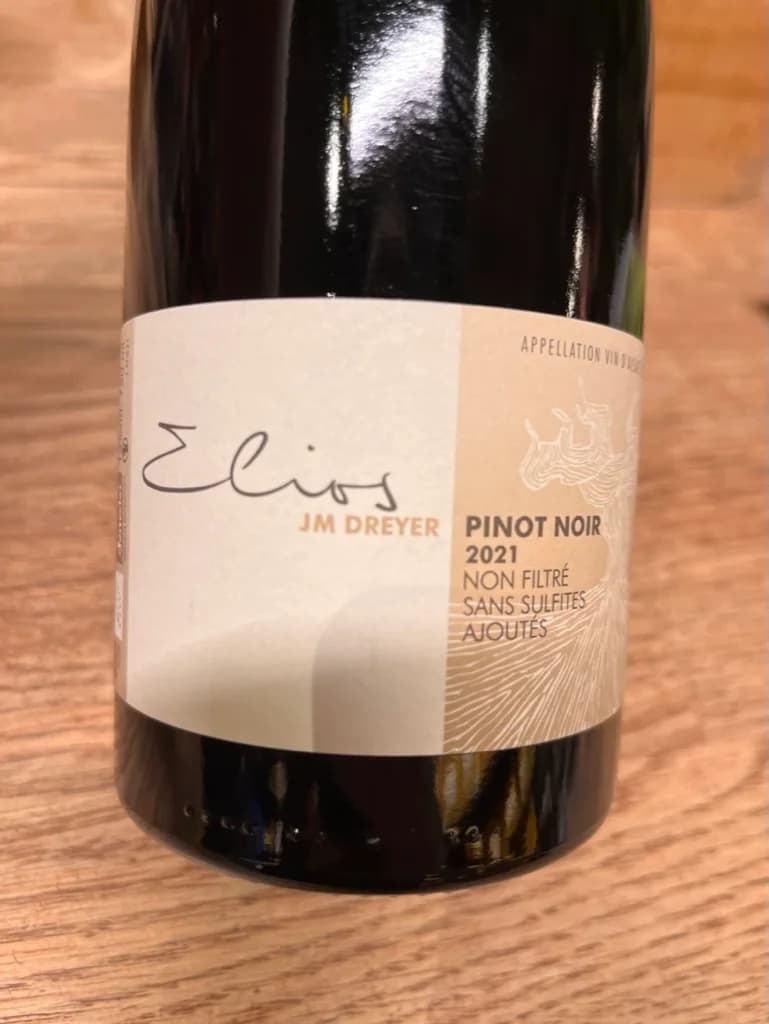
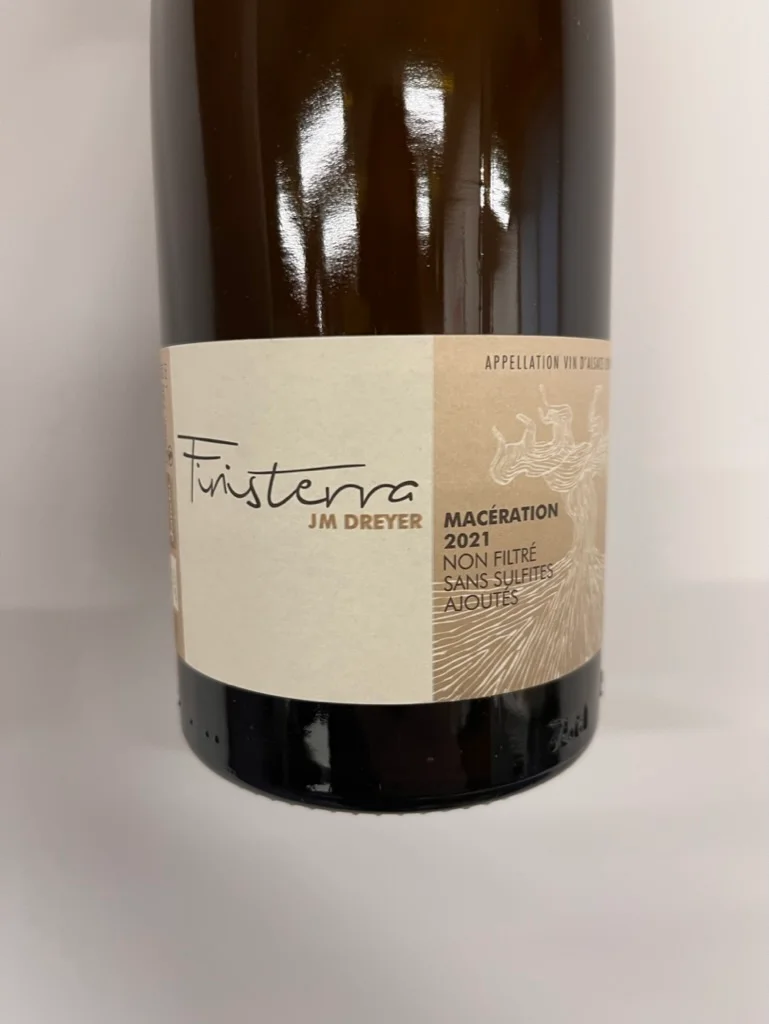
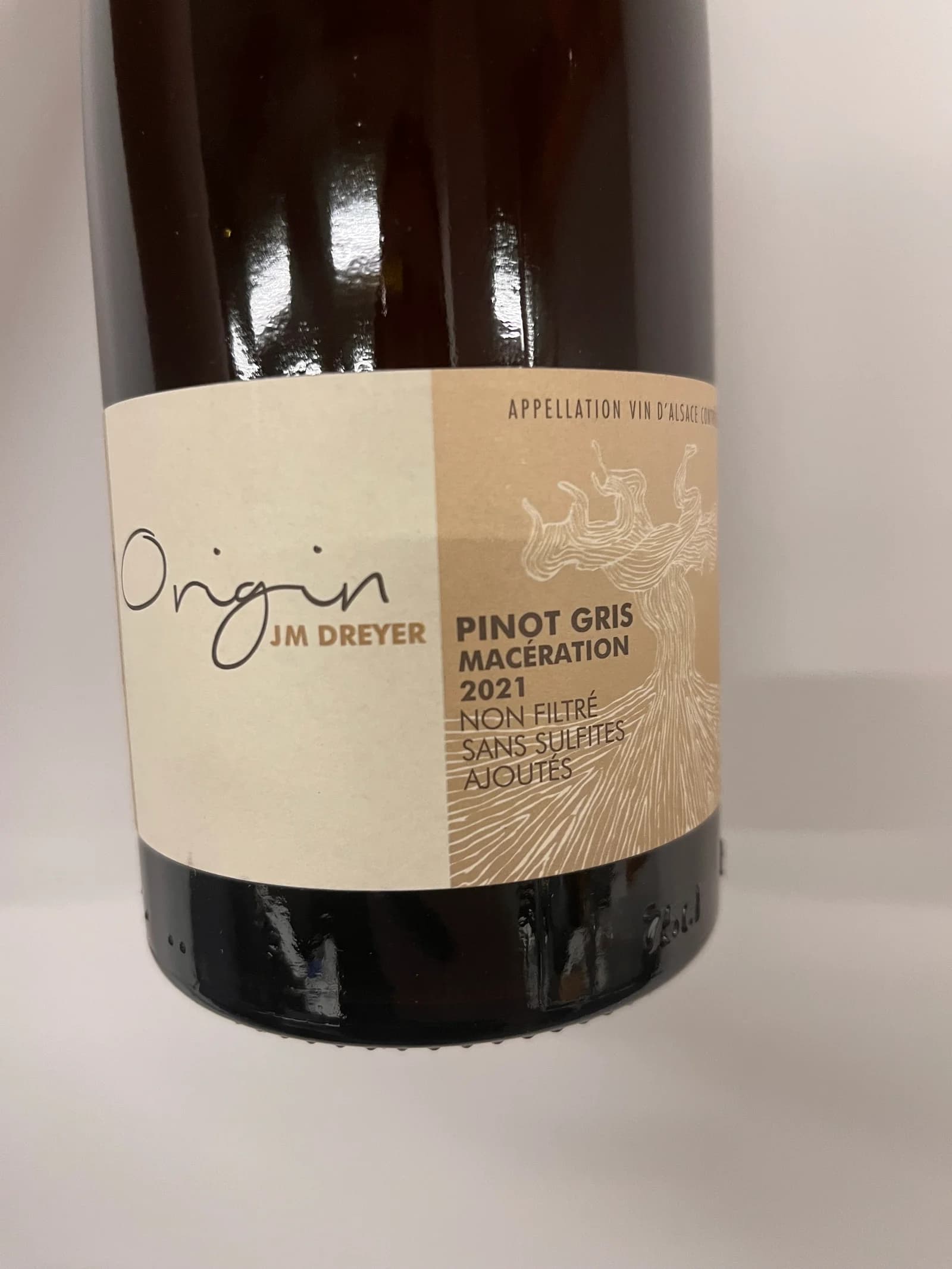
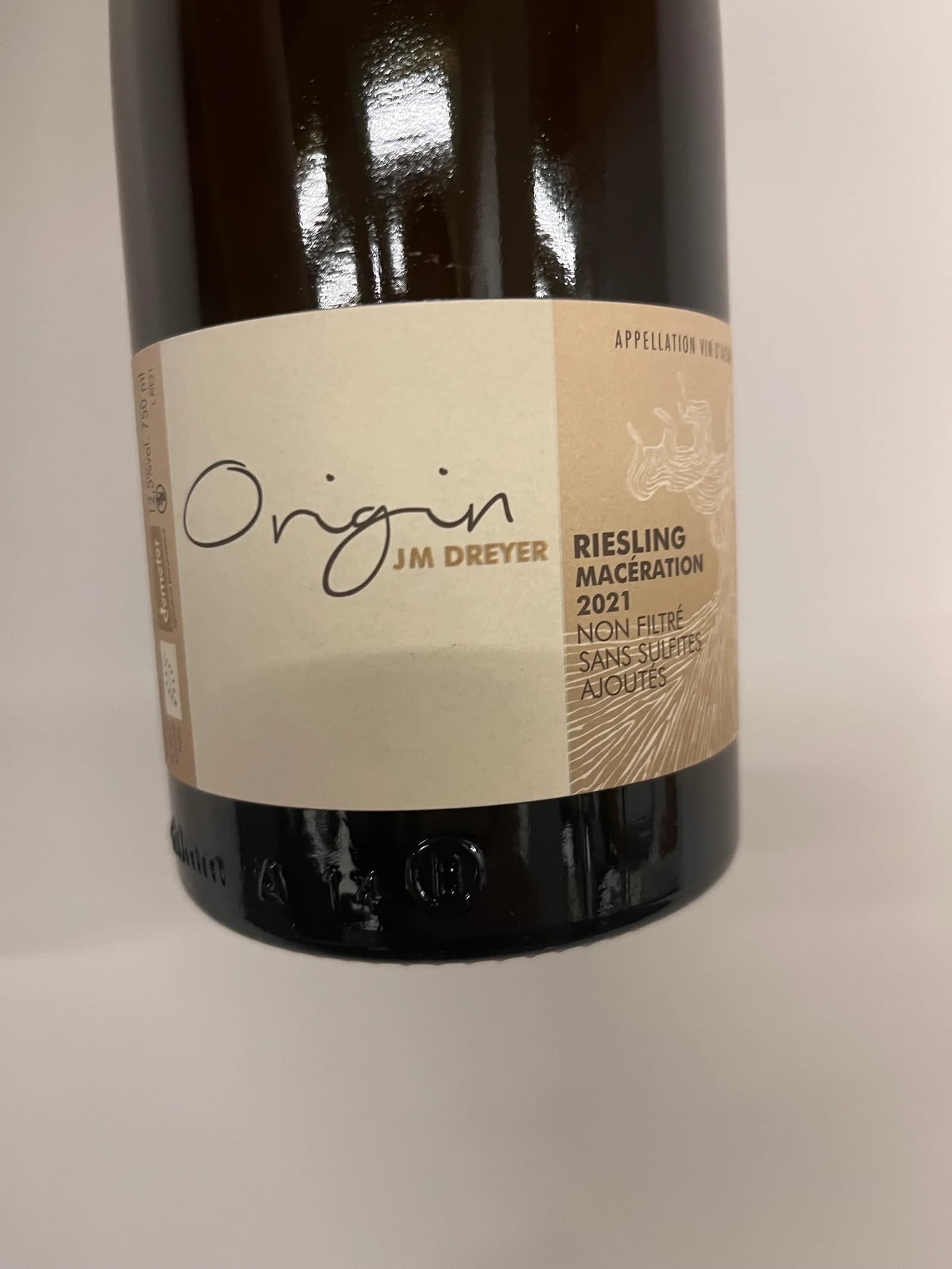
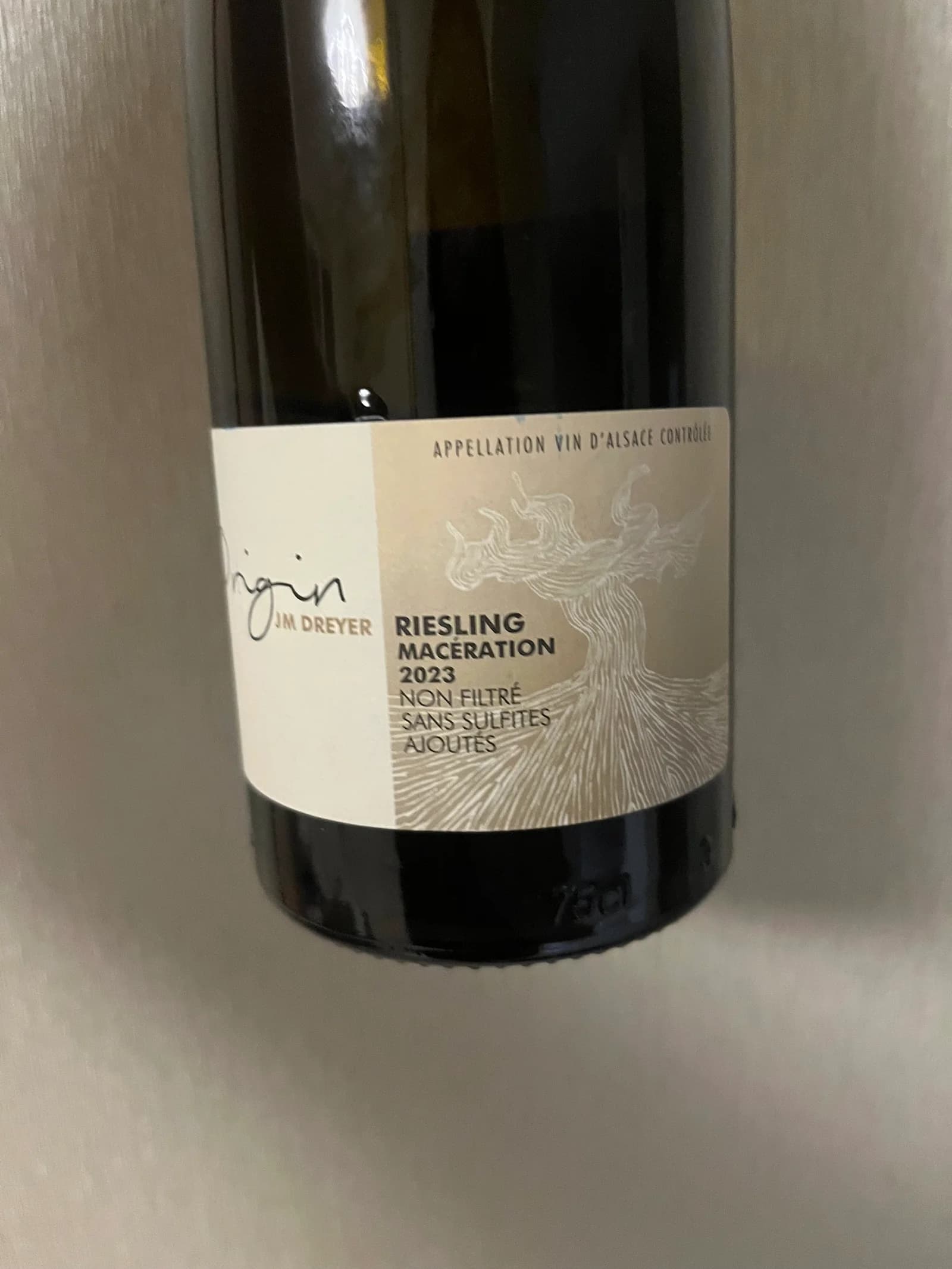
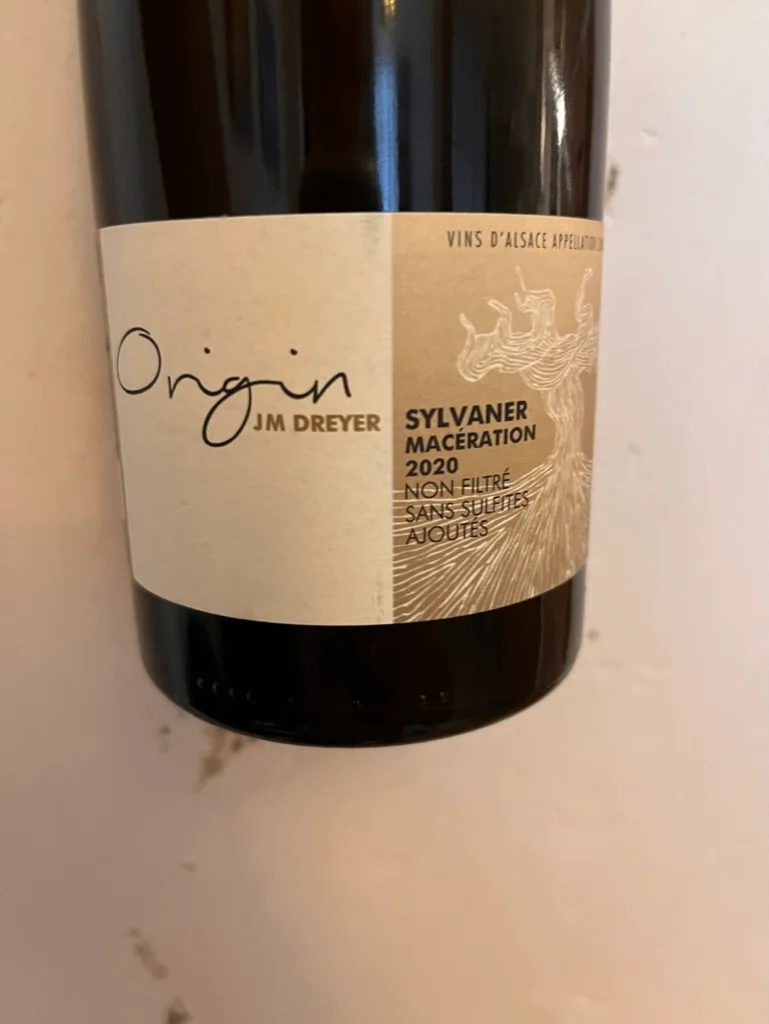
The house signature is extended skin-contact on whites. The Origin line bottles each variety with roughly ten to twenty days of maceration, fermented in open "skips" under tarpaulin in front of the house, then racked into stainless and aged in Alsace foudre or old barrique for at least a year. Around that sit Argitis (direct-press Riesling, named after Argitis minor - the ancient Latin name sometimes identified as Riesling's ancestor); Elios (Pinot Noir in foudre) and Anigma (Pinot Noir in barrique); Pink Pong (skin-macerated Pinot Gris with Pinot Noir and sometimes Auxerrois, depending on the vintage); TriAux (Auxerrois); and Cuvée Brutus (Pinot Gris / Auxerrois).
The central biographical note: after a Compostela pilgrimage around 2009, Jean-Marc committed to never adding sulphur again. Reports of the first fully zero-SO2 vintage vary between 2009 and 2013, but that was the direction of travel from then on.