All producers
Poças
Douro, Portugal2 wines4.1 avg
Family-owned Port house in Gaia since 1918 - old tawnies and colheitas first, DOC Douro pioneer since 1990, three quintas across the sub-regions, and the experimental Fora da Série line.
Poças - formally Manoel D. Poças Júnior - Vinhos, S.A. - was founded in Vila Nova de Gaia in 1918, and started out not as a shipper but as a merchant of aguardente vínica, the grape spirit the big Port houses buy to fortify their wines. Port under its own name came later. In a trade long dominated by British-rooted shippers like Taylor's and Dow's, Poças makes a point of being one of the rare houses that was born Portuguese and never left the founding family - the fourth generation runs it today - Pedro Poças Pintão as president, Maria Manuel Maia over the vineyards, Jorge Manuel Pintão as technical director - alongside winemaking director André Pimentel Barbosa, at the house since 2015.
Three quintas, deliberately one per Douro sub-region, about 100 ha with 76 under vine:
- Quinta das Quartas (Baixo Corgo, Régua) - in the family since 1932, when a client settled a debt with it. Barely a hectare of vines, but it is the winemaking centre: every Poças wine is vinified here, granite lagares included, next to a warehouse holding some 25,000 hl of ageing Port.
- Quinta de Santa Bárbara (Cima Corgo, Ervedosa do Douro) - bought 1999, around 30 ha with prized old field-blend vines (40-60 years per the producer); the source of most of the top wines, from Vintage and Colheitas to the Símbolo red.
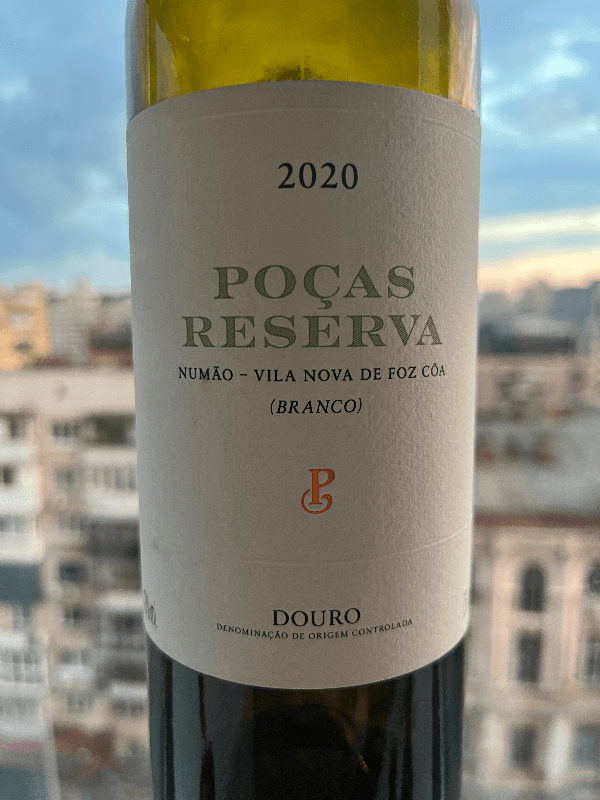
- Quinta de Vale de Cavalos (Douro Superior, Numão) - bought 1988, 440-510 m up on a transition between schist and granite; the high-altitude white engine of the house.
The head office and the historic lodge - more than 800 casks, with an in-house cooperage still working - remain in Gaia. The reputation rests on wood-aged Ports: age-indication tawnies up to 50 Years, and Colheitas the house never stopped bottling, with a current list reaching back to 1967. Vintage came late - the first declaration only in 1960 - LBV is bottled unfiltered, and Port is still about three quarters of the business.
The other quarter is the interesting part. Jorge Pintão - a Bordeaux oenology masters behind him, where he crossed paths with Ribéreau-Gayon and Dubourdieu - pushed the house into DOC Douro table wine in 1990 with Coroa d'Ouro, among the first of the Port houses to make the move. The still range now runs from Coroa d'Ouro through the Poças Douro and Reserva lines up to Símbolo, the old-vine Cima Corgo flagship. Since 2019 the experimental Fora da Série series works as the house lab - amphora and orange wines, a granite-lagar field blend, a 100% Rabigato sparkling from the highest Numão parcels, even a "Bonificador" tawny named for the old blending wines that "bonify" a young Port lot - with the stated job of testing techniques for a warming Douro and feeding what works back into the core range. The centenary years added a revived Quinado (quinine-infused old tawny), a 100-bottle 1918 Very Old Tawny, and the Soberbo vermouth from house recipes of the 1930s-40s.
Farming at the Numão and Ervedosa do Douro vineyards has carried integrated-production certification since 2013 - hedges, cover diversity, cattle in the vineyard - with no organic conversion claimed, and the harvest start has crept to mid-August in warm years.