All producers
Frey
Douro, Portugal2 wines4.2 avg
11
Pedro Ramos Frey's three and a half hectares above Lamego - granite Douro at six hundred metres, century-old field-blend vines, made entirely by hand and a horse called Che.
Pedro Ramos Frey comes from several generations of Douro growers - the kind of family that traditionally sold its grapes to the big port houses and never bottled. He trained in viticulture and oenology, worked harvests across France, Italy, Australia, Argentina, and California, and ran a business in Lisbon for some years before deciding to leave it all and go home. In 2012 he moved full-time back to the family farm above Lamego, in the high country where the Douro valley starts to soften toward the Beira plateau. He released his first wine from the 2013 vintage.
The estate is small and stubbornly hand-worked: three and a half hectares at six hundred metres or higher, on granite with some schist - which makes Frey's wines unusually fresh, mineral, and acid-driven for the Douro, a region whose default register is southern, schist-warm, and powerful. Vines are old (many over a hundred years), planted as field blends rather than single varieties. Pedro works the rows by hand, helped by his horse, Che.
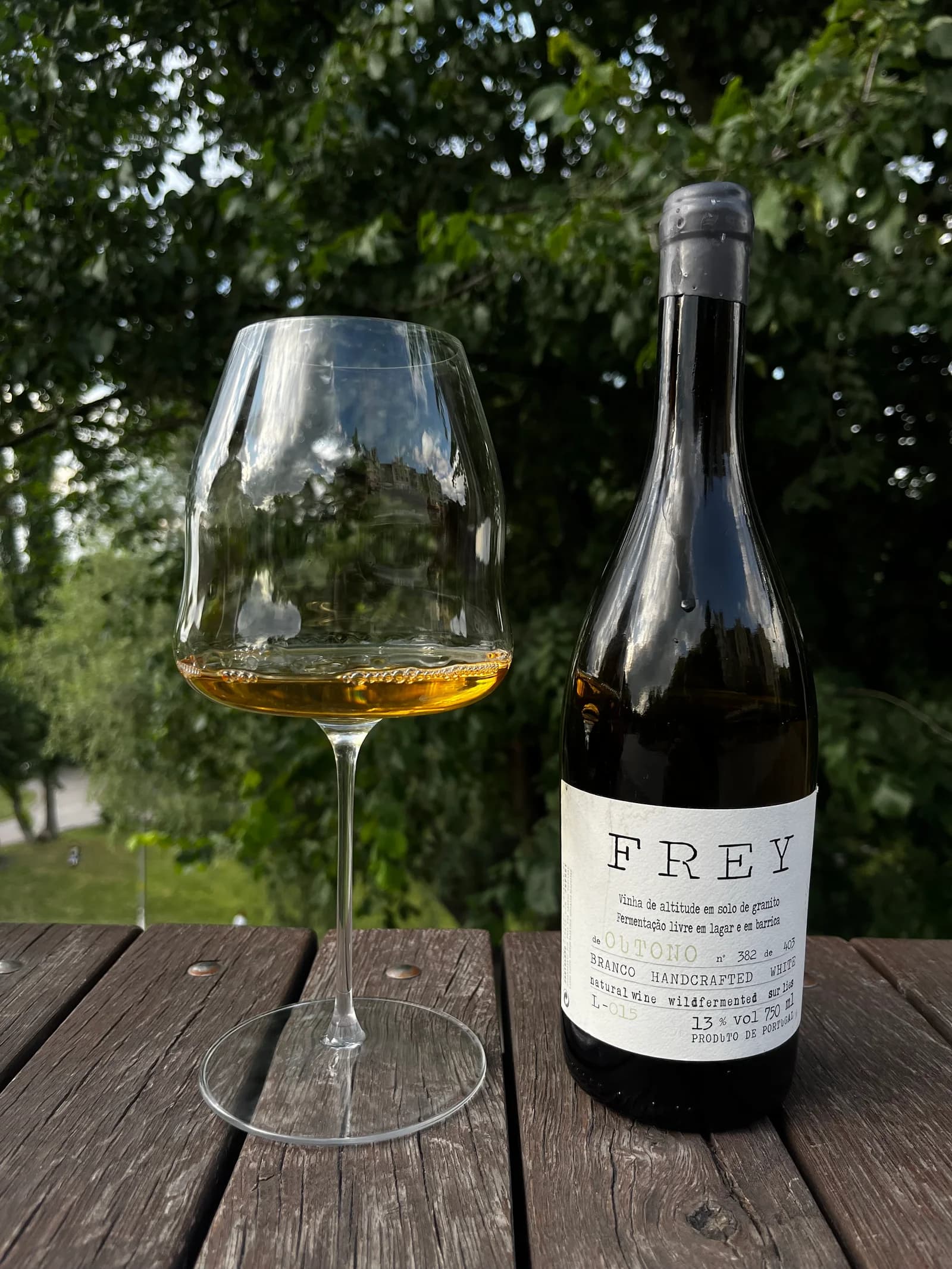
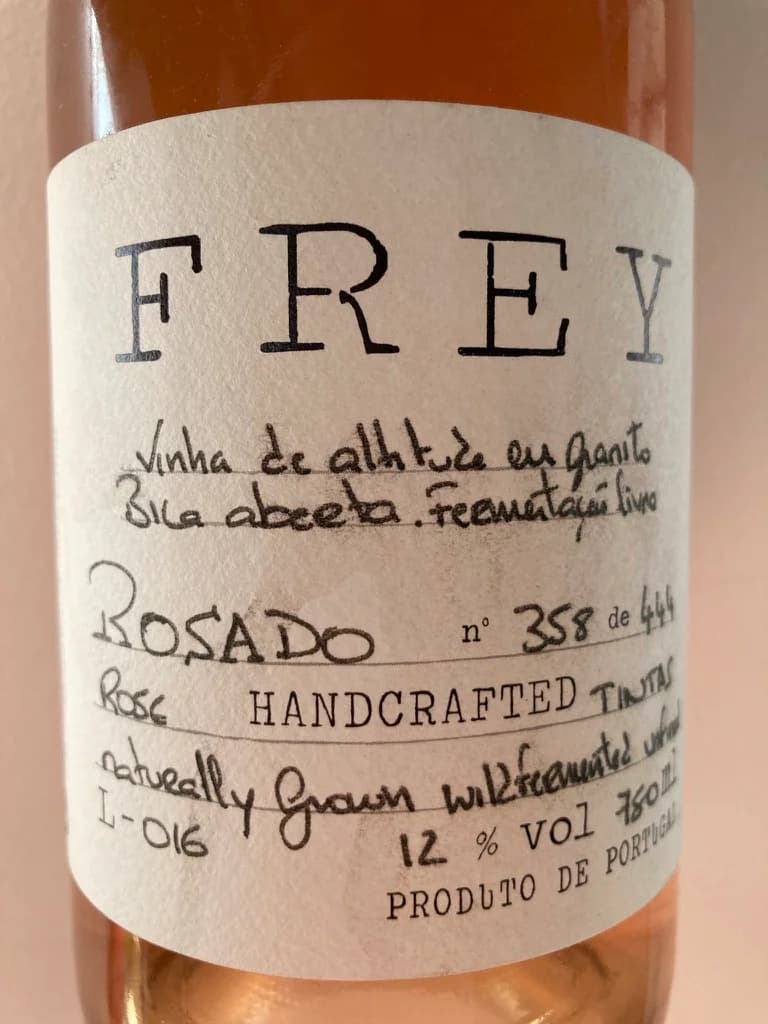
The cellar is in a century-old farmhouse he restored himself. Whole-bunch fermentation, native yeasts, no additions (no acid, no fining, no fining agents), gravity rather than pumps, hand-bottling and hand-labelling on recycled paper with natural cork. Organic in the vineyard. The wines sit deliberately outside the conventional DOC Douro style - lighter, more transparent, more idiosyncratic, and described (with some affection) as disconcerting.
Key cuvées include Frey Granito (Tinto and Branco - the flagship granite-soil bottlings), the É o que é series ("It is what it is", with rotating lot codes), and the Frey Blend red. Revista de Vinhos named him Produtor Revelação do Ano (Breakthrough Producer of the Year) for the work in Lamego.
Frey sits comfortably alongside Aphros, Cabeças do Reguengo, and Filipa Pato in the small but growing cohort of Portuguese natural producers working at altitude, in granite, with old vines, and against everything the country's industrial wine sector usually produces.