All producers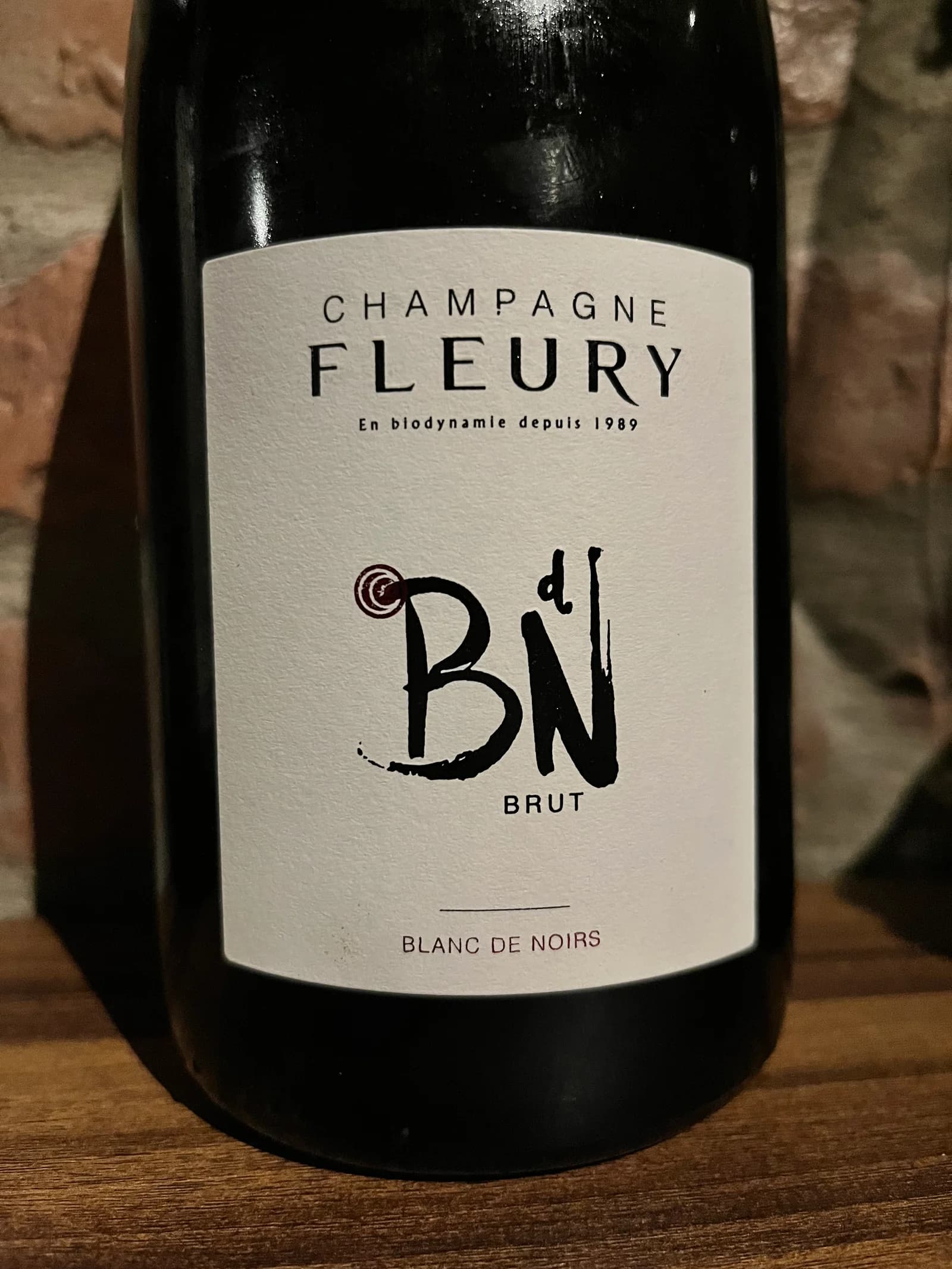
Fleury
Côte des Bar, France9 wines4.2 avg
81
The first Champagne grower to convert to biodynamics - Courteron, Côte des Bar, fifteen hectares on Kimmeridgian marl, four generations, and now a zero-sulphur cuvée.
Fleury was founded in 1895 in Courteron, in the Côte des Bar at the southern end of Champagne. Emile Fleury was the first to graft Pinot Noir in the area after phylloxera. His son Robert began Champagne production in 1929. But the decisive moment came in 1989, when Jean-Pierre Fleury became the first Champagne grower to convert to biodynamics - at a time when that word still sounded like a religion rather than a marketing strategy. Full conversion was achieved by 1992.
The estate is now in its fourth generation: Jean-Sébastien (winemaker, who created Sonate - the zero-sulphur cuvée - from the 2009 harvest) and Morgane (who represents the estate commercially and is behind the newer cuvées Notes Blanches and Bolero). Around fifteen hectares on Kimmeridgian marl - not the Campanian chalk of the Côte des Blancs, but fossilised ancient seabed, 150 million years of compressed clay, limestone, and oyster shells. Eighty-five percent Pinot Noir, with Chardonnay, Pinot Blanc, Pinot Gris, and Meunier.
The cuvées:
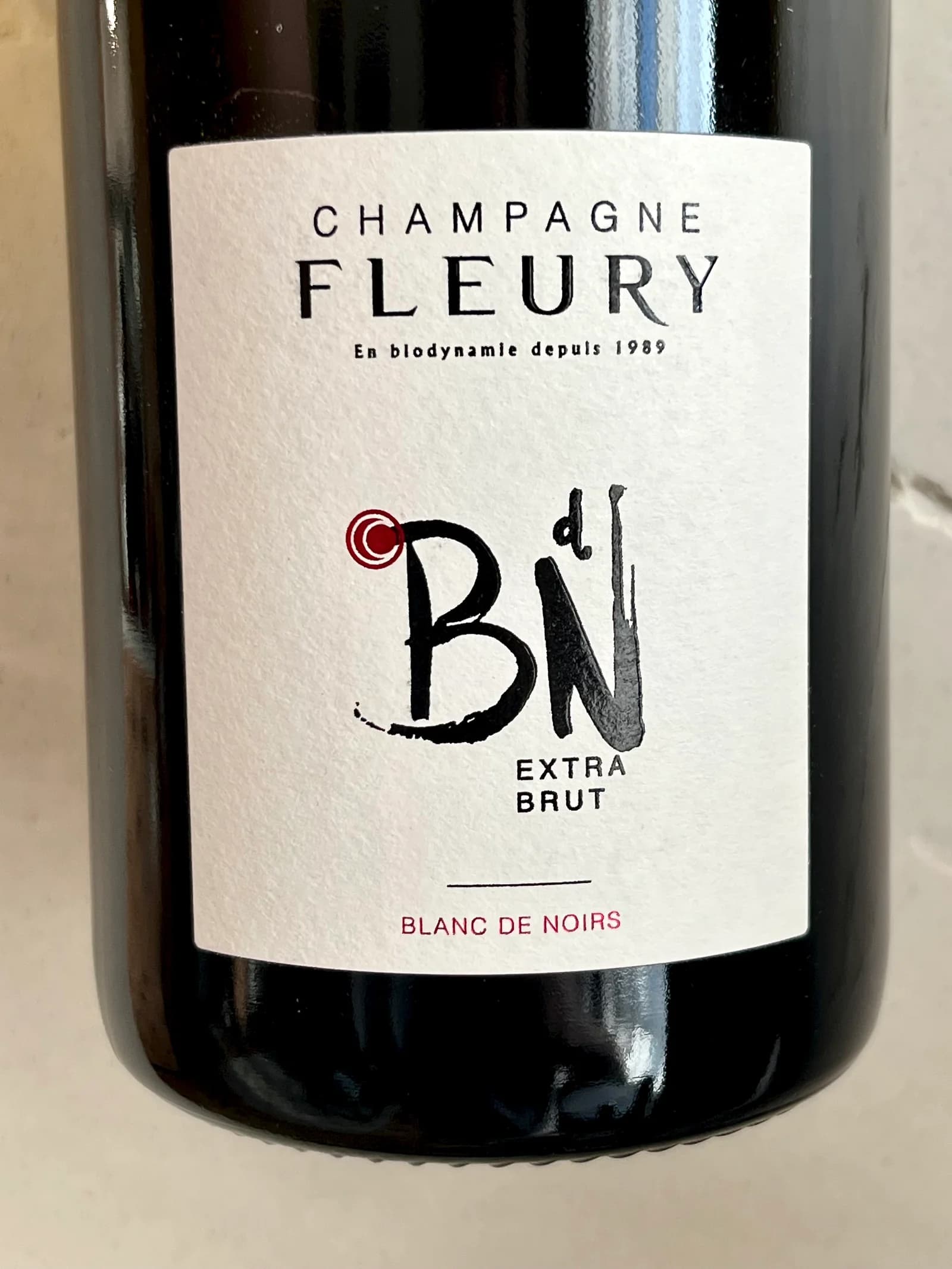
- Blanc de Noirs Brut - created 1955 by Robert Fleury, pure Pinot Noir, réserve perpétuelle. The house signature.
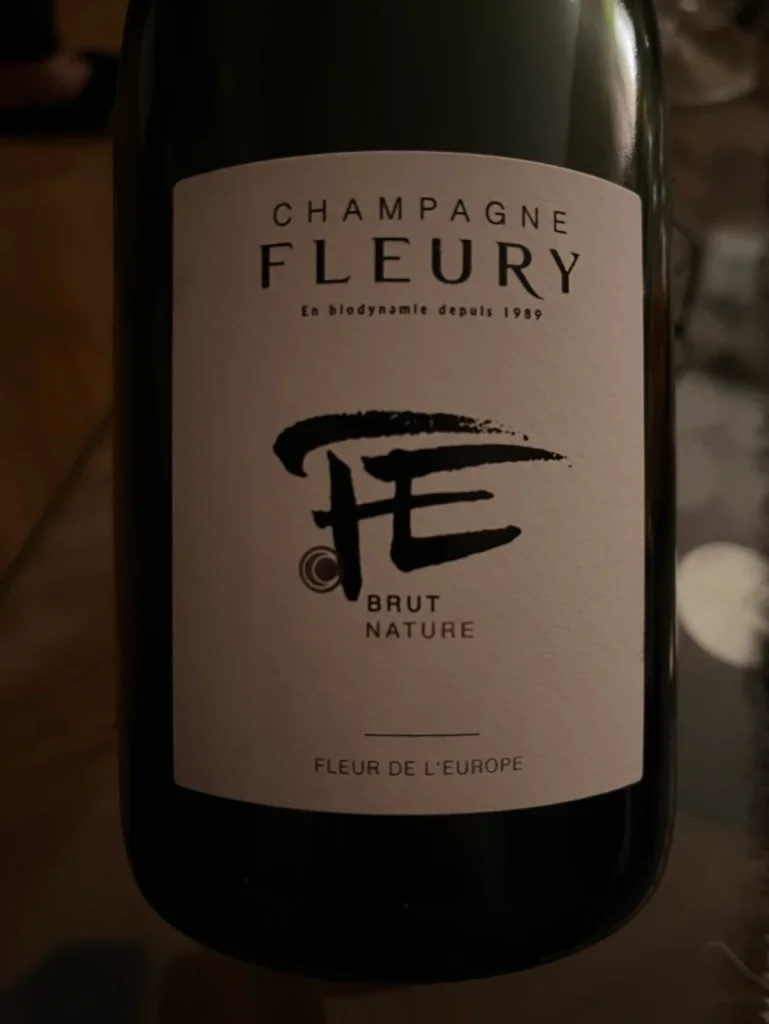
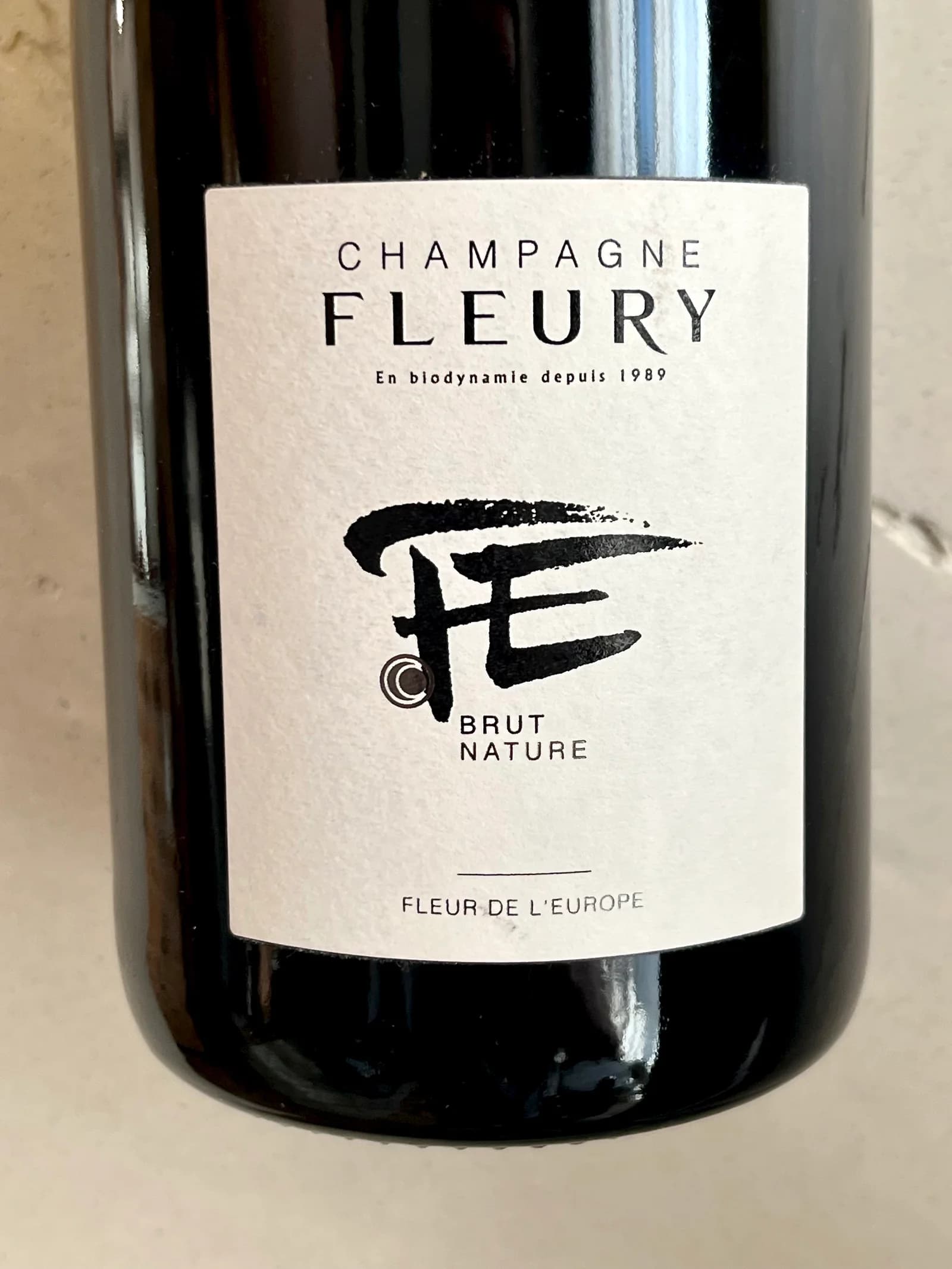
- Fleur de l'Europe Brut Nature - the first biodynamic cuvée produced in Champagne. Pinot Noir and Chardonnay. Named after Europe in 1989, the year of the fall of the Berlin Wall.
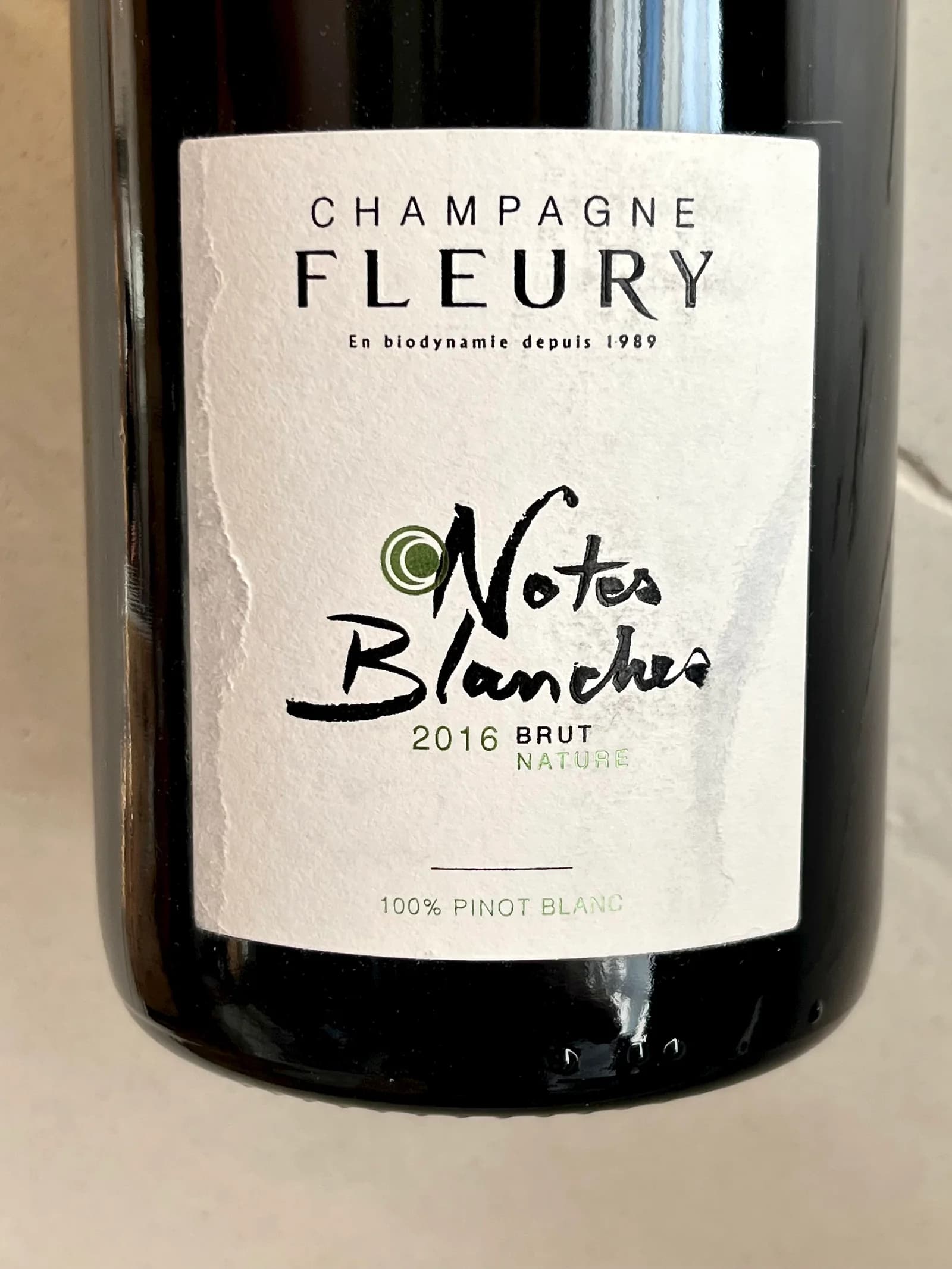
- Notes Blanches - 100% Pinot Blanc, Brut Nature (Morgane's creation). One of Champagne's few single-variety Pinot Blanc bottlings.
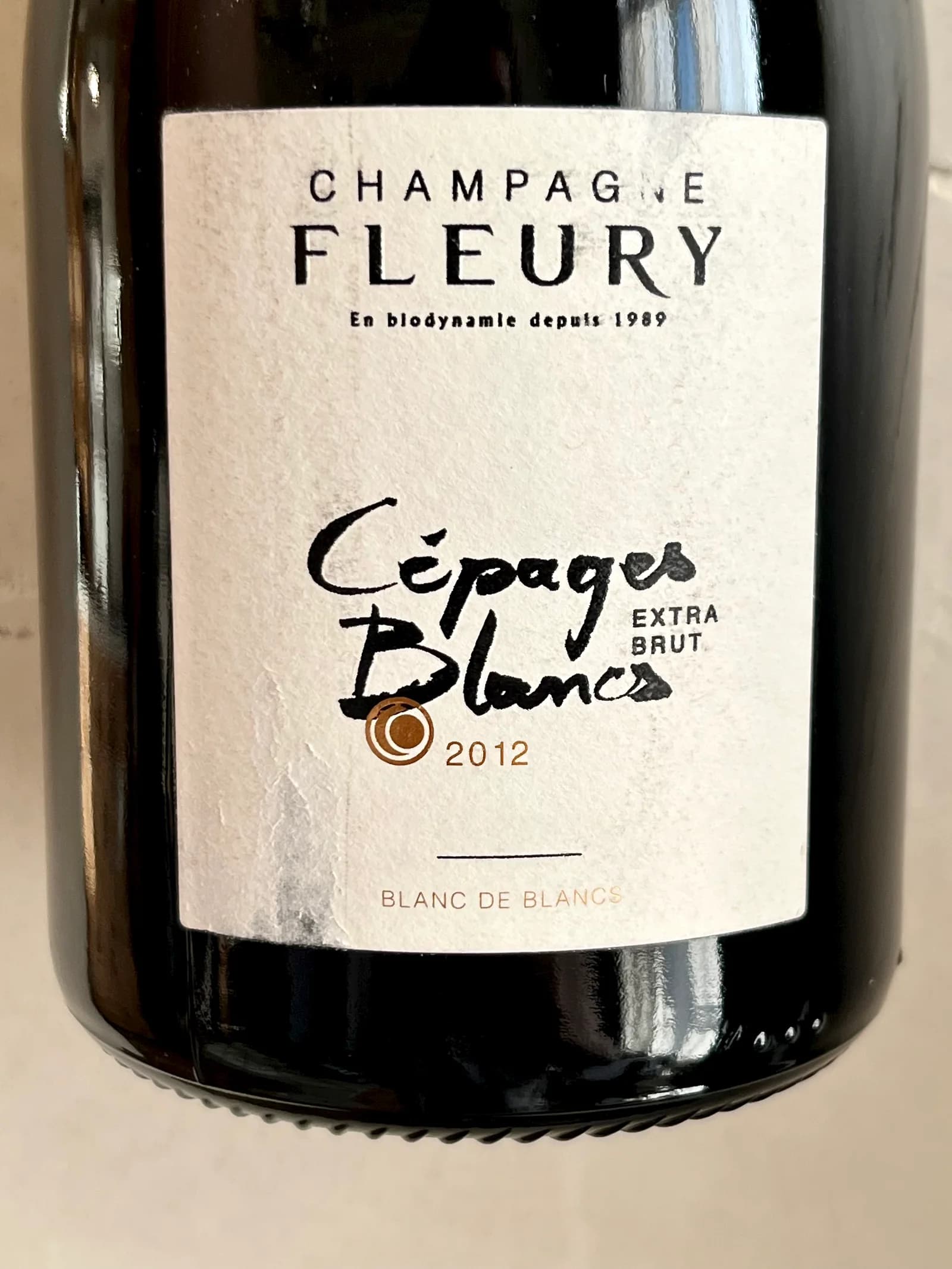
- Cépages Blancs Extra Brut - Chardonnay and Pinot Blanc
- Sonate Extra Brut - Pinot Noir and Pinot Blanc. No added sulphur at any stage (Jean-Sébastien's creation).
- Bolero - pure Pinot Noir vintage (Morgane)
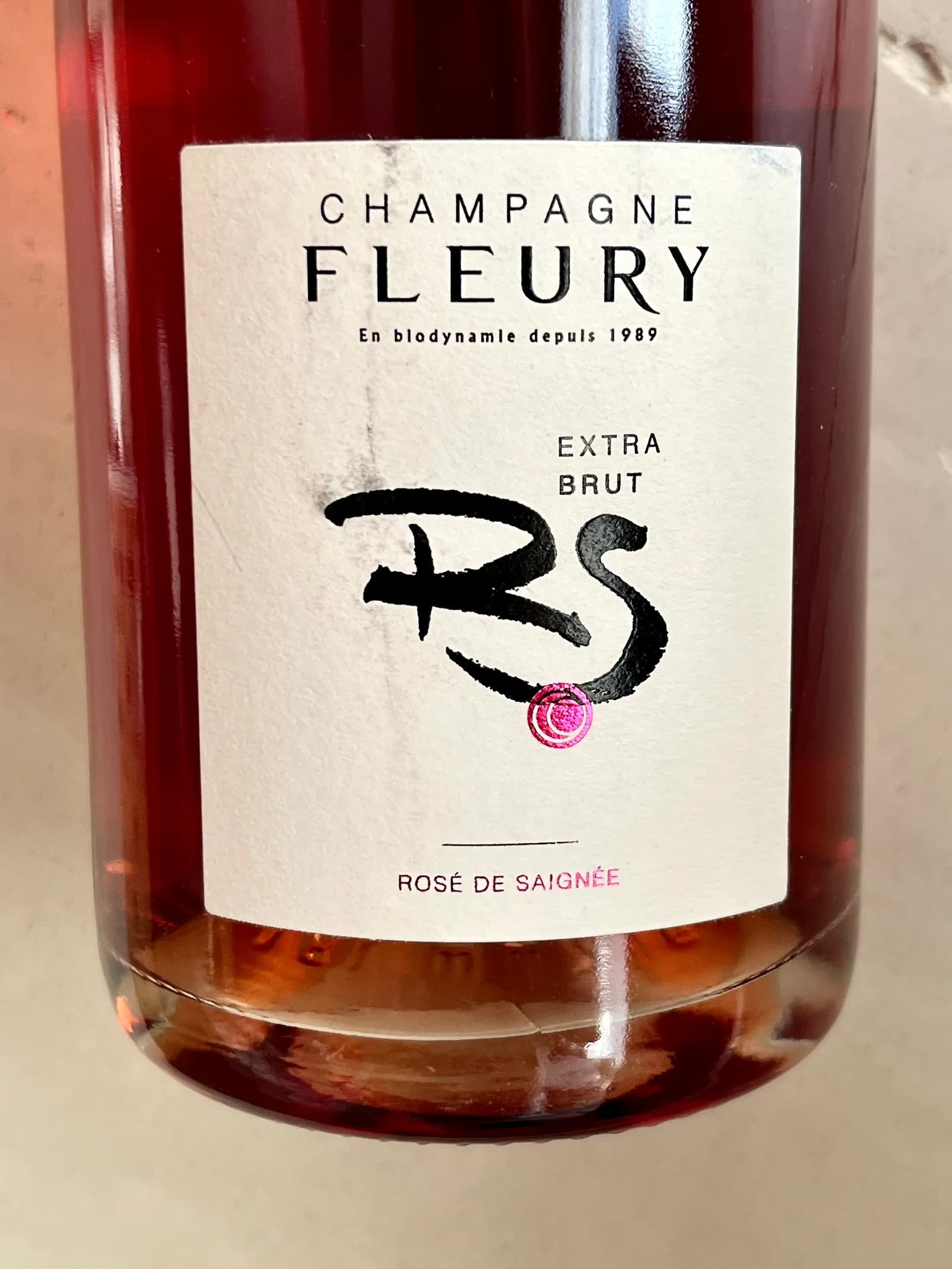
- Rosé de Saignée - saignée method, Pinot Noir
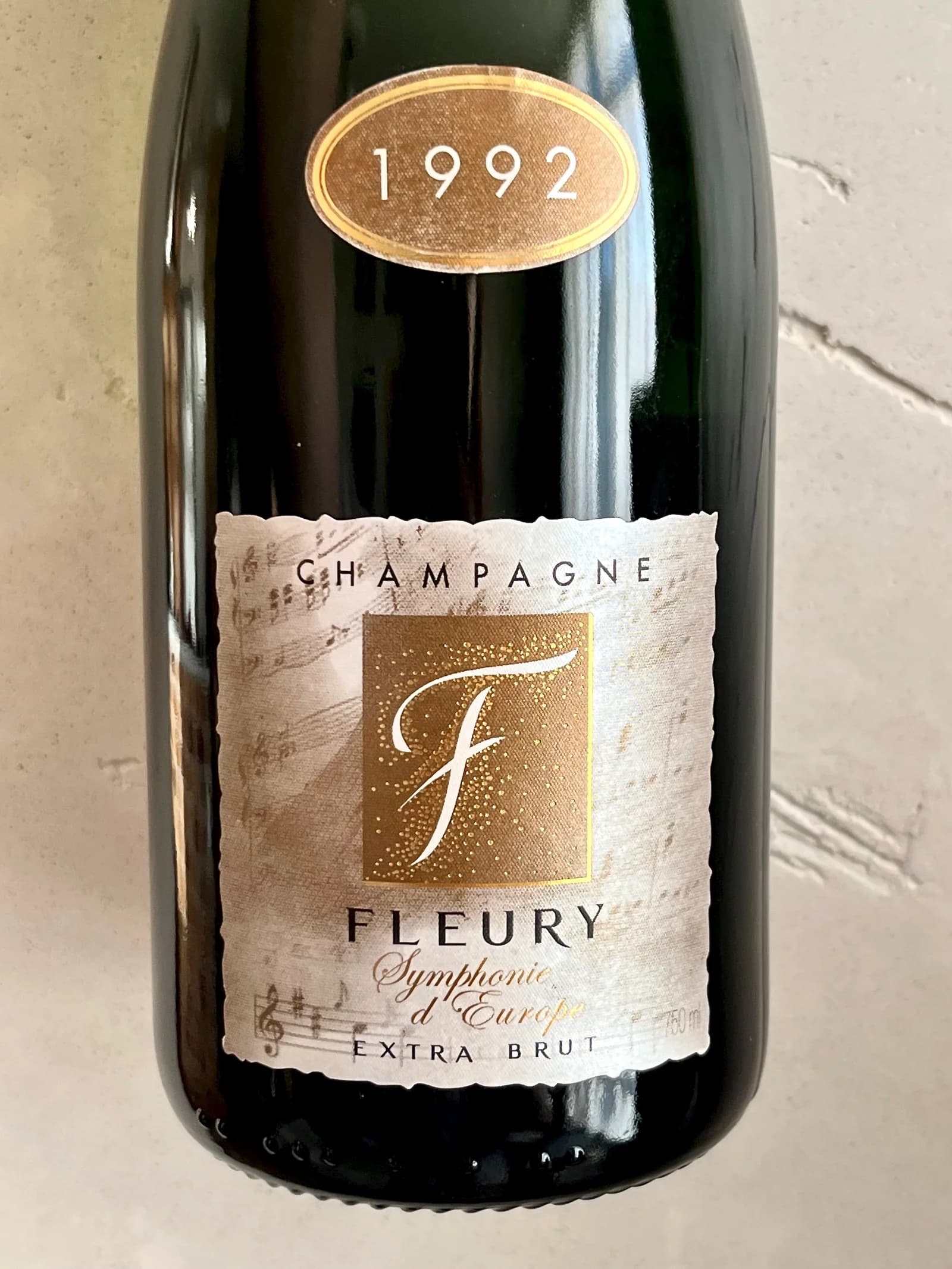
- Symphonie d'Europe - discontinued prestige cuvée, late-disgorged
Across the range a single thread runs through: a saline, stony minerality - the fossilised seabed announcing itself in the glass. At Fleury it is not background. It is the wine.
Wines
4.0
BdN d2023
NV (2018)· France
4.1
BdN d2025
NV (2020)· France
4.3
Cepages Blancs
2012· France
4.4
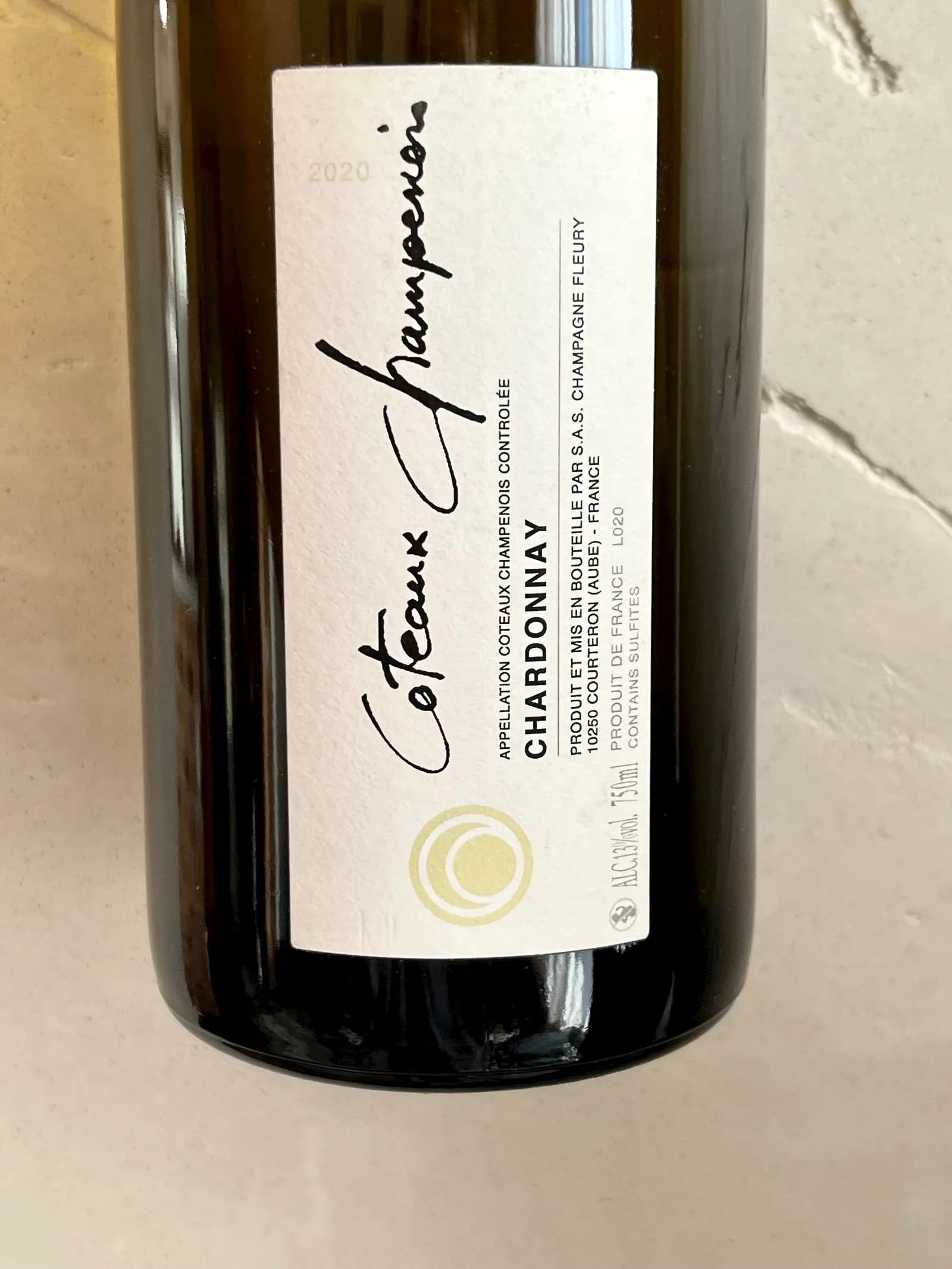
Coteaux Champenois Chardonnay
2020· France
4.1
Fleur de L'Europe (2014)
NV (2014)· France
4.2
Fleur de L'Europe (2019)
NV (2019)· France
4.3
Notes Blanches
2016· France
4.3
Rosé de Saignée
2019· France
4.4
Symphonie d'Europe
1992· France