All producers
Weinbau Wenzel
Burgenland, Austria6 wines3.9 avg
42
Rust am See, Burgenland. Continuously in the Wenzel family since 1647 - twelve generations. Robert Wenzel smuggled Furmint cuttings back across the Iron Curtain in 1984; son Michael is the Austrian Furmint reference. Also a top Ruster Ausbruch house (flagship Saz).
Weinbau Wenzel has been in the Wenzel family since 1647 - twelve continuous generations in Rust, on the west shore of Neusiedlersee. In 1649 the town famously paid partly in Ruster Ausbruch of Furmint to buy its freedom from feudal servitude from the Habsburgs (full Freistadt status came later, in 1681). The Wenzels' sixteenth-century vaulted cellar still functions today and houses a small museum of old equipment; bottles carry "since 1647."
The figure behind the Austrian Furmint revival is Robert Wenzel, who smuggled Furmint cuttings across the Iron Curtain from Hungary in 1984 to replant in Rust - years before the Vienna-Tokaji revival. His son Michael has made wine at the estate since the mid-1990s, with stints in New Zealand, Australia and California on the way in, and took over winemaking fully in 2008; Robert is still actively involved.
Roughly 9-11 hectares along the Ruster hill-chain, on a mosaic of mica schist, limestone, loess and grey and pink quartz. Converted to organic farming in 2008, minimal-intervention cellar (spontaneous fermentation, no added yeasts); no public Demeter biodynamic certification. The estate describes itself as Naturwein, explicit about the distinction between bio and natural wine.
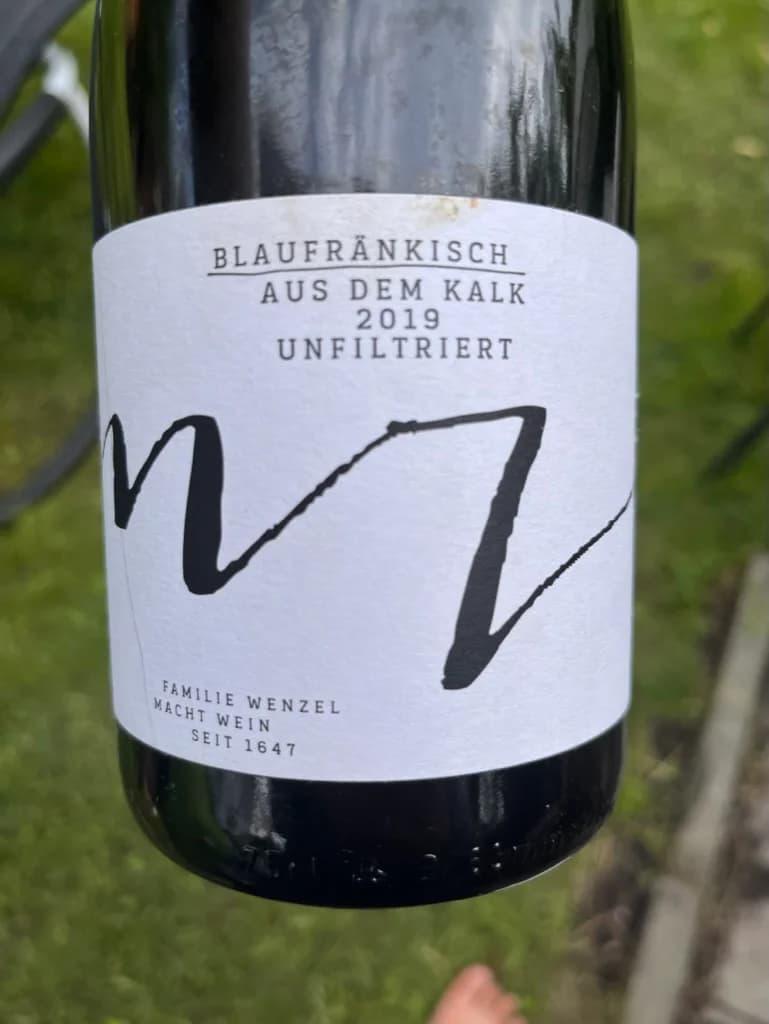
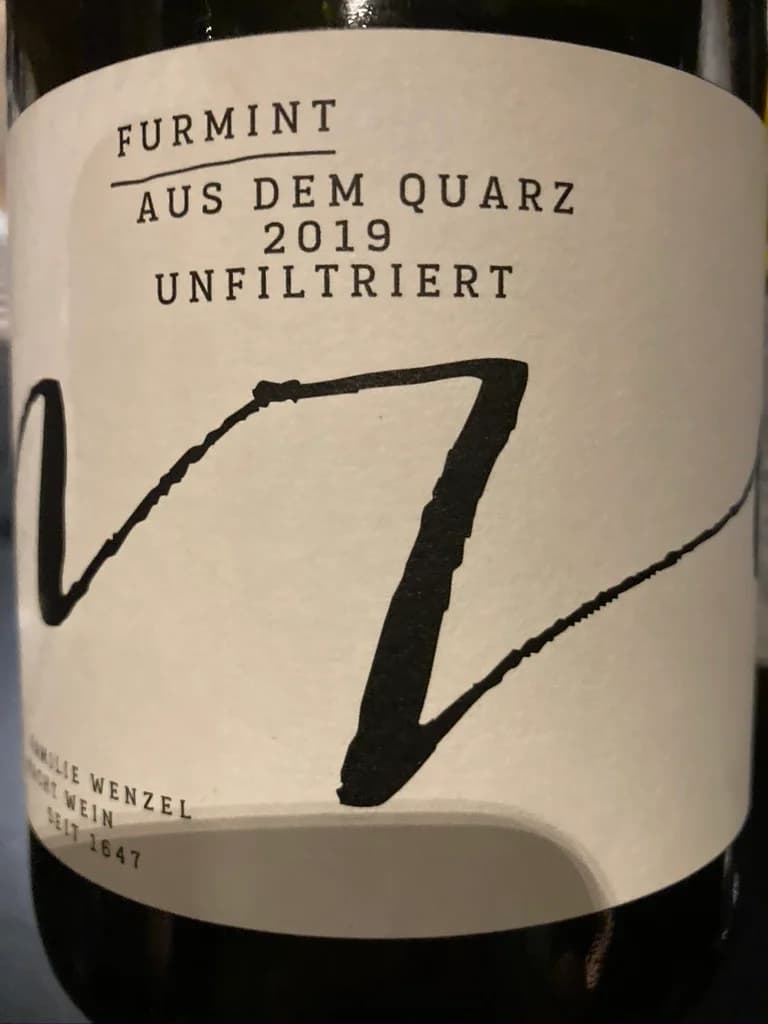
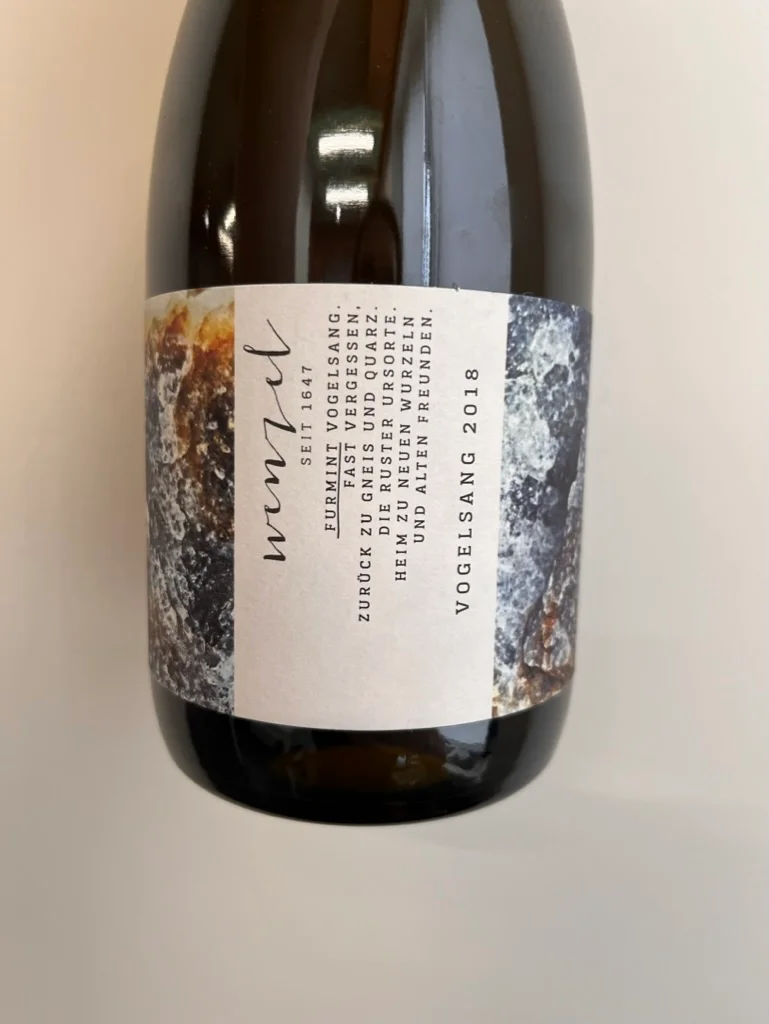
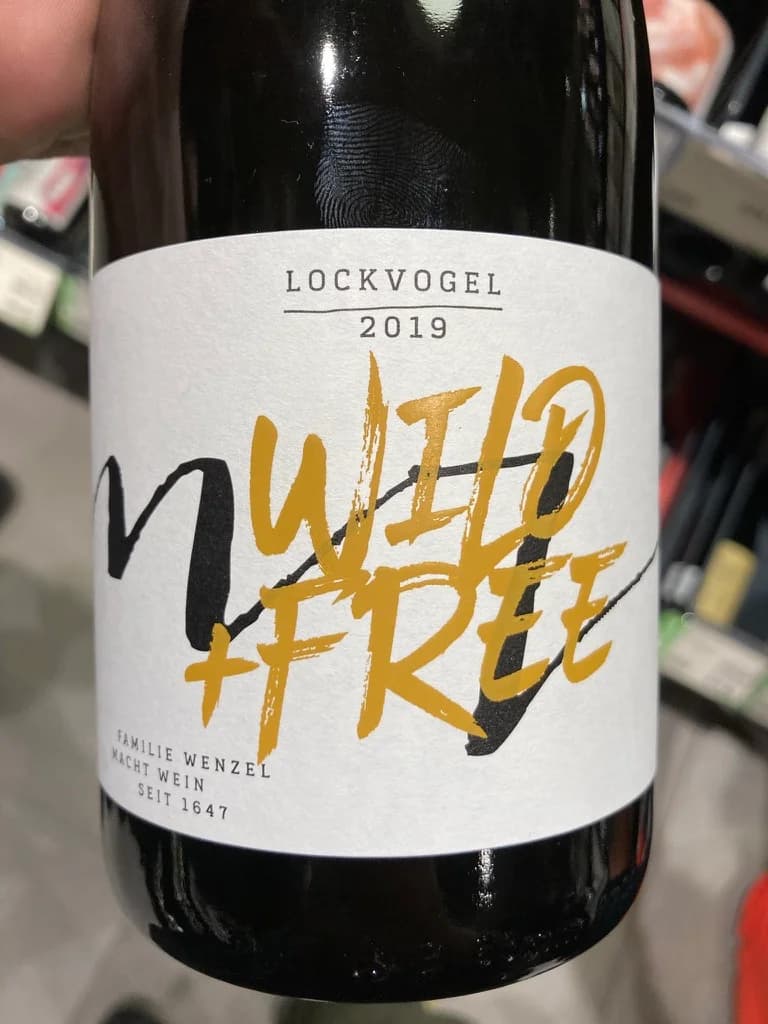
Furmint is the identity - Michael farms roughly three of Austria's ten hectares of Furmint, across Vogelsang, Garten Eden, Oberer Wald and Kleiner Wald, and bottles a soil-driven set: "Aus dem Quarz", Alte Reben, Stockkultur, plus single-vineyard Vogelsang and Garten Eden, a skin-contact "raw-natural" Furmint and a Furmint Beerenauslese. Reds are Blaufränkisch "Aus dem Kalk" and Pinot Noir "Kalkstein"; there is a playful low-intervention line (Lockvogel, Voodoo Child, Fränk, Analogue). The flagship remains the sweet wine: Ruster Ausbruch Saz, 60% Furmint and 40% Gelber Muskateller, with eight months fermentation in new oak followed by twenty-two months in old oak. Routinely named alongside Feiler-Artinger, Heidi Schröck and Triebaumer as the Ausbruch references of Rust.