All producers
Anne et J.F. Ganevat
Jura, France8 wines4.0 avg
431
Fourteenth generation in Rotalier - Jean-François Ganevat's single-parcel Jura whites, rare forgotten varieties, and the benchmark for an entire generation of vignerons.
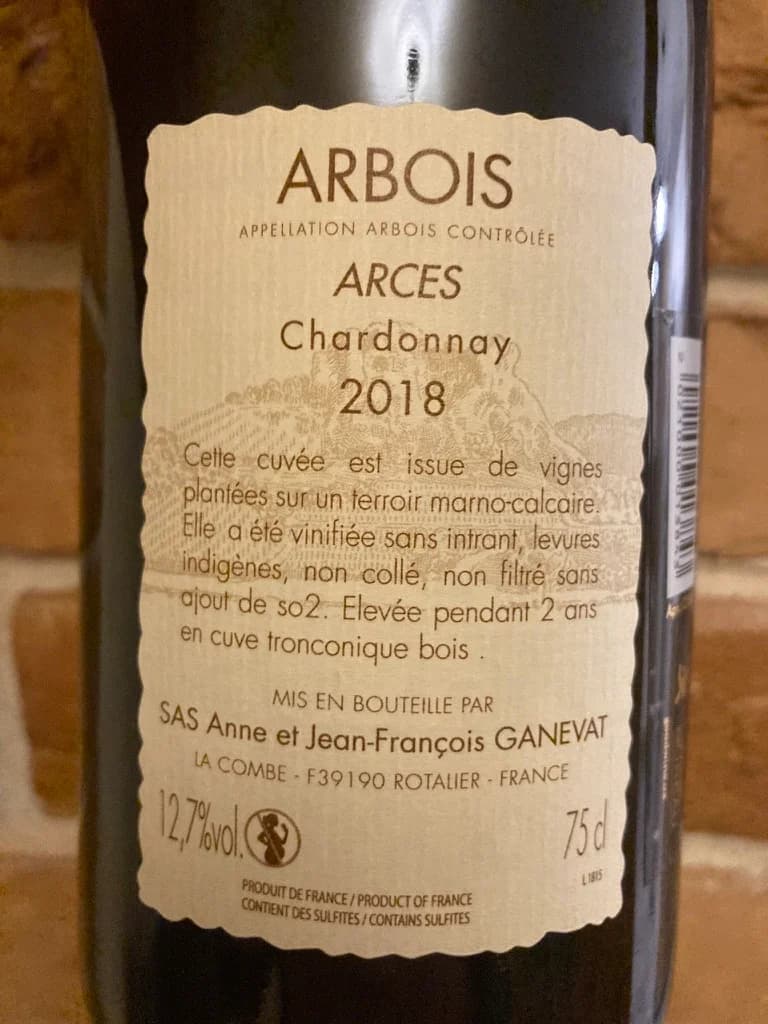
Jean-François Ganevat - "Fanfan" - represents the fourteenth generation of vignerons in Rotalier, La Combe de Rotalier, in the Sud-Revermont of the Jura. The family has been growing grapes here since 1650. He trained as cellar master at Domaine Jean-Marc Morey in Chassagne-Montrachet, then returned to take over the family estate in 1998. His sister Anne runs the domaine alongside him, and together they also operate a négociant activity sourcing from like-minded vignerons.
Around eight and a half hectares, planted with seventeen different varieties - Chardonnay, Savagnin, Pinot Noir, Trousseau, Poulsard, plus rare and near-extinct grapes the French authorities have tried to ban: Petit Béclan, Gros Béclan, Gueuche, Corbeau, Enfariné, Argant, Poulsard Blanc. Each combination of one soil type and one grape variety becomes its own cuvée - roughly thirty-five to forty-five bottlings per year, totalling around 1,700 cases. Converted to organic around 1999, biodynamic since 2006.
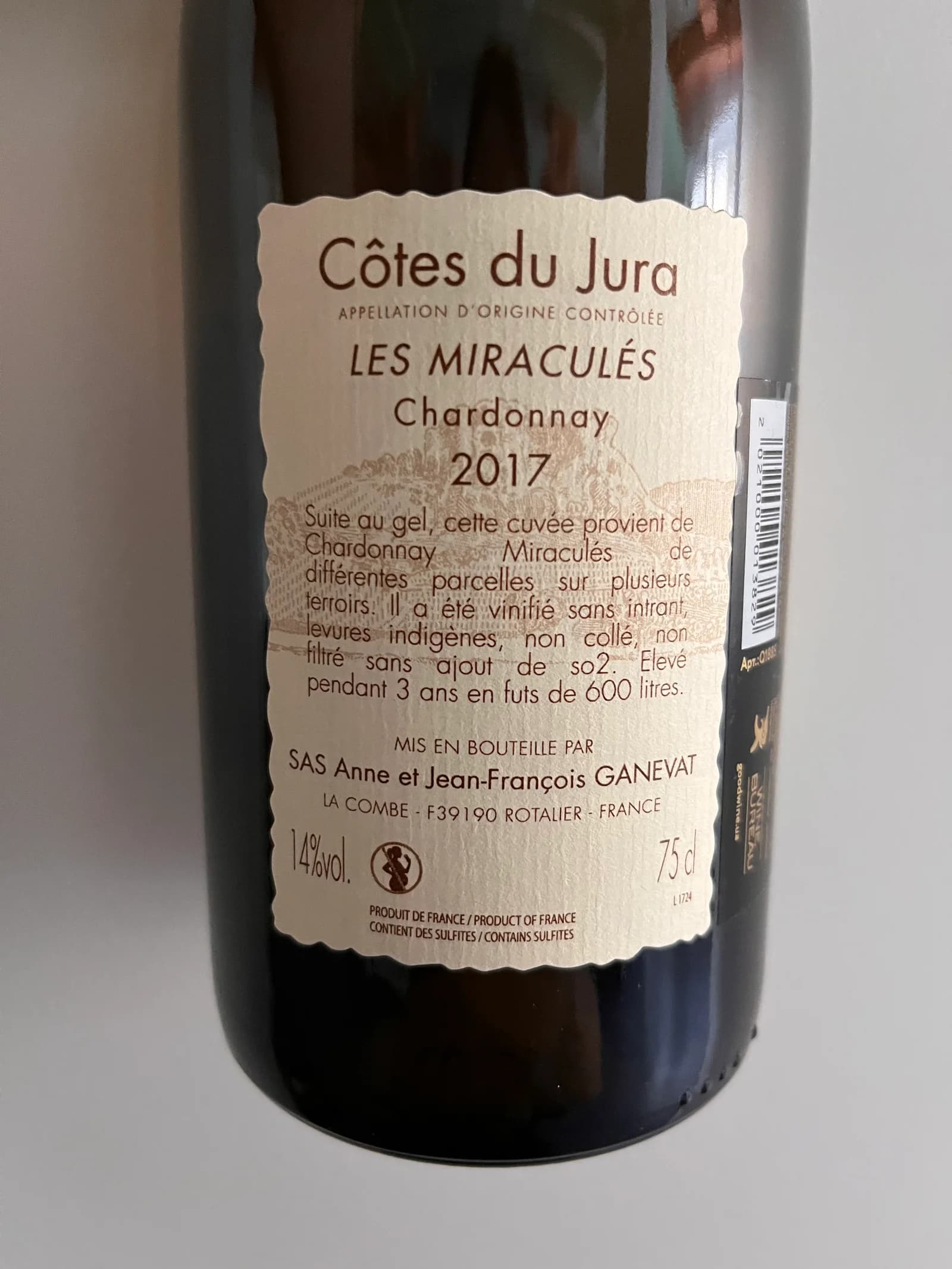
The principle is single-parcel ouillé (topped-up) whites - a Burgundian gesture transplanted to Jura. Where the old tradition was oxidative aging under a yeast veil, Ganevat tops the barrels to preserve freshness and express site. Indigenous yeasts, foot-treading, long carbonic maceration for reds, zero or minimal sulphur.
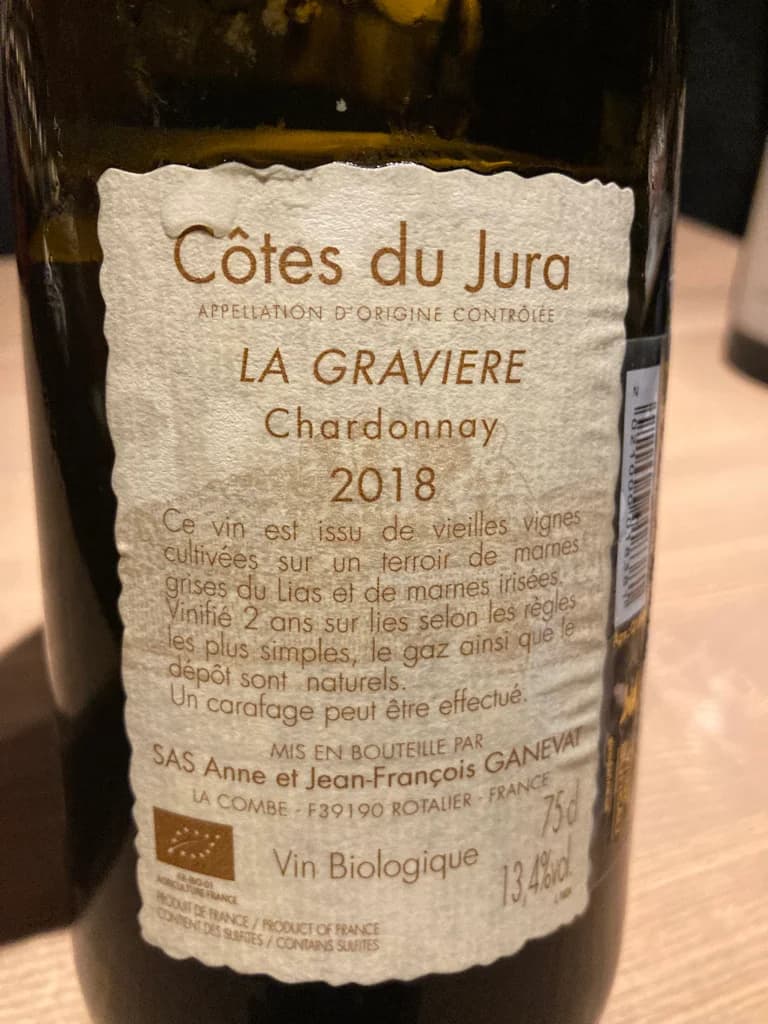
Key cuvées include Les Chalasses Vieilles Vignes (Poulsard, blue marl), Les Vignes de Mon Père (Savagnin ouillé, aged roughly a decade in barrel), Grusse en Billat, Florine and Julien (Chardonnays from specific parcels). He also makes Château-Chalon, Vin Jaune, Vin de Paille, and Macvin du Jura.
Ganevat is widely described as the master - the benchmark for an entire generation of young Jura vignerons. Alongside Domaine Labet and Tissot, the name that defined what modern Jura could be.
In September 2021 Ganevat sold the domaine to Alexander Pumpyansky, son of Russian oligarch Dmitry Pumpyansky - who would be placed under EU sanctions six months later, connected to Vladimir Putin's inner circle, with the Russian state already waging war against Ukraine since 2014. Jean-François and Anne stayed on as employees. When EU sanctions froze the Pumpyansky family's assets in March 2022 - weeks after the full-scale invasion - the domaine was caught in the fallout. A buyback was arranged in March 2023 - not by the Ganevats but by two Pumpyansky employees, Benoît Pontenier (manager of Prieuré Saint-Jean de Bébian, Pumpyansky's other winery) and Jocelyn Brancard (oenologist at Ganevat since 2021), for €15 million. By June 2023 French investigators had seized the estate's assets on suspicion the buyback had been structured to evade sanctions, with €15 million allegedly flowing through a Cyprus holding (Furdberg Holding Limited) originally linked to the Pumpyansky family - meaning Alexander Pumpyansky may have remained the real owner. Ganevat has said he knew nothing of what happened above him. The Paris prosecutor's money-laundering investigation is ongoing.
The wines remain brilliant - among the greatest in the Jura. It is tempting to say wine is above politics. But when you sell your family domaine to an oligarch directly connected to a long-term war monger and later war criminal, and then meet the fallout with deflection rather than reckoning, the separation becomes harder to maintain. People make mistakes. Being able to acknowledge them is the part that matters.